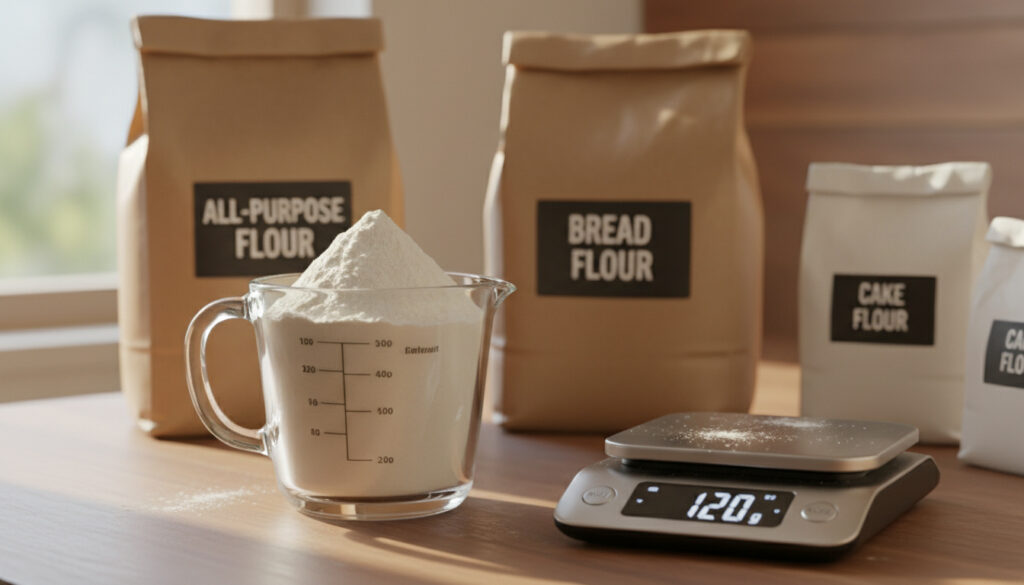
1 Cup Flour in Grams – Accurate Weights by Type and Method
Precise flour measurement separates consistent baking from unpredictable results. One cup of all-purpose flour typically weighs between 120 and 125 grams when measured using the spoon-and-level technique, though this figure shifts dramatically based on flour type, sifting status, and geographic location.
Professional bakers and culinary authorities emphasize that volume-to-weight conversions remain among the most variable in cooking. Density fluctuations caused by humidity, storage conditions, and milling processes can alter a single cup’s weight by up to 45 percent, directly impacting texture and structure in finished products.
How Many Grams is 1 Cup of Flour?
Standard conversions vary by ingredient density and measurement technique. The following grid summarizes the most common benchmarks used in professional and home baking contexts.
Key insights regarding flour weight variability include:
- USDA standards define 125g per cup of all-purpose flour.
- King Arthur Baking specifies 120g (4¼ oz) using the spoon-and-level method.
- Improper scooping can pack 135–160g into a single cup.
- Sifting aerates flour, reducing weight by approximately 8–10%.
- UK, Australian and Canadian metric cups hold 250ml versus 237ml in the US.
- Humidity and storage duration affect flour density through moisture absorption.
- Bread flour contains higher protein, increasing weight per volume compared to cake flour.
| Measurement Method | All-Purpose | Bread Flour | Cake Flour | Whole Wheat |
|---|---|---|---|---|
| 1 Cup (Spooned) | 120–125g | 125–130g | 114–115g | 120–125g |
| 1 Cup (Sifted) | 110–115g | n/a | ~100g | n/a |
| 1 Cup (Scooped) | 135–160g | 140–165g | 125–145g | 135–160g |
| ½ Cup | 60–62g | 62–65g | 57–58g | 60–62g |
| ¼ Cup | 30–31g | 31–32g | 28–29g | 30–31g |
| 2 Cups | 240–250g | 250–260g | 228–230g | 240–250g |
For comprehensive conversion tables, see the cups to grams flour conversion guide. The King Arthur ingredient weight chart provides additional validation for these figures.
1 Cup Flour Grams by Flour Type
Protein content and milling fineness dictate how different flours pack into a measuring cup. High-protein varieties like bread flour weigh more per volume than low-protein cake flours.
All-Purpose and Bread Flour Variations
All-purpose flour serves as the baseline for most recipes, weighing 120–125 grams per US cup when properly spooned and leveled. Bread flour, containing 12–14% protein compared to all-purpose’s 10–12%, typically weighs 125–130 grams per cup. The additional gluten-forming proteins increase density, requiring slightly more liquid in recipes to achieve proper hydration.
Cake, Pastry and Alternative Flours
Cake flour’s fine milling and low protein content (8–10%) result in lighter measurements. One cup of cake flour weighs approximately 114–115 grams when spooned, decreasing to roughly 100 grams when sifted. Pastry flour falls between cake and all-purpose at approximately 120 grams per cup. Rye flour varies significantly by grind, ranging from 110–120 grams per cup according to USDA standards.
Cake flour weighs approximately 114–115 grams per cup when spooned and leveled, dropping to roughly 100 grams when sifted due to its fine milling and lower protein content. Sourced from Pastries Like A Pro.
How to Measure Flour Accurately for Grams
Measurement technique creates greater variance than flour type. The difference between gently spooned flour and firmly packed scoops can exceed 35 grams per cup.
The Spoon-and-Level Technique
The USDA and King Arthur Baking recommend spooning flour lightly into a dry measuring cup, then leveling with a straight edge. This method yields 120–125 grams for all-purpose flour. Dipping the cup directly into the flour bag compresses the product, potentially adding 15–35 grams of excess material that dries out cookies and creates dense cakes.
Understanding Sifted Requirements
Recipe phrasing determines measurement timing. “One cup flour, sifted” indicates measuring first, then sifting, resulting in approximately 120 grams. Conversely, “one cup sifted flour” requires sifting before measuring, yielding roughly 110 grams. This distinction, confirmed by Cotswold Flour, affects delicate recipes like sponge cakes significantly.
Digital kitchen scales eliminate the variability of cup measurements. Weighing ingredients directly into the mixing bowl ensures consistency regardless of flour type or environmental humidity.
Regional Differences: 1 Cup Flour Grams UK vs US
Cup volumes differ internationally, creating additional conversion complexity even when using identical flour types.
US Standard Volumes
The United States customary cup measures 237 milliliters, while the US legal cup used for nutrition labeling equals 240 milliliters. Both yield approximately 120–125 grams of spooned all-purpose flour, though the legal cup technically holds slightly more.
Commonwealth Measurements
UK, Canadian, Australian and New Zealand metric cups standardize at 250 milliliters. This 13-milliliter difference increases flour weight to 125–130 grams per cup for all-purpose varieties. Australian baking resources, including Commercial Kitchen Appliances, confirm these higher weights for local recipes.
Using a UK 250ml cup for a US recipe designed for 237ml creates a 5% flour surplus, potentially altering texture and moisture content in delicate cakes and pastries.
Conversions for Multiple Cups of Flour
Scaling recipes requires consistent multiplication of base weights. The following progression assumes US standard spooned all-purpose flour.
- ¼ cup: 30–31 grams
- ⅓ cup: 40–42 grams
- ½ cup: 60–62 grams
- ⅔ cup: 80–83 grams
- ¾ cup: 90–94 grams
- 1 cup: 120–125 grams
- 2 cups: 240–250 grams
Older conversion charts occasionally list 300 grams for 2 cups of unsifted flour, though modern standards favor 240–250 grams when properly spooned and leveled, as noted by Eat Little Bird. For accurate baking, check out this guide on aucklandjournal.nz. aucklandjournal.nz
Why Flour Weights Vary: Certainty Guide
Distinguishing between established standards and variable factors helps bakers troubleshoot inconsistent results.
| Established Standards | Variable Factors |
|---|---|
| USDA specifies 125g per cup | Exact density varies by brand and milling date |
| King Arthur cites 120g (4¼ oz) | Humidity absorption changes weight daily |
| Sifting reduces weight by 8–10% | Storage settling increases density over time |
| Protein content affects density | Scooping pressure creates 20–45% variance |
Understanding Flour Density for Baking
Flour consists of starch granules and protein structures that compress under pressure. When dipped and swept, the cup captures settled, denser flour from the bag’s bottom layers. Aeration through sifting or spooning introduces air pockets between particles, reducing mass without reducing volume. This physical property explains why weight-based measurement provides superior accuracy for chemical-leavened goods dependent on precise flour-to-liquid ratios.
Environmental humidity further complicates density. Flour acts as a hygroscopic material, absorbing atmospheric moisture that increases weight while potentially caking particles together. Conversely, arid conditions cause drying and settling, increasing density per volume. These variations remain invisible to cup measurements but register immediately on digital scales.
Expert Sources on Flour Measurements
Authoritative baking institutions provide the foundation for standard conversion weights.
King Arthur Baking explicitly states 120g (4 1/4 oz) per cup of all-purpose flour measured via the spoon-and-level method, establishing one of the most widely cited standards in American baking.
King Arthur Baking
USDA nutritional databases reference approximately 125 grams per cup for all-purpose flour, representing the higher end of the acceptable professional range while remaining within standard deviation.
USDA FoodData Central
Quick Reference for Baking Conversions
One cup of all-purpose flour equals 120–125 grams when properly measured using the spoon-and-level technique. For specialized flours, bread varieties weigh 125–130 grams while cake flour measures 114–115 grams per cup. Regional cup sizes and sifting status further modify these figures. For complete conversion tools and ingredient-specific calculators, consult the cups to grams flour conversion resource.
Frequently Asked Questions
Is 1 cup of flour exactly 120g or 125g?
Both figures fall within acceptable standards. King Arthur Baking specifies 120g, while USDA references 125g for all-purpose flour. The 5-gram difference reflects measurement technique variations rather than error.
How many grams is 3 cups of flour?
Three cups of spooned all-purpose flour weigh approximately 360–375 grams. For precision, multiply the single-cup weight from your specific measurement method by three.
Does brand affect flour weight per cup?
Yes. Milling processes and protein levels vary between manufacturers, creating density differences up to 10 grams per cup for the same flour type.
How many grams in 1 cup self-raising flour?
Self-raising flour weighs approximately 120–125 grams per cup, nearly identical to all-purpose flour, as the leavening agents add minimal weight.
Why do my measurements differ from conversion charts?
Scooping technique, humidity, and flour age create natural variance. Charts assume spoon-and-level methods; dipping cups into bags increases weights significantly.
Can I substitute bread flour gram-for-gram with all-purpose?
While weights are similar (120–130g per cup), protein content differs. Bread flour creates stronger gluten networks, altering texture in cakes but working well in breads.
Does humidity significantly affect flour weight?
Yes. Flour absorbs atmospheric moisture, potentially increasing weight by several grams per cup in humid conditions while potentially caking during measurement.
More related posts
 ADHD Symptoms in Kids: Signs, Diagnosis, Treatment
 Wellington City Council Social Housing Deal: $439.5m Explained
 TV Shows with Mark Bonnar: Full List and Where to Watch
 Android vs iOS Security 2026: Which Phone Is Safer
 Lunch Box for Adults NZ: Best Kmart & Farmers Picks
 Things to Do in Nadi, Fiji: Top Attractions & Travel Guide
 Resident Evil Requiem Review: Is It a Good Game
 Cast of Ginny and Georgia: Full List by Season, Ages
