Eau de Toilette Meaning – Definition, Concentration and Comparisons
Eau de toilette represents one of the most commonly purchased fragrance categories worldwide, yet its precise meaning and positioning within the scent hierarchy often confuse consumers. The term, borrowed directly from French grooming traditions, refers to a lightly scented alcohol-based solution containing 5% to 15% aromatic compounds—substantially lighter than pure perfume but noticeably more concentrated than cologne. Merriam-Webster defines it as a perfumed liquid with a lower concentration of fragrance oils, positioning it between stronger eau de parfum and lighter body sprays.
Unlike heavier fragrance formats that announce arrival with intense projection, eau de toilette operates on a more intimate scale. It typically lasts two to four hours on skin, requiring reapplication throughout the day but avoiding the overwhelming sillage that can dominate shared spaces. This concentration strikes a delicate balance between presence and subtlety, making it suitable for daily wear across professional and social contexts.
The formulation relies on a high alcohol content—typically 60% to 80%—combined with water and volatile fragrance oils that evaporate at different rates. Cambridge Dictionary notes the translation refers literally to “toilet water,” derived from the French “faire sa toilette,” meaning to groom or freshen up. This etymology reveals the product’s original purpose: scented water for daily grooming routines rather than special occasions.
What Does Eau de Toilette Mean?
Understanding eau de toilette requires examining its concentration boundaries and functional role. The category occupies a specific niche in the fragrance concentration ladder, offering enough scent to be noticeable without the intensity of higher-end parfums.
Key characteristics define this fragrance type:
- French origin translates literally as “grooming water” or “toilet water” from the ritual of “faire sa toilette”
- Concentration ranges between 5% and 15% aromatic compounds, averaging around 10%
- Alcohol-based delivery system comprising 60-80% alcohol with water dilution
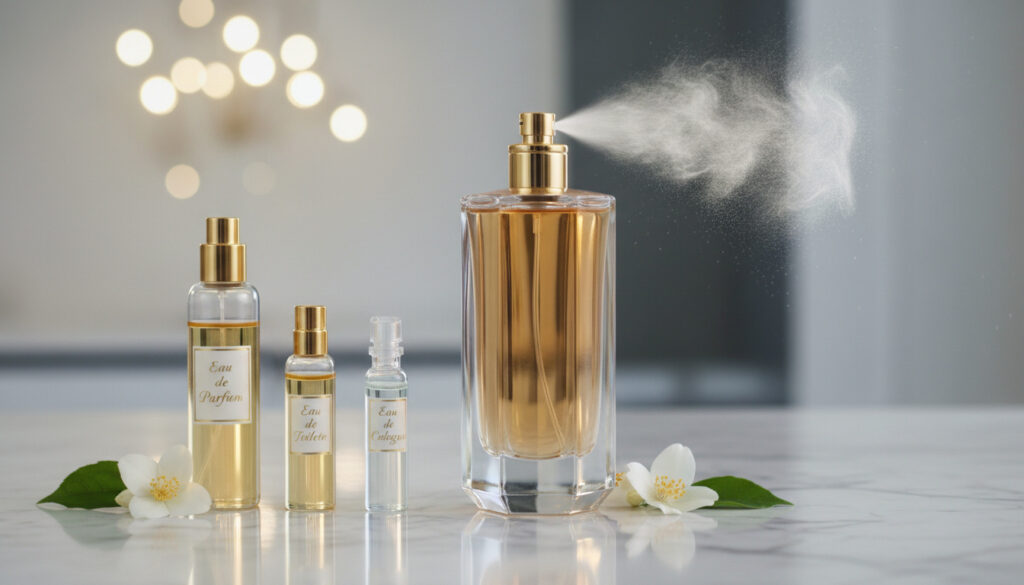
- Positioned lighter than eau de parfum (15-20%) but stronger than eau de cologne (2-6%)
- Cost-effective formulation allowing frequent reapplication without financial burden
- Traditionally unisex, though modern marketing often targets specific genders
- Designed specifically for direct skin application rather than fabric or clothing
| Attribute | Specification |
|---|---|
| French Terminology | “Eau de toilette” = grooming water |
| Fragrance Oil Concentration | 5-15% (typically ~10%) |
| Primary Diluent | Alcohol (60-80%) plus distilled water |
| Typical Longevity on Skin | 2-4 hours |
| Historical Origin | 14th-century France |
| Standardized Usage | Daily grooming, post-bathing application |
Eau de Toilette vs. Eau de Parfum, Perfume, and Cologne
The fragrance market organizes products by aromatic compound percentage, creating distinct categories that perform differently on skin and clothing. Understanding these gradations helps consumers select appropriate concentrations for specific contexts.
Distinction from Eau de Parfum
Eau de parfum contains 10% to 20% aromatic compounds, typically averaging 15%, which significantly alters the wearing experience compared to eau de toilette. Carner Barcelona explains that eau de parfum offers more intense, longer-lasting scent profiles, often projecting for four to six hours or more.
Eau de toilette’s lighter composition emphasizes volatile top notes—citrus, herbs, and light florals—that dissipate within the first hour. Eau de parfum maintains stronger base notes throughout the dry-down period. This concentration difference affects not only longevity but also the scent’s evolution on skin.
Cologne, Aftershave, and Eau de Toilette
Wikipedia’s fragrance classification places eau de cologne at 2% to 6% concentration, traditionally citrus-based and lasting one to two hours. Aftershave splashes contain even less—1% to 3%—designed primarily for skin soothing rather than fragrance projection.
Eau de toilette surpasses both in longevity and versatility. While cologne remains traditionally limited to fresh, citrus profiles, eau de toilette accommodates woody, floral, and oriental families. Aftershave functions as a post-shave treatment; eau de toilette serves as a standalone fragrance.
While industry standards define these ranges, individual formulations vary by manufacturer. Some luxury eau de toilettes approach 15% concentration, nearly matching weaker eau de parfums. Always check specific product details rather than relying solely on category classification.
Eau de Toilette Concentration, Strength, and Longevity
The performance of any fragrance depends on its chemical composition and interaction with human skin. Eau de toilette’s moderate concentration creates specific behavioral patterns distinct from heavier or lighter alternatives.
Chemical Composition
The 5% to 15% aromatic compound ratio determines how scent molecules evaporate. Higher alcohol content (60-80%) acts as a volatile carrier, lifting fragrance oils from skin into the air. Mugler’s fragrance education indicates this alcohol base creates the initial sharp scent impression that softens as volatile top notes dissipate.
Wear Time Variables
Longevity extends beyond simple concentration percentages. Skin chemistry—oiliness, pH levels, and temperature—accelerates or slows evaporation rates. Climate conditions, particularly humidity and heat, drastically alter performance. Cambridge references note that lighter top notes fade faster than the base notes found in parfum concentrations.
Projection and Sillage
Sillage—the scent trail left in passing—remains moderate with eau de toilette. The fragrance projects noticeably for the first hour, then retreats to skin scent levels. This characteristic suits office environments where intense projection might overwhelm colleagues.
Exact wear time cannot be guaranteed. Dry skin may reduce longevity to 90 minutes, while oily skin might extend performance to five hours. Seasonal changes and application sites (pulse points vs. clothing) create additional variables. Expect 2-3 hours as standard, but carry atomizers for touch-ups.
How to Apply Eau de Toilette and Who Can Wear It
Application technique maximizes fragrance performance while respecting social boundaries. Eau de toilette’s lighter nature allows generous application without the suffocation risk associated with parfum concentrations.
Proper Application Technique
Optimal distribution requires targeting pulse points—wrists, neck, behind ears, and chest—where blood flow generates heat to activate scent molecules. Historical usage guidelines recommend application after bathing or shaving when pores remain open and skin is clean.
Two to four sprays provide sufficient coverage for most body chemistries. Avoid rubbing wrists together post-application; this friction crushes delicate top note molecules and accelerates evaporation. Allow the alcohol to air-dry naturally.
Gender Identity and Occasion
While marketing traditionally segregated fragrances by gender, eau de toilette functions as inherently unisex. Dictionary definitions specify no gender restrictions. Men historically utilized fresh or citrus profiles paired with aftershaves, while contemporary offerings include woody, spicy, and gourmand families suitable for any wearer. For those curious about the science behind it, you can find more information about MSG health effects at MSG health effects.
The concentration suits daytime and office environments where subtlety prevails. Evening events might require stronger concentrations, though eau de toilette layers effectively with matching body products. Consumers might wear eau de toilette to the gym (a practice related to fitness culture explored in 24/7 Fitness – NC Locations and Membership Guide), then switch to parfum for evening events.
For extended longevity without re-purchasing stronger concentrations, apply eau de toilette to clothing fibers rather than skin. While alcohol can damage delicate fabrics, a light mist on shirt collars or scarf edges creates a persistent scent bubble without skin chemistry interference.
History and Origin of Eau de Toilette
The lineage of scented waters traces to ancient Mesopotamia and India, but eau de toilette crystallized as a distinct category in 14th-century France. Distillers began creating lighter scented waters—specifically lavender, neroli, and geranium variants—distinct from the heavy, oil-based perfumes reserved for nobility.
La Belle Perfumes historical analysis notes these waters served practical grooming functions rather than purely aesthetic ones. The term itself derives from “faire sa toilette,” the French expression describing the morning ritual of washing, shaving, and dressing.
By the 19th century, these preparations had standardized into the concentration categories recognized today. Modern perfumery maintains these traditions while expanding scent profiles beyond the original floral and citrus boundaries.
Evolution of Eau de Toilette Through History
- 14th Century: French alchemists develop lightly scented waters for daily grooming, distinguishing them from heavy ceremonial perfumes.
- 18th Century: Named varieties proliferate—lavender water, orange flower water, and geranium water become staples of aristocratic and bourgeois hygiene.
- 19th Century: Industrial production democratizes access; eau de toilette becomes standard post-shaving ritual for men and refreshment for women.
- 20th Century: Concentration standards formalize within the fragrance industry, establishing the 5-15% range as distinct from cologne and parfum.
- Modern Era: Designer houses release unisex and gender-fluid variants, while niche perfumers experiment with atypical notes within the traditional concentration.
Established Facts vs. Variable Experience
While industry standards provide baseline definitions, individual experiences vary significantly based on biological and environmental factors.
| Scientifically Established | Subjectively Variable |
|---|---|
| Concentration range: 5-15% aromatic compounds | Exact longevity: 2 hours (dry skin) to 5 hours (oily skin) |
| Lighter concentration than eau de parfum (15-20%) | Sillage strength: intimate to moderate depending on humidity |
| Alcohol-based diluent (60-80%) | Scent evolution: top note duration varies by body temperature |
| French terminology origin: “faire sa toilette” | Price-to-quality ratios differ significantly across brands |
Cultural Context and Modern Positioning
Contemporary grooming culture positions eau de toilette as the pragmatic choice for daily scenting. Unlike parfum, which signals special occasion luxury, or cologne, which suggests casual freshness, eau de toilette occupies the professional middle ground. It respects office environment boundaries while maintaining personal presence.
The format supports the modern trend of “fragrance wardrobing”—selecting scents by activity rather than signature identity. For those interested in performance metrics across different contexts, Sri Lanka vs Oman – 105-Run Victory, Scorecard & Analysis demonstrates detailed statistical comparisons applicable to any measured category.
Layering techniques allow users to extend longevity by combining eau de toilette with matching shower gels or body lotions. This approach maximizes scent persistence without overwhelming concentration.
Expert Sources and Industry Standards
Fragrance classification relies on guidelines established by the International Fragrance Association (IFRA) and historical perfumery traditions. These standards maintain consistency across manufacturers, though individual formulations vary.
“Eau de toilette represents the democratic heart of perfumery—accessible, versatile, and designed for the wearer’s pleasure rather than the audience’s notice.”
— Fragrance Industry Standard Classification
Historical records from the Wikipedia fragrance archive confirm the concentration hierarchy emerged from 19th-century French perfumery practices, codifying informal traditions into the modern taxonomy consumers recognize today.
Summary and Key Takeaways
Eau de toilette delivers 5% to 15% aromatic concentration in an alcohol-based solution, lasting two to four hours on skin with moderate sillage. The French term references daily grooming rituals, not bathroom fixtures. It stands between cologne (2-6%) and eau de parfum (10-20%) in strength, suitable for unisex daily wear and professional environments. For those interested in performance metrics across different contexts, Sri Lanka vs Oman – 105-Run Victory, Scorecard & Analysis demonstrates detailed statistical comparisons applicable to any measured category.
Frequently Asked Questions
Is eau de toilette alcohol-based?
Yes. Eau de toilette contains 60% to 80% alcohol, which acts as a carrier for fragrance oils and enables the initial volatile projection before evaporating to leave the scent on skin.
What does EDT stand for in perfume?
EDT stands for Eau de Toilette. It represents the standard abbreviation used on packaging and in retail to indicate the 5-15% concentration category.
What is the best time to wear eau de toilette?
Morning and daytime occasions suit eau de toilette best. Its lighter profile complements office environments, casual social gatherings, and warm weather when heavier scents might overwhelm.
Can eau de toilette be worn by men?
Absolutely. While marketing often targets specific genders, eau de toilette is inherently unisex. Many masculine-marketed fragrances utilize this concentration for fresh, post-shave applications.
How does skin type affect eau de toilette longevity?
Oily skin retains scent molecules longer, potentially extending wear to five hours. Dry skin accelerates evaporation, sometimes reducing longevity to 90 minutes. Moisturizing before application helps balance these effects.
Why is it called “toilet water”?
The term derives from the French “faire sa toilette,” meaning to groom or dress oneself. It refers to the morning preparation ritual, not modern bathroom facilities. Historical usage involved scented waters for washing and freshening.
Is eau de toilette the same as body spray?
No. Body sprays typically contain 1-3% fragrance oils and emphasize deodorizing functions. Eau de toilette offers higher concentration (5-15%), alcohol base, and structured scent profiles designed as fine fragrance rather than hygiene products.
More related posts
 Race Across the World 2026: Season 6 Confirmed & Guide
 Waitara Childcare Closure: Verified Facts & Updates
 Westpac Credit Card Travel Insurance: What You Need to Know (2025)
 Sevilla FC vs FC Barcelona Lineups: Predicted XI & Team News (2026)
 Meghan and Harry Latest: What’s Happening Now? (2025 News)
 10 Year Anniversary Gift – Tin, Aluminum and Diamond Ideas
 High Resolution World Map: Free Downloads, PDF, 4K & 3D Maps
 Kaya Scodelario Movies and TV Shows: Complete Career Guide
