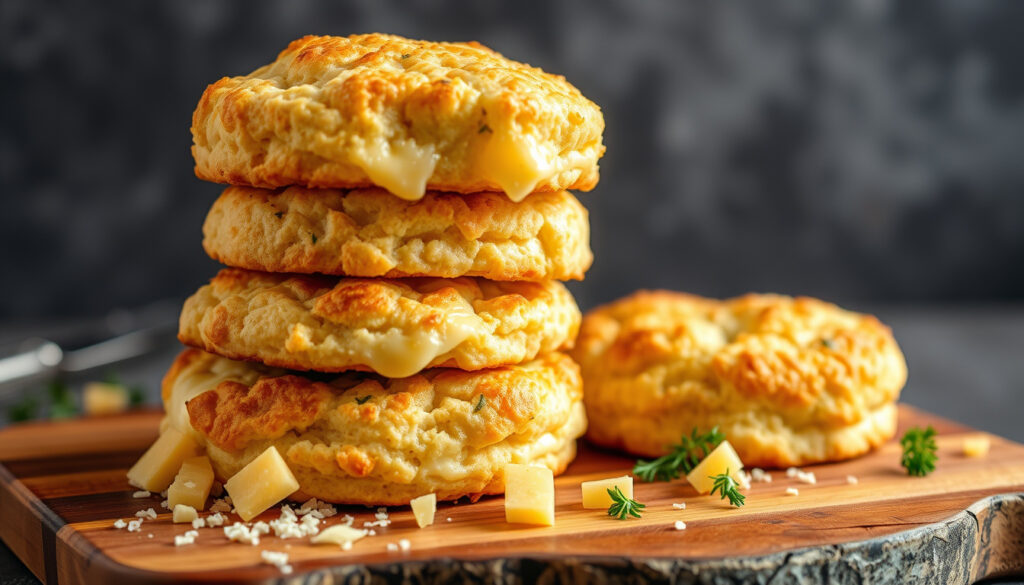
Best Cheese Scones Recipe Ever: Easy & Fluffy Guide
The difference between a fluffy cheese scone and a sad, flat stone often comes down to a handful of techniques that most recipes gloss over. This guide brings together the BBC’s classic method, Paul Hollywood’s technical approach, and a few under-the-radar tricks that serious bakers swear by.
Key Ingredient: Mature Cheddar · Prep Time Reference: 15 minutes · Basic Ingredients: Self-raising flour, butter, cheese, milk · Oven Temp: 220°C · Makes: 8-10 scones
Quick snapshot
- Self-raising flour base, chilled butter, mature cheddar (BBC Good Food classic recipe)
- Minimal prep, no butter cubing, fast bake (Apply to Face Blog basic method)
- Baking powder boost, cold milk, light handling (Mad about Macarons fluffy technique)
- Paul Hollywood style, Mary Berry influence, BBC tested (British Recipes UK celebrity method)
| Ingredient | Amount | Notes |
|---|---|---|
| Flour Base | 225g self-raising flour | Verified across BBC Good Food and Paul Hollywood recipes |
| Fat | 55g chilled butter | Cold butter worked in for flakiness |
| Cheese | 120g mature cheddar grated | Full of cheese flavor according to multiple sources |
| Liquid | 90-100ml milk | Milk-based from BBC recipe |
| Leavener | 1 tsp baking powder | Standard across most UK recipes |
What is the best cheese for cheese scones?
Most baking authorities converge on one answer: mature cheddar. Its lower moisture content and concentrated flavor deliver what home cooks consistently report as the best results. According to BBC Good Food, 120g mature cheddar strikes the right balance between flavor and structure.
Mature cheddar options
- Stronger aged varieties add depth but can overwhelm the dough
- Pre-grated cheese tends to have anti-caking agents that affect melt
- Sharp or extra-sharp cheddar works well for a more pronounced savory punch
Grating and quantity tips
The texture matters. Grating cheese fresh—not pre-packaged—produces cleaner distribution through the dough. The Moorlands Eater recipe goes heavier with 250g of cheddar for what they call “very cheesy” scones, trading subtlety for impact. Most standard recipes settle around 120g, which BBC Good Food considers the sweet spot for structural integrity.
Mature cheddar delivers the depth you want without making the scone greasy. Grate it fresh yourself—you’ll notice the difference in how evenly it distributes through the dough.
The pattern is consistent: stronger cheese, fresher grating, modest quantity. That’s the formula most recipes converge on, even if they disagree on everything else.
What is the secret to the best scones?
Two words: cold butter. More specifically, how you work it in. Paul Hollywood’s approach centers on technical precision with minimal handling, and the cold butter rubbed into flour technique shows up across tier-2 sources as the non-negotiable foundation for lift and flakiness.
Chilled butter technique
The goal is pea-sized butter pieces coated in flour. These pockets melt during baking, releasing steam that creates the characteristic layers. The Bake & Bacon method takes this further by freezing the butter and grating it directly into the flour—a technique that produces what they describe as superior flakiness.
Handling dough lightly
Overworking develops gluten, which means tough scones. Mrs Jones’s Kitchen captures it simply: a light touch when rubbing butter ensures lighter scones. The BBC recipe reinforces this with specific guidance to handle the dough minimally once you’ve mixed it.
Every extra fold or press compacts the dough and signals more gluten formation. For scones, speed and restraint are features, not bugs—you’re not making bread.
What this means: your technique matters as much as your ingredients. Cold butter, minimal contact, quick work. That’s the secret most recipe writers assume you already know.
What are common cheese scone mistakes?
Five mistakes consistently surface across baking forums and recipe critiques. Understanding them beforehand lets you sidestep the failures that turn promising batches into doorstops.
Overworking dough
The Kitchn identifies this as mistake number one. Each time you re-roll or press the dough, you’re building gluten structure that works against the light, crumbly texture you want. The fix: mix just until cohesive, then stop.
Wrong oven temperature
Baking at too low a temperature means scones don’t get the rapid rise they need. The pro tip across multiple sources points to 220°C as the sweet spot for quick, even browning. BBC Good Food specifies 15-20 minutes at that temperature for golden results.
Scones hit their peak within minutes—overbaking by even 2-3 minutes turns them from tender to dry and crumbly. Start checking at the 12-minute mark.
The pattern is clear: most scone failures trace back to the oven, not the ingredients. A reliable thermometer and a timer you trust—those two tools prevent 90% of the complaints people post online about their scones falling flat.
Should you put egg in cheese scones?
Traditional British cheese scones don’t include egg in the dough. The BBC’s classic recipe, the Paul Hollywood variations, and most UK-focused sources stick to the flour-fat-cheese-milk formula without egg. The basic easy version from Apply to Face Blog confirms this straightforward approach.
Traditional no-egg method
Egg-free recipes rely on baking powder for leavening and milk for moisture. This simplicity is intentional—it lets the cheese flavor dominate without interference from egg proteins that can alter texture in subtle ways.
Optional egg wash
Where egg does appear is as a wash before baking. A light egg wash on top, optionally followed by extra cheese, creates the glossy, golden crust you see in professional bakery scones. British Recipes UK mentions this egg wash and extra cheese topping as an optional enhancement for visual appeal.
Skipping the egg in the dough keeps things simple and lets cheese shine. Adding an egg wash is purely cosmetic—you get a prettier scone, not a different one.
The implication: don’t overthink the egg question. For the dough itself, the traditional answer is no. For the crust, egg wash is optional but visually rewarding if presentation matters to you.
How to make the fluffiest cheese scones?
Fluffiness in scones comes from two sources: chemical leavening and steam from butter pockets. Getting both right means understanding the 15-minute rule, the baking powder boost, and how to handle the dough for maximum lift.
Baking powder boost
While some recipes rely solely on self-raising flour, adding extra baking powder gives the dough an additional lift mechanism. BBC Good Food specifies 1 tsp baking powder alongside the flour. Mad about Macarons goes further with bicarbonate of soda for their fluffy version.
15 minute rule application
The 15-minute rule refers to getting scones into the oven quickly after mixing—the dough loses leavening potency the longer it sits. Most recipes advise prep time of 25 minutes total, with minimal delay between mixing and baking.
How to make the best cheese scones: step by step
Follow these steps in order for the most reliable path to fluffy, golden cheese scones.
- Prep your ingredients: Measure 225g self-raising flour and 1 tsp baking powder into a large bowl. Add ½ tsp salt. Grate 120g mature cheddar fresh—don’t use pre-packaged. Cut 55g cold butter into small cubes.
- Work in the butter: Add cold butter to the flour mixture. Using your fingertips, rub the butter into the flour until the mixture resembles coarse breadcrumbs with pea-sized butter pieces visible. Work quickly—warm hands melt the butter.
- Add the cheese: Stir in the grated cheddar, reserving a small handful for topping if desired.
- Add liquid gradually: Pour in 90-100ml cold milk, stirring with a fork. Stop when the dough just comes together—it should look shaggy and slightly sticky.
- Shape the dough: Turn onto a lightly floured surface. Pat gently to 2cm thick. Don’t roll aggressively—you want to preserve the butter pockets.
- Cut scones: Use an 8cm cutter to cut rounds. Press straight down without twisting—this ensures even rising.
- Prepare for baking: Place scones on a baking tray lined with parchment. Optionally brush tops with egg wash and scatter reserved cheese.
- Bake at 220°C: Bake for 12-15 minutes until golden on top and risen. Check at 12 minutes to avoid overbaking.
- Cool on a wire rack: Let scones cool for 5 minutes before serving. They’re best warm.
If you’re short on time, the 3-ingredient shortcut version works with self-raising flour, milk, and cheese—no butter cubing required—though the texture won’t be quite as flaky.
What checks out
- Mature cheddar is the standard top choice across sources
- Cold butter is non-negotiable for flakiness
- 220°C is the consensus baking temperature
- Baking powder boost improves lift
- Minimal dough handling prevents toughness
What stays uncertain
- Exact calorie counts vary by recipe without standardized nutrition data
- Optimal storage duration for maintaining texture
- Precise comparison between UK self-raising vs US all-purpose flour in equal conditions
“You want lift, not heaviness. You want richness, not greasiness.”
— Paul Hollywood, chef and BBC Great British Bake Off judge
“These light and fluffy cheese scones made from basic ingredients and are on the table in under 30 minutes.”
— Mrs Jones’s Kitchen, recipe blog
Home bakers who master these techniques will produce scones that outclass anything from a bakery display. Paul Hollywood’s technical precision and the BBC’s tested approach converge on the same formula. Whether you follow the classic method or experiment with the buttermilk variant, those core principles hold. Serve them warm with butter, and guests will skip the shop-bought versions entirely.
Related reading: Paul Hollywood cheese scones recipe · Classic cheese scones
While mastering these fluffy cheese scones with BBC tips, try a milk-free scones recipe for dairy-free bakers seeking simple substitutions.
Frequently asked questions
What is the 15 minute rule for scones?
The 15-minute rule refers to minimizing the time between mixing the dough and getting it into the oven. Baking powder loses potency the longer it sits in wet dough, so most recipes recommend completing prep and baking within 15-30 minutes for maximum rise.
What to avoid when making scones?
Avoid overworking the dough, baking at temperatures below 200°C, opening the oven door frequently during baking, and overbaking past the point of golden coloring. Each of these compromises the light, fluffy texture you’re after.
How do you make quick and easy cheese scones?
Use a 3-ingredient approach: self-raising flour, milk, and mature cheddar. Skip the butter-cubing step by using self-raising flour’s built-in leavening. Mix quickly, pat to shape, cut, and bake at 220°C for 12-15 minutes.
Can you use buttermilk in cheese scones?
Yes. Buttermilk or yogurt can replace regular milk for a tangier scone with slightly softer texture. The Baking with Butter recipe uses buttermilk alongside chives for this effect.
What makes cheese scones rise properly?
Three factors: sufficient baking powder, cold fat that creates steam pockets during baking, and dough thickness of 2-3cm. Cutting straight down without twisting the cutter also ensures even rising.
How long to bake cheese scones?
Most recipes specify 12-15 minutes at 220°C. BBC Good Food allows 15-20 minutes depending on oven calibration. Start checking at 12 minutes—scones go from perfect to overdone quickly.
Is mustard powder used in cheese scones?
Mustard powder is optional but appears in some recipes for an enhanced savory profile. Paul Hollywood-style recipes from British Recipes UK include ½ tsp mustard powder for this purpose. It’s a flavor boost, not a requirement.
More related posts
 Roof Moss Removal Companies: Costs & Top Ireland Providers
 Harvey Norman Outlet Store: Ireland Locations & Clearance Deals
 South Canterbury Propagation Liquidation: Over $1M Paid
 Maison Francis Kurkdjian Baccarat Rouge 540: Scent, Price & Hype
 Foodstuffs South Island Jobs – Apply Online & Find Roles
 6 Seater Dining Table NZ: Sizes, Prices & Buying Guide
 Best Plant Protein Powder NZ: Top Brands Compared (2025)
 Ice Cream Cake NZ: Where to Buy, Prices & Recipes (2025)
