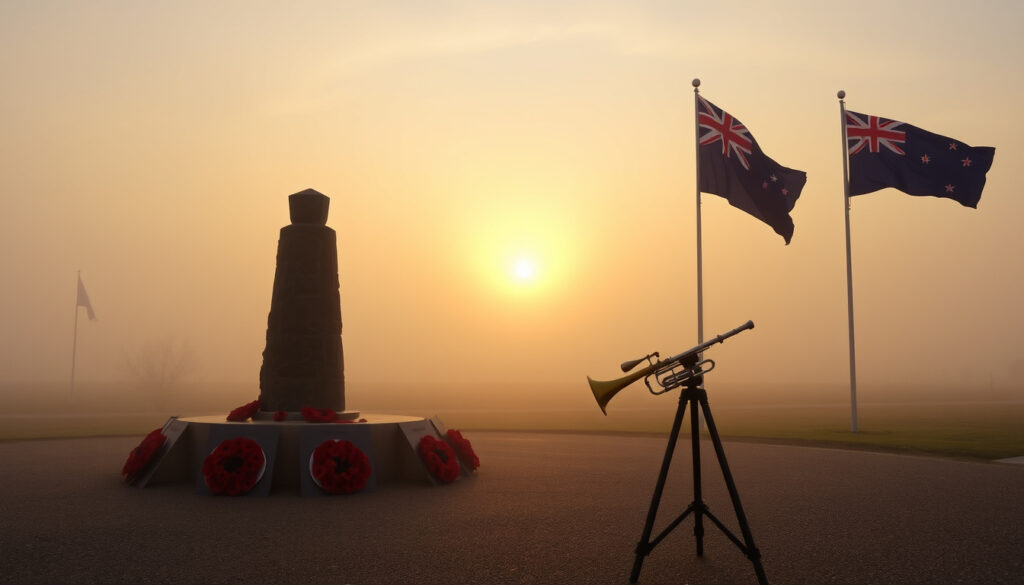
Dawn Service Anzac Day: History, Timing & What to Expect
There’s something almost sacred about gathering in the dark before dawn on 25 April. For millions of Australians and New Zealanders, the dawn service is the quiet heart of Anzac Day — a tradition that began on the battlefield and now draws crowds from Perth to London.
First official dawn service: 1927 at Sydney Cenotaph ·
Typical start time: 4:30 AM – 5:30 AM ·
Duration of silence: 1 minute ·
ANZAC stands for: Australian and New Zealand Army Corps ·
Annual date: 25 April
Quick snapshot
- Anzac Day commemorates the Gallipoli landing on 25 April 1915 (Australian Department of Veterans’ Affairs, official commemorations portal)
- The first official dawn service was held at the Sydney Cenotaph in 1927 (Australian Army, historical traditions page)
- One minute silence is a standard element of the dawn service (RSL Australia, Anzac history resource)
- The exact origin of the term “Dawn Service” is debated — some credit Reverend Arthur White’s 1923 Albany service, others a 1919 Toowoomba gathering (Australian Army, multiple possible first services noted)
- 25 April 1915 — ANZAC forces land at Gallipoli at dawn (NZ History, official government site)
- 1923 — Reverend White leads first recognised dawn observance in Albany (RSL Australia)
- 1927 — First official dawn service at Sydney Cenotaph (Australian Army)
- Dawn services now occur in over 2,000 locations across Australia and New Zealand, with growing numbers in Turkey, France, and the UK (Australian Department of Veterans’ Affairs, commemorations backgrounder)
The table below summarises key facts about the dawn service.
| Fact | Detail |
|---|---|
| Date | 25 April |
| Observance | Commemoration of Gallipoli landing |
| First official service | 1927, Sydney Cenotaph |
| Typical start time | 4:30 – 5:30 AM |
| Silence duration | 1 minute |
What is Anzac Day and why is it celebrated?
What does ANZAC stand for?
The acronym ANZAC stands for Australian and New Zealand Army Corps, the formation that landed on the Gallipoli Peninsula on 25 April 1915 (Australian Department of Veterans’ Affairs, official definition). The ANZAC Corps comprised volunteers from both nations fighting under British command during World War I.
Why is 25 April significant?
25 April 1915 marks the date of the Allied landing at Gallipoli — a campaign that lasted eight months and cost tens of thousands of lives. The Australian Department of Veterans’ Affairs (commemorations backgrounder) notes that the first Anzac Day commemorations were held exactly one year later, on 25 April 1916. Over time the day has broadened to honour all Australians and New Zealanders who served and died in war, peacekeeping, and operational service.
The implication: Anzac Day has grown from a single campaign to a comprehensive remembrance, and the dawn service remains its most intimate expression.
What happens at a dawn service on Anzac Day?
What is the order of service?
- Guests assemble before dawn, often by 4:15–4:30 AM, in silence.
- A catafalque party (honour guard) mounts a vigil around the memorial.
- Hymns such as “Abide with Me” are sung.
- The Last Post is played by a bugler.
- One minute of silence is observed.
- Wreaths are laid by veterans, officials, and community groups.
- The Ode of Remembrance is recited.
- Reveille (or the Rouse) is played to signal the end.
The RSL Australia (Anzac history resource) describes this structure as reflecting the wartime “stand-to” — the pre-dawn period when soldiers prepared for attack.
What role do veterans and cadets play?
Veterans and current serving members form the catafalque party and lay wreaths. Cadets and youth groups often assist with flag ceremonies and ushering. The service is typically organised by the Returned and Services League of Australia (RSL) in consultation with the Australian Defence Force (Australian Army, historical traditions page).
The most powerful moment for many attendees is the transition from Last Post silence to Reveille — a shift from mourning to resolve that mirrors the experience of soldiers at dawn.
The pattern: this sequence turns a military routine into a shared emotional arc, making the service accessible even to first-timers.
Why is it called a dawn service?
What is the origin of the dawn service?
The name “dawn service” directly references the time of the original Gallipoli landing — 4:28 AM on 25 April 1915. The RSL Australia (Anzac history resource) states that multiple possible early services exist: a 1916 service on the Western Front, a Toowoomba gathering in 1919, Reverend Arthur White’s Albany service in 1923, and a Sydney Cenotaph service in 1928. The Sydney 1927 service is widely cited as the first official dawn service.
Did the landing at Gallipoli happen at dawn?
Yes. The first ANZAC forces landed on the Gallipoli Peninsula just before dawn on 25 April 1915. The Brisbane dawn service, for example, still begins at exactly 4:28 AM to match that moment (Anzac Day Commemoration Committee, Brisbane service timing). However, many modern services begin between 4:30 and 5:30 AM and the NZ History official site notes that the practice reflects a general pre-dawn period of reflection rather than a precise re-enactment.
“As the sun rises and goeth down, we will remember them.”
— Reverend Arthur Ernest White, 1923 Albany dawn service, as recorded by RSL Australia
What time is the dawn service for Anzac Day?
What time does the dawn service start in major cities?
Start times vary across major Australian cities.
| City | Typical start time |
|---|---|
| Sydney | 4:15 AM – 4:30 AM |
| Melbourne | 5:30 AM |
| Brisbane | 4:28 AM (exact time of landing) |
| Perth | 5:30 AM |
| Adelaide | 5:00 AM |
| Canberra | 5:30 AM |
Timing varies by city and venue. Local RSL branches publish exact times each year. For most services, arriving 20–30 minutes early is recommended.
What time is the one minute silence on Anzac Day?
The one minute silence typically occurs around 5:00 AM or 5:30 AM, depending on the service’s start. It follows the playing of the Last Post and is the emotional centre of the dawn service. The Australian Department of Veterans’ Affairs emphasises that the silence is observed at dawn services nationwide, with local timings aligned to the sun’s rising.
Attending at 4:30 AM means standing in pre-dawn cold — temperatures can drop to 5–8°C in southern cities. The reward: an intimate, shared silence that midday marches rarely replicate.
What this means: the early hour is part of the experience, not an obstacle — it filters out distractions and deepens focus.
What do you wear to an ANZAC Dawn Service?
Are there dress code requirements?
There is no strict dress code, but dark, smart-casual clothing is respectful. Practical considerations: the service is outdoors, often at dawn, so layers, a warm coat, and comfortable footwear matter. The Australian Department of Veterans’ Affairs advises dressing modestly — avoid bright colours or sportswear. For travel tips, see our guide on Australia New Zealand Visa Changes.
What should veterans wear?
Veterans and currently serving personnel wear medals on the left side of the chest. Medals should be worn on the left-hand side of the chest, above the heart. It is customary not to wear medals on the right unless representing another person (Australian Army, medal wear protocol). Civilians are encouraged to wear medals of deceased relatives on the right side.
The implication: dress for the early hour and the solemn tone — your clothing signals respect for the occasion and for those who served.
How to attend a dawn service with confidence
- Determine the service time and location from your local RSL branch.
- Arrive 20–30 minutes early to secure a spot and settle in.
- Dress in dark, smart-casual layers and comfortable shoes.
- Turn off your phone and remain silent during the service.
- Stand during the playing of the Last Post and the one minute of silence.
- Reflect on the meaning of the day; consider reading the Ode privately.
Timeline: Key Dates in the Dawn Service Tradition
- 25 April 1915 — ANZAC forces land at Gallipoli at dawn (NZ History, official timeline)
- 1923 — First unofficial dawn service held in Albany, Western Australia, led by Reverend Arthur White (RSL Australia)
- 1927 — First official dawn service at the Sydney Cenotaph (Australian Army)
- 1942 — RSL formalises dawn services across Australia (Anzac Day Commemoration Committee)
- 1990s onwards — Dawn services become widespread in Australia, New Zealand, and overseas (Australian Department of Veterans’ Affairs)
What we know and what remains uncertain
Confirmed facts
- The landing at Gallipoli began at dawn on 25 April 1915 (NZ History).
- The first official dawn service was held at the Sydney Cenotaph in 1927 (Australian Army).
- One minute silence is a standard element of the dawn service (RSL Australia).
- Dawn services are organised by the RSL with military involvement (Australian Army).
- The service structure includes Last Post, Ode, hymns, wreath-laying (RSL Australia).
What’s unclear
- The exact origin of the term “Dawn Service” is debated; some credit Reverend Arthur White or a group of women in Albany, others point to Toowoomba in 1919.
- Precise timings of early services before 1927 are not all documented.
- The direct connection between the Gallipoli landing and the dawn service format is debated — some attribute it to the stand-to tradition rather than the landing time (Australian Army, stand-to interpretation).
Voices on the Dawn Service
“The Dawn Service reflects the quiet, reflective period before dawn — a moment when the nation pauses to remember.”
— RSL Australia, Anzac history page (paraphrase of RSL National President remarks)
“In Albany, Western Australia, Reverend Arthur Ernest White led what is widely commemorated as the first Dawn Service on Anzac Day on 25 April 1923. About 20 men gathered on Mount Clarence.”
— RSL Australia, historical account
For Australians and New Zealanders, the dawn service is no relic — it’s a living tradition that refuses to fade. For first-time attendees, the choice is clear: arrive early, dress warmly, and let the silence speak for itself. Or stay home and miss one of the most quietly powerful hours of the year.
To plan your attendance properly, check the Anzac Day 2025 date and traditions guide for the exact observance details in 2025.
Frequently asked questions
Can I take photos at a dawn service?
Most services permit photography before and after, but during the silence and the Ode, put devices away. Check with the local RSL or venue for specific rules.
Are children welcome at dawn services?
Yes. Many families bring children. Keep them close and explain the significance beforehand. Some services provide children’s activities.
Is the dawn service held rain or shine?
Always. Services proceed in all weather unless authorities cancel for safety. Bring an umbrella and warm layers.
What is the Ode of Remembrance?
The Ode is from Laurence Binyon’s poem ‘For the Fallen’ — “They shall grow not old, as we that are left grow old…” It is recited during the service.
Can non-Australians attend?
Absolutely. Dawn services welcome everyone. It’s a respectful opportunity to experience a national tradition.
Are there dawn services outside Australia?
Yes. Major services occur in Gallipoli (Turkey), Villers-Bretonneux (France), London (UK), and at ANZAC Cove. Check the Australian Department of Veterans’ Affairs for international locations.
Do I need to arrive early?
Yes. Popular services fill quickly. Arrive 20–30 minutes early to find a spot, park, and settle before the service begins.
More related posts
 St John’s College Hastings: A Complete Parents Guide
 Ammu South Indian Restaurant Masterton Menu & Reviews
 Nuze t Clean Lean Protein Review: I It Safe and Good for You?
 When Did PS4 Come Out? Release Dates, Lifespan & 2026 Status
 Han and Can the Block – Still Together After Drama
 Luton Town F.C. 2024: Debt, Wages, Trophies & Fan Facts
 How to Check for Bed Bugs – Step-by-Step Inspection Guide
 How Long to Boil Potatoes: Times for Every Cut
