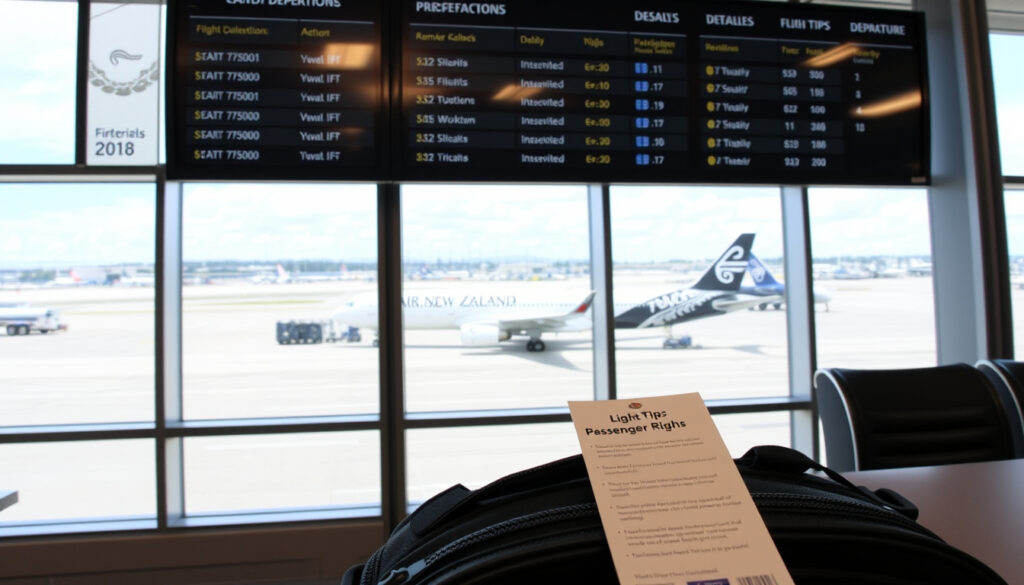
Air New Zealand Strike: Passenger Rights & Flight Tips
If you’ve got a flight booked with Air New Zealand in the coming days, you’re probably wondering what the cabin crew strike means for your plans. On 12–13 February 2026, nearly 10,000 passengers found themselves scrambling as wide-body cabin crew walked off the job after almost 10 months of failed negotiations.
Passengers affected by strike: Nearly 10,000 ·
Strike duration: 12–13 February 2026 ·
Striking crew group: Air New Zealand wide-body cabin crew ·
Months of failed negotiations: Almost 10 months
Quick snapshot
- Strike took place 12–13 February 2026 (Reuters report)
- Nearly 10,000 passengers affected (1News coverage)
- Strike was a ban on training by wide-body cabin crew (1News coverage)
- Exact number of flights cancelled across all routes
- Whether compensation will be paid in individual cases
- Long-term impact on Air New Zealand labor relations
- April 2025: Negotiations begin
- February 2026: Strike announced
- 12–13 February 2026: Strike action
- Living wage breakthrough reported by ETU after strike (Business & Human Rights Resource Centre)
- Passengers urged to check flight status and rebooking options (Business & Human Rights Resource Centre)
Air New Zealand announced 46 long-haul cancellations before the crew walkout — here’s how the numbers stack up.
| Metric | Value |
|---|---|
| Strike dates | 12–13 February 2026 |
| Striking group | Air New Zealand wide-body cabin crew |
| Passengers affected | Nearly 10,000 |
| Duration of failed negotiations | Almost 10 months |
| Strike action type | Ban on training (not full walkout) |
| Flights cancelled (announced 11 Feb) | 46 long-haul wide-body flights (Reuters report) |
The implication: nearly 10,000 travelers had to scramble for alternatives, and the airline’s compensation obligations remain contested.
What happens if my flight is cancelled due to strike?
Air New Zealand’s customer disruption page states that passengers on flights cancelled or delayed for reasons within the airline’s control — and not for safety reasons — are eligible for compensation if they arrive three hours or more late, unless notified at least 15 days before departure (Air New Zealand customer service plan).
Rebooking and refund options
- Reuters reported that Air New Zealand reached out to impacted travelers with options for rebooking or refunds (Reuters report).
- Consumer NZ says that for domestic flights cancelled or delayed due to events within the airline’s control, passengers can ask for a refund and may claim additional expenses such as meals, accommodation, and transport costs (Consumer NZ advice).
- Recoverable disruption costs are capped at the lesser of 10 times the ticket price or the actual cost of the delay (Consumer NZ advice).
Air New Zealand travel alerts
Air New Zealand publishes travel alerts on its official website. Passengers should check the customer disruption page for the latest updates. The airline also provides information via its Air New Zealand Arrivals and Departures page.
Passengers whose flights are cancelled due to the strike are entitled to a refund or rebooking — but the airline’s compensation obligations depend on whether the strike is deemed within its control. For domestic flights, additional expenses may be recoverable up to 10 times the ticket price.
Do I get compensation if my flight is cancelled due to a strike?
Whether you’re entitled to cash compensation depends on where you’re flying and the legal framework governing your ticket.
EU and New Zealand passenger rights
- Under EU Regulation 261/2004, an airline’s own staff strike is not treated as an extraordinary circumstance under current EU court reasoning, meaning compensation of €250 to €600 may still apply depending on distance (German consumer advice Verbraucherzentrale).
- For flights within New Zealand, the Civil Aviation Act provides a right to a refund if you choose not to take a replacement flight, as confirmed by Consumer NZ chief executive Jon Duffy (TVNZ 1News report).
- Air New Zealand’s Canada-specific compensation table lists CAD $400, CAD $700, and CAD $1,000 for delays of 3-6, 6-9, and 9+ hours respectively (Air New Zealand customer service plan).
Strike as extraordinary circumstance
Strikes are often classified as extraordinary circumstances, which can limit compensation obligations. However, the EU’s consumer protection body has explicitly stated that an airline’s own staff strike does not qualify as extraordinary, opening the door for compensation claims on flights to/from the EU. For non-EU routes, New Zealand consumer law may still provide remedies, though the cap on additional costs is 10 times the ticket price (TVNZ 1News analysis).
If you’re flying to or from the EU, you may be entitled to compensation of €250-€600 because the strike is not considered an extraordinary circumstance. For other routes, expect only a refund or rebooking — not cash compensation.
Which Air New Zealand flights are cancelled?
On 11 February 2026, Air New Zealand announced the cancellation of 46 long-haul wide-body flights in anticipation of the two-day strike (Reuters report).
Affected wide-body routes
- The strike involved wide-body cabin crew, meaning long-haul international flights were primarily affected. Domestic and short-haul flights operated by narrow-body aircraft were not directly impacted by the training ban.
- Nearly 10,000 passengers were affected on 12-13 February 2026, according to 1News coverage.
Flight status check tools
The official Air New Zealand flight status page is the authoritative source for real-time updates. You can also use Air NZ Arrivals and Departures for a consolidated view of current flight statuses.
The strike was a ban on training, not a full walkout, so some wide-body flights may have operated with reduced crew. Check your flight status even if it’s not on the initial cancellation list — last-minute changes are possible.
The pattern: long-haul travelers bore the brunt of the disruption while short-haul routes remained largely unaffected.
Does travel insurance cover cancelled flights due to strike?
Coverage depends entirely on the policy wording and when you purchased it. Some travel insurance policies include strike cover, but many exclude industrial action or require a specific add-on.
Policy terms for strike cover
- Air New Zealand’s own travel insurance (Australia) explicitly states there is no cover for claims arising from the February 2026 strike event for policies/trips with a relevant time on or after 6pm on 28 January 2026 (Air New Zealand Insurance Australia travel advisory).
- Third-party providers like Staysure may offer strike cover as an optional extra, but terms vary. Always review the policy’s “industrial action” or “strike” clause.
Staysure and other provider examples
Some insurers treat strikes as a “known event” once they are publicly announced, making new policies purchased after the announcement date ineligible for strike-related claims. The Air New Zealand insurance advisory cuts off cover for trips booked after 28 January 2026, highlighting the importance of buying insurance before a strike is announced.
Why are Air New Zealand cabin crews striking?
The strike follows almost 10 months of failed negotiations over pay and working conditions. The dispute centers on base salary increases and additional allowances.
Failed pay and conditions negotiations
- Air New Zealand said it had offered base salary increases of 4.14% to 6.41% in the cabin crew pay talks (Business & Human Rights Resource Centre).
- The airline stated that cabin crew remuneration includes a guaranteed base salary plus additional payments and allowances linked to duties undertaken (Business & Human Rights Resource Centre).
- The union, the Engineering, Printing and Manufacturing Union (ETU), argued that the offer did not keep pace with the cost of living and that working conditions needed improvement.
Role of the union (ETU)
After the strike, the ETU reported a living wage breakthrough, suggesting the industrial action pressured the airline to improve its offer. The strike action itself was a ban on training — meaning crew refused to participate in mandatory training sessions — rather than a full walkout, which minimized disruption but still sent a strong message.
Timeline: Key events in the Air New Zealand strike
- April 2025: Negotiations begin between Air New Zealand and cabin crew union.
- February 2026: Failed negotiations lead to strike announcement.
- 12–13 February 2026: Wide-body cabin crew strike, nearly 10,000 passengers affected.
- February 2026: Living wage breakthrough reported by ETU after strike.
What’s confirmed and what’s unclear
Confirmed facts
- Strike took place on 12-13 February 2026
- Nearly 10,000 passengers were affected
- Strike was a ban on training by wide-body cabin crew
- Negotiations had been ongoing for almost 10 months
- Air New Zealand offered base salary increases of 4.14% to 6.41%
- Air New Zealand’s own travel insurance excludes strike cover for trips booked after 28 January 2026
What’s unclear
- Exact number of flights cancelled across all routes
- Whether compensation will be paid in individual cases under EU law
- Long-term impact on Air New Zealand labor relations
- Whether the living wage breakthrough will be a permanent settlement
Quotes from key sources
“We are pleased to report a living wage breakthrough for our members after the strike action. The company has finally come to the table with a fair offer.”
— ETU union representative, as reported by Business & Human Rights Resource Centre
“We are contacting affected passengers to offer rebooking or refund options. We apologize for the disruption and are working to minimize the impact on our customers.”
— Air New Zealand spokesperson, as quoted by Reuters
Summary: What this means for travelers
The Air New Zealand strike is a reminder that industrial action can throw travel plans into chaos, even when the airline offers rebooking and refunds. The key takeaway: check your flight status early, know your jurisdiction’s passenger rights, and never assume travel insurance will cover a strike — especially if you bought your policy after the dispute became public. For New Zealand travelers, the choice is clear: either accept a refund or rebooking and claim additional expenses up to 10 times your ticket price under the Civil Aviation Act, or, if you’re flying to the EU, push for compensation of up to €600. The union’s living wage breakthrough suggests the strike achieved its goal, but passengers are left navigating a patchwork of rights and exclusions. The catch: travelers to non-EU destinations should brace for refunds only, while EU passengers have a stronger path to cash compensation.
Frequently asked questions
What is the Air New Zealand strike about?
The strike is about pay and working conditions for wide-body cabin crew. After almost 10 months of failed negotiations, the crew staged a training ban on 12-13 February 2026. The union reported a living wage breakthrough after the action.
How long will the Air New Zealand strike last?
The strike action was planned for 12-13 February 2026, a two-day period. As of now, no further strike dates have been announced, but the underlying dispute may not be fully resolved.
Can I get a refund if my Air New Zealand flight is cancelled due to strike?
Yes. Air New Zealand offers rebooking or refund options for cancelled flights. Under New Zealand’s Civil Aviation Act, you can also claim additional expenses up to 10 times the ticket price.
Does my travel insurance cover Air New Zealand strike cancellations?
It depends on the policy. Air New Zealand’s own travel insurance (Australia) excludes strike cover for trips booked after 28 January 2026. Check your policy’s “industrial action” clause. Some third-party insurers may offer strike cover if purchased before the strike was announced.
How do I check if my Air New Zealand flight is affected by the strike?
Use the official Air New Zealand flight status page on their website. You can also use Air NZ Arrivals and Departures for a consolidated view.
What are my rights as a passenger during an airline strike?
Your rights depend on your route. For flights within New Zealand, you can get a refund and claim expenses up to 10x the ticket price. For EU flights, you may be entitled to compensation of €250-€600. For other routes, check local consumer laws.
Are flights from New Zealand cancelled today due to the strike?
The strike on 12-13 February 2026 is over. Check the Air New Zealand travel alerts page for any ongoing disruptions. As of the latest reports, no further strike action has been announced.
More related posts
 The Fish Box Menu: Daily Specials & Fresh Seafood Dingle
 Sunday Rose Kidman Urban: Age, Parents, Biography & More
 Sri Lanka vs Oman – 105-Run Victory, Scorecard & Analysis
 What Is a Bop? Slang Meaning and TikTok Controversy
 Italian Phrases for Travelers: Greetings & Gestures
 Te Paepae o Aotea: A New Community School in Hāwera
 Beds R Us Hamilton: Mattress Store & Expert Guide
 Working for Families Overpayment Bill: Do You Have to Pay Back?
