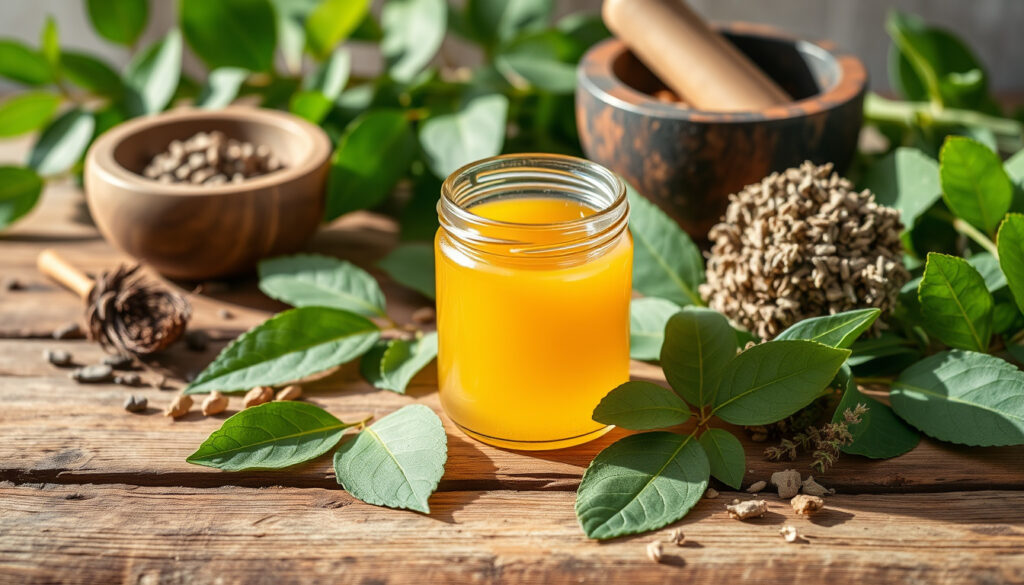
How to Make Kawakawa Balm: Step-by-Step Recipe & Tips
There’s a reason New Zealanders have been foraging kawakawa leaves for generations – the plant’s active compound myristicin is known for its anti-inflammatory and analgesic properties. Making your own kawakawa balm at home is surprisingly straightforward, and this guide walks you through the ingredients, oil choices, beeswax ratios, and even a vegan alternative so you can create a balm that suits your skin and your climate.
Kawakawa balm shelf life: 6–12 months when stored correctly ·
Typical beeswax-to-oil ratio: 1:4 to 1:6 by volume ·
Kawakawa leaf infusion time: 1–4 weeks depending on method ·
Active compound in kawakawa: Myristicin – anti-inflammatory and analgesic ·
Traditional use in Māori medicine: Topical treatment for cuts, eczema, and insect bites
Quick snapshot
- Kawakawa leaves can be infused in carrier oils to extract lipophilic compounds (Aotea Health (natural remedy specialist))
- Beeswax is a traditional thickener for salves and balms (Ascension Kitchen (foraging and recipe blog))
- The balm is used topically for minor skin issues in rongoā Māori (Aotea Health) (Aotea Health (natural remedy specialist))
- Whether kawakawa balm is more effective than standard emollients for eczema (Aotea Health) (School of Natural Skincare (educational platform))
- Optimal infusion duration for maximum extraction of active compounds (Ascension Kitchen) (School of Natural Skincare (educational platform))
- Relative potency of different carrier oils in retaining myristicin (School of Natural Skincare (educational platform))
- Pre-European times: Māori use kawakawa as poultice (Aotea Health)
- Early 2000s: Natural skincare movement popularises balm (Ascension Kitchen)
- 2015–2020: Social media groups share variations (Ascension Kitchen)
- 2024: No clinical trials yet published (Aotea Health)
- Clinical trials on kawakawa balm for eczema could clarify efficacy (Aotea Health)
- More precision in infusion times and oil selection likely as research grows (School of Natural Skincare)
Five key facts that define kawakawa balm at a glance.
| Attribute | Value |
|---|---|
| Botanical name | Piper excelsum |
| Key compound | Myristicin (anti-inflammatory) |
| Traditional use | Rongoā Māori for wounds, eczema, and insect bites |
| Infusion time | Cold: 2–4 weeks; Warm: 4–6 hours |
| Typical beeswax ratio | 15–20% of oil weight |
What do you need to make Kawakawa balm?
Choosing your kawakawa leaves
- Fresh leaves are preferred for highest active compound content (Aotea Health). Dried leaves can be used but may yield a milder balm.
- Look for lush green leaves without yellowing – the plant grows wild along New Zealand’s coastlines and forest edges.
Base oil options
- Coconut oil – antimicrobial and produces a firmer balm; may clog pores for some skin types (Ascension Kitchen).
- Olive oil – rich but requires a longer maceration of 2–4 weeks (Aotea Health).
- Sweet almond oil – non-comedogenic and absorbs quickly, ideal for facial balms (Ascension Kitchen).
Beeswax – types and sourcing
- Beeswax provides the solid structure. Ethically sourced NZ beeswax is available from local beekeepers (Aotea Health).
- For a vegan balm, candelilla wax or soy wax can replace beeswax at roughly half the amount by weight (The Nerdy Farm Wife (DIY skincare resource)).
Optional extras
- Mānuka oil for added antimicrobial properties (Aotea Health).
- Lavender essential oil for scent (Ascension Kitchen).
- Vitamin E oil to extend shelf life (Savvy Homemade (homemade beauty guide)).
Equipment: glass jar with lid, double boiler (or heatproof bowl over a pot), cheesecloth or fine strainer, storage tins or lip balm tubes.
The implication: choosing the right leaf quality and oil determines the potency of your balm – fresh leaves and a longer infusion give a stronger final product.
What oil is best for Kawakawa balm?
Coconut oil – stability and antibacterial properties
- Coconut oil is antimicrobial and yields a firm balm that holds up in warm climates. However, it can be comedogenic for some (Ascension Kitchen).
- It remains solid at room temperature, so your balm will be solid even without extra wax.
Olive oil – traditional and slow infusion
- Olive oil is a classic carrier for herbal infusions. It requires a longer maceration – 2 to 4 weeks – to extract kawakawa’s active compounds fully (Aotea Health).
- The resulting balm feels rich and moisturising on dry skin.
Sweet almond oil – lightweight and fast absorption
- Non-comedogenic and quickly absorbed, sweet almond oil is a top choice for facial balms and eczema-prone skin (Ascension Kitchen).
- It has a lighter texture than olive oil and requires less wax to achieve a spreadable consistency.
Blending oils for desired consistency
- A 50/50 blend of coconut and olive oil gives a balanced consistency that’s firm yet spreadable (Aotea Health).
- Adding a small amount of sweet almond oil can reduce greasiness.
Coconut oil gives the firmest balm but may clog pores for some; olive oil offers richness at the cost of a longer infusion. For a fast, all-purpose balm, a coconut-sweet almond blend wins.
The pattern: no single oil dominates – your choice depends on intended use (body vs. face), climate, and skin sensitivity.
How much beeswax for kawakawa balm?
Standard volume ratios
- For a firm balm suited to tropical climates: 1 part beeswax to 4 parts oil by volume (Ascension Kitchen).
- For a softer moisturising balm: 1:6 ratio (e.g., 1 tbsp beeswax to 6 tbsp oil) (Aotea Health).
Adjusting for climate and desired firmness
- In cooler climates, a 1:5 ratio is often ideal; in warm climates, go higher – up to 1:4.
- Ascension Kitchen recommends testing firmness by chilling a teaspoonful before adjusting the formula (Ascension Kitchen).
Weighing vs. measuring by volume
- Weighing is more accurate: beeswax weight should be 15–20% of total oil weight (The Nerdy Farm Wife).
- Example: for 100 g of infused oil, use 15–20 g of beeswax.
Troubleshooting: too hard / too soft
- If balm crumbles, remelt and add more oil; if too greasy, remelt and add beeswax.
- Separation after setting means the emulsion wasn’t blended thoroughly before pouring.
The catch: you’ll need to test your own batch because beeswax hardness varies by supplier and season. Always do a spoon test before pouring the whole batch.
How to make kawakawa balm without beeswax?
Using candelilla wax or soy wax
- Candelilla wax can replace beeswax at a 1:1 ratio by weight but requires a slightly higher melting temperature (around 75°C) (Humblebee & Me (formulation blog)).
- The Nerdy Farm Wife suggests using roughly half as much candelilla wax as beeswax in substitution (The Nerdy Farm Wife).
Alternative thickeners: shea butter, cocoa butter
- Shea butter adds creaminess and can replace up to 50% of the wax volume (Savvy Homemade).
- Cocoa butter gives a harder set but has a strong chocolate scent.
Coconut oil as a standalone thickener?
- Solid coconut oil alone will produce a very soft balm, best kept refrigerated. It won’t hold up in warm pockets.
Step-by-step vegan recipe
- Infuse 15-20 fresh kawakawa leaves in 280 ml sweet almond oil for 6 hours at 50°C (Ascension Kitchen).
- Strain the oil through cheesecloth.
- Combine 60 mL infused oil with 20 g candelilla wax and 10 g shea butter in a double boiler.
- Heat gently until melted, then pour into tins. Let set for 2–4 hours.
A vegan balm is not only animal-friendly but also avoids beeswax’s potential allergenicity. The trade-off is a slightly softer texture that may require refrigeration in warm weather.
For vegan balm makers, the formula is a direct translation of traditional ratios – swap beeswax for candelilla at half the weight and add a butter for creaminess.
Can Kawakawa balm help with eczema?
Traditional Māori use for skin conditions
- Māori healers (rongoā) have used kawakawa poultices for inflamed skin for centuries (Aotea Health).
- The leaves are applied directly to cuts, eczema patches, and insect bites.
Active compounds: myristicin, pipermethysticine
- Kawakawa leaves contain myristicin, which has reported anti-inflammatory and analgesic properties (Aotea Health).
- Pipermethysticine is another alkaloid thought to contribute to the plant’s soothing effects.
Anecdotal vs. clinical evidence
- No peer-reviewed clinical trials specifically on kawakawa balm for eczema exist; evidence is mostly anecdotal or from traditional knowledge (Aotea Health).
- Users on social media groups often report reduced itching and redness, but results vary.
Comparison with conventional eczema treatments
- Standard emollients and corticosteroid creams are clinically proven, but some people seek natural alternatives to avoid long-term steroid use.
- Kawakawa balm may complement conventional care but should not replace prescribed treatments without consulting a doctor.
The caution: without clinical trials, the balm’s effectiveness for eczema remains unproven. That doesn’t mean it doesn’t work – it means we don’t yet know how well it works compared to standard care.
What we know and what remains unclear
Confirmed facts
- Kawakawa leaves can be infused in carrier oils to extract lipophilic compounds.
- Beeswax is a traditional thickener for salves and balms.
- The balm is used topically for minor skin issues in rongoā Māori.
What’s unclear
- Whether kawakawa balm is more effective than standard emollients for eczema.
- Optimal infusion duration for maximum extraction of active compounds.
- Relative potency of different carrier oils in retaining myristicin.
Voices from the kawakawa community
“This is a beautiful way to connect with the whenua and traditional Rongoā Māori. The process itself is a meditation.” — Rongoā practitioner, Aotea Health
“My mum and I would forage kawakawa after a rain shower, then spend the afternoon infusing oil in the slow oven. It’s become a family ritual.” — Blog author, Ascension Kitchen
“I add rosehip and vitamin E oil to my kawakawa balm – it’s the only thing that calms my daughter’s eczema patches.” — User in Facebook group ‘Making Kawakawa Balm for Skin Issues’
For home skincare makers in New Zealand, the decision between a traditional beeswax kawakawa balm and a vegan version comes down to your ethics and climate. Test the firmness, respect the infusion time, and you’ll have a balm that carries the healing wisdom of rongoā Māori into your everyday life. For those with eczema, the balm offers a gentle alternative – but until clinical trials arrive, it’s wise to use it alongside, not instead of, proven treatments.
Related reading: How to make kawakawa balm · Kawakawa balm recipe
Frequently asked questions
What is kawakawa balm used for?
It is used topically for minor cuts, eczema, insect bites, and dry skin – traditionally in rongoā Māori and now in natural skincare.
Where can I find kawakawa leaves?
Kawakawa (Piper excelsum) grows wild in coastal and lowland forests throughout New Zealand. Always forage responsibly and avoid taking leaves from protected areas.
How long does homemade kawakawa balm last?
Stored in a cool, dark place, it lasts 6–12 months. Adding vitamin E oil can extend shelf life.
Can I use dried kawakawa leaves instead of fresh?
Yes, but dried leaves yield a less potent balm. Fresh leaves are preferred for higher active compound content.
Is kawakawa balm safe for babies?
Generally yes for very small amounts on nappy rash, but test on a small patch first. Consult a paediatrician if unsure.
Does kawakawa balm expire?
Yes. Signs of mould, rancid smell, or separation mean it’s past its prime. Discard if any spoilage appears.
Can I add essential oils to kawakawa balm?
Yes. Lavender, mānuka, or vitamin E oil are common additions. Add after the balm has cooled slightly to preserve volatile compounds.
More related posts
 How Long to Cook Chicken Nibbles in Air Fryer | Time & Temp Guide
 Neutrogena Ultra Sheer Sunscreen: Review, Safety & Use
 Surf Forecast Waihi Beach: Current Conditions & 10-Day Outlook
 Best Remote Control Monster Trucks for Adults: 2024
 Stratosfare Restaurant & Bar Reviews: Queenstown & Rotorua
 Android vs iOS Security 2026: Which Phone Is Safer
 What Time is Sunset in LA? Los Angeles Times Guide
 High Resolution World Map: Free Downloads, PDF, 4K & 3D Maps
