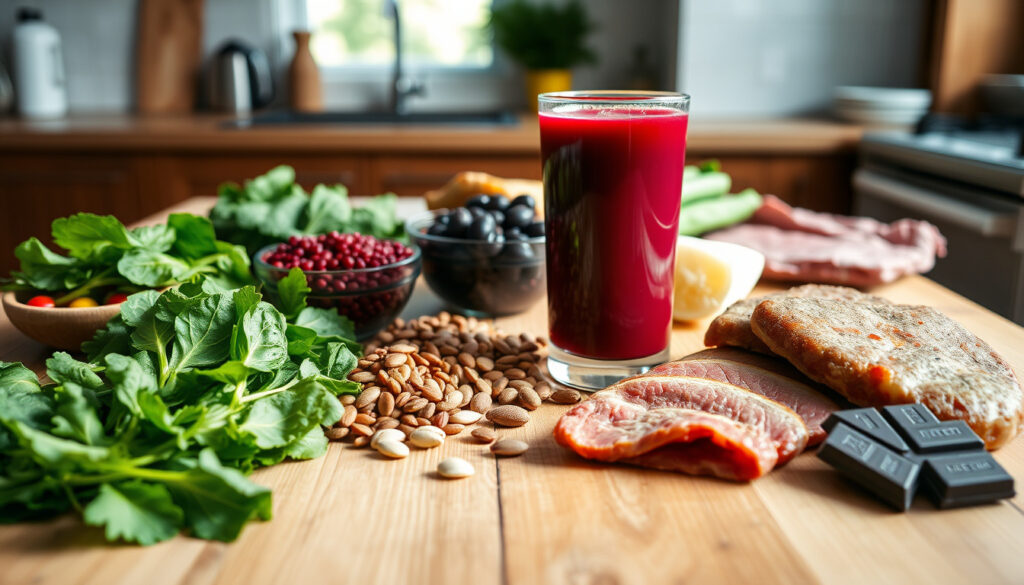
Foods High in Iron: Top Sources, Drinks & Quick Boosts
Getting enough iron from food alone isn’t always straightforward—and the difference between what you eat and what your body actually absorbs can be surprising. Animal sources pack heme iron that your body uses efficiently (15–35% absorption), while plant sources offer non-heme iron that’s harder to capture (2–20% at best). Pairing iron-rich foods with the right companions, though, can shift those numbers considerably. This article maps the highest iron foods by type, explains how to pair for absorption, and identifies the fastest routes to raising your levels whether you’re a meat eater or vegetarian.
Recommended daily iron for adult men: 8 mg ·
Recommended daily iron for adult women: 18 mg ·
Heme iron absorption rate: 15-35% ·
Non-heme iron absorption rate: 2-20%
Quick snapshot
- Heme iron from meats absorbs best, reaching 15–35% (Cleveland Clinic health experts)
- Liver and oysters rank highest per serving among animal sources (WebMD medical reviewers)
- Exact mg per serving varies by cut, cooking method, and brand (HealthLink BC nutritionists)
- Individual absorption varies significantly by gut health and genetics (Harvard Nutrition Source researchers)
- USDA iron food sources chart last updated August 2024 (Dietary Guidelines for Americans officials)
- Pairing heme + non-heme iron with vitamin C boosts overall absorption (Red Cross Blood donation advisors)
The table below compares iron values across top animal and plant sources, drawing from authoritative nutritional databases.
| Food | Iron amount | Source type |
|---|---|---|
| Oysters | 8.26 mg per serving | Heme (seafood) |
| Mussels | 7.08 mg per serving | Heme (seafood) |
| Iron-fortified infant cereal | 7.0 mg per 28g | Non-heme (fortified) |
| Spinach, cooked | 6.4 mg per cup | Non-heme (leafy green) |
| Soybeans, cooked | 6.5 mg per 175 mL | Non-heme (legume) |
| Spinach, raw | 2.71 mg per 100g | Non-heme (leafy green) |
| Tofu, firm | 2.4 mg per 150g | Non-heme (soy) |
| Potato, baked with skin | 1.9 mg per medium | Non-heme (vegetable) |
Which foods have the highest iron?
Not all iron is created equal. Your body distinguishes sharply between heme iron, found in animal tissues, and non-heme iron, which comes from plants and fortified foods. That distinction drives how much you actually absorb—and which foods deserve the top spots on your plate.
Meats and organ meats
Organ meats, particularly liver, deliver the highest concentration of iron per serving among animal foods. Red meats like beef and lamb provide substantial heme iron, as does poultry. According to Cleveland Clinic health experts, heme iron “is better absorbed by the body and is commonly found in liver, meat, poultry and seafood.” The heme form sidesteps the gut’s regulatory mechanisms, allowing absorption rates of 15–35% compared to the much lower uptake from plant sources.
- Liver (beef, chicken, lamb): highest concentration per gram among all iron foods
- Beef and lamb: 2–3 mg per 75g serving, depending on cut
- Poultry: moderate heme iron, roughly 1 mg per 75g serving
Seafood
Shellfish punches above its weight class. Oysters deliver 8.26 mg of iron per serving, the highest figure among verified seafood sources (WebMD medical reviewers). Mussels provide 7.08 mg per serving, and clams offer 2.91 mg per serving. These figures come from serving-size analyses that health authorities recognize as reliable benchmarks for dietary planning.
Shellfish iron content varies by species and growing region—wild-caught and farmed shellfish can show meaningful differences in actual iron content despite appearing equivalent on nutrition labels.
Legumes and beans
For vegetarians and anyone reducing meat intake, legumes offer the most iron-dense plant alternative. Soybeans cooked provide 6.5 mg of iron per 175 mL. Lentils, chickpeas, and kidney beans all register in the 3–5 mg range per cooked cup, making them reliable staples for plant-based iron strategies.
- Soybeans: 6.5 mg per 175 mL
- Lentils: approximately 3.3 mg per cooked cup
- Chickpeas: 2.2 mg per 175 mL
- Tofu (firm): 2.4 mg per 150g
How can I raise my iron fast?
Speed matters when your levels are depleted. The fastest routes to raising iron involve combining heme iron sources with absorption boosters—and knowing which combinations to avoid.
Foods that raise iron quickly
Red meats and poultry deliver heme iron that your body absorbs efficiently without requiring pairing strategies. For quick results, a single serving of beef or liver provides more usable iron than several servings of plant foods combined. Cleveland Clinic health experts note that heme iron sources work immediately because the gut doesn’t regulate them as tightly as non-heme alternatives.
- Beef or lamb: 2–3 mg heme iron per 75g, immediately bioavailable
- Poultry: moderate heme iron for steady raises
- Shellfish: oysters and mussels pack 7–8 mg per serving
Combine with vitamin C
Vitamin C transforms non-heme iron from a slow-release source into something your gut can actually use efficiently. Cleveland Clinic health experts recommend pairing non-heme iron foods with vitamin C sources to increase absorption significantly. Tomatoes, citrus fruits, strawberries, and bell peppers all convert non-heme iron into a form that bypasses the gut’s inhibitory mechanisms.
A spinach salad alone delivers non-heme iron that your body struggles to absorb. Adding a squeeze of lemon juice or a side of bell peppers shifts the absorption rate from roughly 2–5% toward the higher end of the non-heme range. For vegetarians with depleted stores, vitamin C pairing isn’t optional—it’s essential.
What to avoid with iron-rich meals
Certain compounds actively block iron absorption. Calcium from dairy products directly inhibits both heme and non-heme iron uptake (GoodRx medical reviewers). Phytates in whole grains, beans, and nuts, plus tannins in tea and coffee, reduce non-heme absorption further. GoodRx medical reviewers recommend avoiding calcium supplements and high-calcium foods within the same meal as iron sources if you’re trying to maximize absorption.
- Tea and coffee: tannins inhibit non-heme iron; avoid with meals
- Dairy products: calcium blocks iron absorption; separate from iron-rich meals
- High-phytate foods (bran, raw beans): reduce non-heme uptake
Which drink is high in iron?
Beverages rarely match solid foods for iron concentration, but a few stand out—and knowing which ones interfere versus deliver matters for anyone building an iron strategy around drinks.
Prune juice
Prune juice leads the pack among commonly available drinks, delivering roughly 3 mg of iron per cup depending on concentration and brand. Cleveland Clinic health experts list prune juice among non-heme iron fruits, noting that dried fruit juices concentrate iron compared to their fresh counterparts. Red Cross Blood donation advisors also include prune juice in their iron-rich foods guidance for blood donors rebuilding iron stores.
Prune juice won’t replace a steak, but it delivers non-heme iron alongside sorbitol and fiber that support gut health. For vegetarians tracking iron intake across the day, prunes or prune juice count as a meaningful addition—not a supplement.
Other iron-rich drinks
Dried fruit juices beyond prunes—apricot nectar, grape juice from raisins—provide modest iron contributions. Iron-fortified aguas frescas appear in some Latin American markets, though concentrations vary widely without standardization. The key limitation across all drinks: liquid iron isn’t absorbed as efficiently as solid food iron, and bioavailability drops further without vitamin C pairing.
What this means: if you’re relying on drinks to raise iron, prune juice is the strongest option, but it works best alongside solid iron sources rather than as a standalone strategy.
Are eggs enough iron?
Eggs appear in iron discussions frequently, but the numbers tell a more complicated story. Whether eggs can meet daily iron needs depends heavily on how much iron you need and what else you’re eating.
Iron content in eggs
A large egg contains roughly 1 mg of iron, with the yolk carrying the majority of that amount. Cleveland Clinic health experts note that non-heme iron in eggs “is not as well absorbed as heme iron found in meat, fish, and poultry.” That 1 mg sounds modest, but it adds up across multiple eggs—and the protein matrix in eggs makes the iron that is present reasonably bioavailable compared to some plant sources.
- Large egg: approximately 1 mg iron
- Iron from eggs is non-heme, meaning lower absorption rate
- Pairing eggs with vitamin C doesn’t significantly boost non-heme uptake from the egg itself
Daily needs comparison
Adult men need 8 mg of iron daily; adult women need 18 mg. Eating two eggs a day delivers 2 mg of iron from a non-heme source—roughly 12.5% of a man’s daily need and just over 11% of a woman’s. For someone rebuilding depleted iron stores, eggs alone cannot close the gap. For maintenance in a varied diet that includes other iron sources, eggs contribute meaningfully but require backup from legumes, fortified cereals, or animal proteins.
Eggs are a complete protein with iron attached, but the iron is non-heme and poorly absorbed relative to meat. Building a diet around eggs for iron needs is like building a house with only nails—the individual pieces exist but the structure requires other materials too.
What are signs of low iron?
Iron deficiency develops in stages, and catching it early matters. Symptoms often appear subtle at first—easy to dismiss as stress, busy schedules, or not enough sleep—then escalate as iron stores drain further.
Common symptoms
According to the American Society of Hematology, iron deficiency anemia produces fatigue, weakness, pale skin, shortness of breath, chest pain, rapid heartbeat, and cold hands and feet. These symptoms reflect the body’s inability to deliver adequate oxygen through hemoglobin, which depends on iron as its core component.
- Fatigue and weakness that doesn’t resolve with rest
- Pale or sallow skin, particularly noticeable in the inner eyelids, gums, and nail beds
- Shortness of breath during routine activities
- Chest pain, dizziness, or lightheadedness
- Cold hands and feet, even in moderate temperatures
- Brittle nails, hair loss, or pica (craving non-nutritive substances like ice or dirt)
The catch: these symptoms overlap with many other conditions—from thyroid disorders to B12 deficiency to simple overwork. The only way to confirm iron deficiency is through blood testing, not symptom self-assessment alone.
How to build iron-rich meals
Practical steps for constructing meals that maximize iron absorption, whether you eat meat or follow a plant-based diet.
- Choose one heme iron source per meal — beef, poultry, shellfish, or liver delivers 2–8 mg of highly absorbable iron. Even a modest 75g serving of beef provides immediately bioavailable iron that plant sources can’t match gram-for-gram.
- Add a non-heme iron source as a side — lentils, beans, spinach, or fortified cereal extends the iron base. A cup of cooked lentils adds roughly 3 mg to any meal without requiring animal products.
- Pair with vitamin C at the same meal — citrus, tomatoes, bell peppers, strawberries, or a squeeze of lemon transforms non-heme absorption. Harvard Nutrition Source researchers note that vitamin C counteracts common inhibitors, making this pairing the most important single habit for plant-based iron strategies.
- Separate calcium and tannin sources — avoid tea, coffee, dairy, or calcium supplements within two hours of an iron-rich meal. GoodRx medical reviewers identify these as the primary inhibitors worth timing around rather than eliminating entirely.
- Include a heme + non-heme combination whenever possible — Red Cross Blood donation advisors research shows that eating meat alongside plant iron sources boosts non-heme absorption beyond what either achieves alone. A beef stir-fry with spinach and bell peppers hits all three mechanisms simultaneously.
Upsides
- Heme iron (liver, beef, shellfish) delivers 15–35% absorption vs 2–20% for plant sources
- Vitamin C pairing nearly doubles non-heme uptake within the same meal
- Iron-fortified cereals and breads provide consistent baseline iron in standard Western diets
- Plant sources like lentils, spinach, and tofu are widely available and affordable
Downsides
- Calcium (dairy), tannins (tea, coffee), and phytates (raw grains, beans) actively block absorption
- Eggs provide only 1 mg per egg—insufficient as a primary iron source
- Most drinks provide minimal iron compared to solid foods
- Individual absorption varies significantly by gut health, genetics, and baseline stores
“Heme is better absorbed by the body and is commonly found in liver, meat, poultry and seafood,” says Zumpano, a dietitian at Cleveland Clinic (2024).
— Zumpano, Dietitian, Cleveland Clinic
“Be sure to pair non-heme iron foods with vitamin C to increase the absorption of iron.”
— Zumpano, Dietitian, Cleveland Clinic
“Heme iron is better absorbed by the body than non-heme iron.”
— Harvard T.H. Chan School of Public Health Nutrition Source
For anyone managing iron levels—whether through diet, supplements, or medical supervision—the priority is straightforward: heme sources for speed, plant sources for consistency, and vitamin C pairing as the lever that closes the gap between what you eat and what your body uses. Women with higher daily requirements, endurance athletes, and vegetarians face the steepest climb, but the same principles apply across every group.
Related reading: Basil Pesto Recipe · Best Cheese Scones Recipe
en.wikipedia.org, bigbangkpop.fandom.com, open.spotify.com, youtube.com, mitohealth.com
Liver and oysters lead iron sources and tips, yet everyday beans and prune juice offer accessible ways to boost iron levels quickly and effectively.
Frequently asked questions
What are iron-rich foods for anemia?
For anemia recovery, prioritize heme iron sources like liver, beef, and shellfish alongside non-heme sources like lentils and spinach. Pair non-heme foods with vitamin C and avoid calcium/tannin-rich foods with iron meals. A healthcare provider should guide treatment—diet alone may not resolve clinical anemia.
What are iron-rich foods for females?
Adult women need 18 mg of iron daily versus 8 mg for men, making iron-rich foods especially important. Liver, oysters, and red meat deliver the most bioavailable iron per serving. For vegetarian women, stacking lentils, fortified cereals, spinach, and tofu across multiple meals, paired with vitamin C, is the primary strategy for meeting that higher requirement.
What are iron-rich fruits and vegetables?
Non-heme iron fruits include prunes, raisins, apricots, and figs. Vegetables with notable iron include spinach (6.4 mg per cooked cup), kale, broccoli, Brussels sprouts, potatoes with skin, and Jerusalem artichokes. All plant sources are non-heme and require vitamin C pairing for optimal absorption.
What fruits are rich in iron?
Dried fruits lead fresh fruits for iron density. Prunes, raisins, dried apricots, and figs provide the highest iron per serving among fruits. Prune juice delivers approximately 3 mg per cup. Fresh fruits like oranges and strawberries contribute minimal iron directly but provide vitamin C that boosts absorption of non-heme iron from other foods.
What is an iron rich foods chart?
An iron-rich foods chart organizes iron sources by category (animal vs plant, heme vs non-heme) and often includes mg amounts per standard serving. HealthLink BC nutritionists and the Dietary Guidelines for Americans officials both publish quantitative charts with verified values per serving. These charts help meal planners identify the highest-density sources across food categories.
Are there top 10 iron-rich foods vegetarian?
A vegetarian top-10 list typically leads with soybeans (6.5 mg per 175 mL), lentils, spinach, tofu, fortified cereals, chickpeas, potatoes with skin, pumpkin seeds, tahini, and dark chocolate (45%+ cocoa). All are non-heme sources, making vitamin C pairing essential for anyone relying on plant foods as their primary iron source.
What are top 10 iron-rich fruits?
Prunes, dried apricots, raisins, figs, dates, dried peaches, currants, apricot nectar, prune juice, and frozen dried plums rank highest for iron among commonly available fruits. Fresh vitamin C-rich fruits serve the critical function of boosting non-heme absorption from all plant sources rather than contributing significant iron directly.
More related posts
 24/7 Fitness – NC Locations and Membership Guide
 500 AUD to NZD: Current Exchange Rates from Wise, XE & More
 Farmers Market Near Me Today: Dublin & Ireland Guide
 2 Cheap Cars Greenlane: Reviews & Budget Cars Under $10k
 King Single Bed NZ: Dimensions, Age Guide, and Comparison
 Toaster and Kettle Set – Top Expert-Tested Picks for 2025
 Warhammer 40,000: Tabletop Guide, Games & Movie News
 Jean-Claude Van Damme: Seagal Feud, Age, Movies, News
