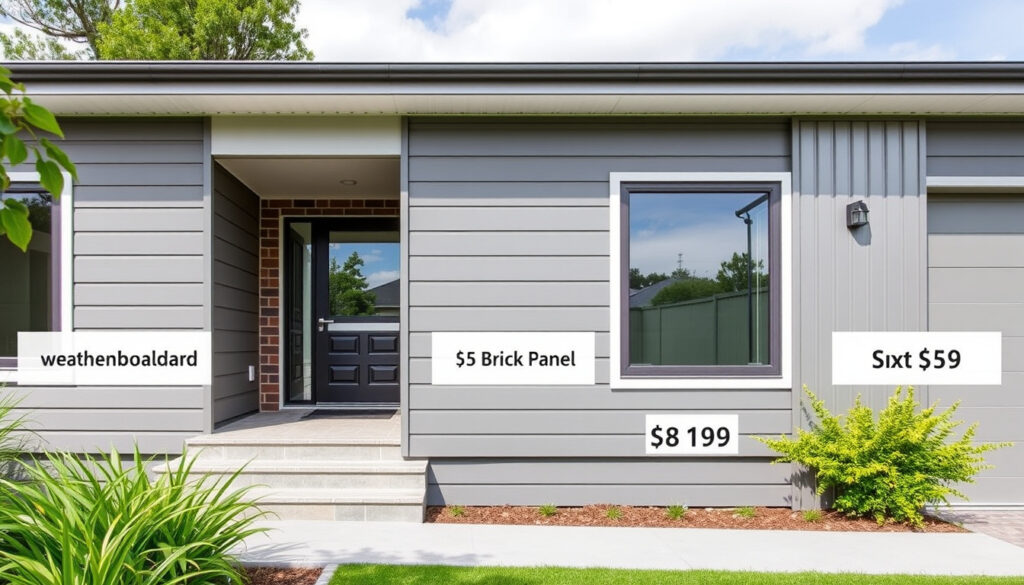
Cheapest Exterior Cladding NZ – 2026 Prices & Top 5 Options
Anyone who’s priced up a home renovation in New Zealand knows the moment when exterior cladding costs stop being abstract and start feeling very real. The good news is that affordable options exist across a wide range of budgets — vinyl sits around $50–$80 per square metre installed, while entry-level fibre cement starts at about $60 per square metre.
Cheapest cladding material (vinyl): $50–$80 per sqm (supply and install) ·
Entry-level fibre cement: $60–$100 per sqm ·
Plywood (DIY-friendly): $30–$60 per sqm (materials only) ·
Overall cladding cost range in NZ: $50–$400 per sqm ·
Most expensive common option (brick): $150–$300 per sqm
Quick snapshot
- Lowest installed cost at $50–$80 per sqm (Superior Renovations)
- Requires minimal maintenance (Superior Renovations)
- Limited colour options (Superior Renovations)
- Lifespan 20–30 years (Superior Renovations)
- Entry-level ~$60 per sqm (Superior Renovations)
- Fire-resistant and low maintenance (Superior Renovations)
- Heavy – needs pro install (Superior Renovations)
- Paint every 5–10 years (Superior Renovations)
- Cheapest material-only option at $30–$60 per sqm (r/diynz community)
- Must be H3 treated and painted (r/diynz community)
- Best for small areas (r/diynz community)
- Shorter lifespan (10–15 years) (r/diynz community)
- Classic look, moderate cost at $80–$150 per sqm (Arcline Architecture)
- High maintenance – repaint every 3–5 years (Arcline Architecture)
- Susceptible to rot if not treated (Arcline Architecture)
- Lifespan 30+ years with care (Arcline Architecture)
| Metric | Value | Source |
|---|---|---|
| Cheapest installed cladding | Vinyl at $50–$80 per sqm | Superior Renovations |
| Cheapest material-only | 9mm H3 plywood at $30–$60 per sqm | r/diynz community |
| Most durable cheap option | Fibre cement (lifespan 50+ years) | BRANZ |
| Average NZ cladding cost | $100–$150 per sqm installed | Builderscrack |
| DIY savings estimate | Up to 40% off installed price | EBOSS |
What is the cheapest exterior cladding in NZ?
Vinyl cladding takes the crown for the lowest installed cost in New Zealand, with professional supply-and-install packages landing at $50–$80 per square metre, according to Superior Renovations. Entry-level fibre cement products start around $60 per square metre, and for homeowners willing to pick up a nail gun, 9mm H3 treated plywood can cost as little as $30–$60 per square metre in materials alone.
The cheapest per-square-metre material (plywood) demands the most ongoing labour. Buyers who value their weekends over their dollars should factor in that trade before choosing.
Vinyl cladding: pros, costs, and installation
- Supply-and-install ranges from $50–$80 per sqm (Superior Renovations).
- Low maintenance — no painting or staining required.
- Can chip in severe hail and colours may fade over 10–15 years (BRANZ).
- Lifespan of 20–30 years with proper installation.
Vinyl is light, easy for builders to install, and doesn’t need specialist trades. The catch is that colour options are limited, and once it’s up, you’re committed to that palette. As EBOSS notes, some claddings require recoating every couple of years — vinyl sidesteps that entirely, which keeps long-term costs low.
The implication: the upfront price tells only half the story. Total cost over 20 years depends more on how often you need to repaint, repair, or replace.
Fibre cement: entry-level vs premium
- Entry-level products start at $60–$100 per sqm installed (Superior Renovations).
- Premium lines such as Linea or Oblique run $320–$350 per sqm (Arcline Architecture).
- Fire-resistant, durable, and resistant to rot.
- Heavy material — requires professional installation.
Fibre cement sits in a sweet spot: entry-level pricing near vinyl territory but with a lifespan that can exceed 50 years. The trade-off is weight — you won’t want to DIY an entire house with it. Builderscrack advises that installation costs vary by region, so getting multiple quotes matters.
The implication: fibre cement is the value pick for owners who plan to stay in the house for more than a decade. The upfront saving versus timber weatherboard — which runs $80–$150 per sqm according to Arcline Architecture — compounds over time through lower maintenance.
Plywood as a budget DIY option
- 9mm H3 treated non-structural plywood costs $30–$60 per sqm materials-only (r/diynz community).
- Must be treated to H3 standard and fully painted on all edges.
- Suitable for small structures: sheds, garages, minor additions.
- Lifespan of 10–15 years before requiring replacement.
For a small shed or garage, plywood is the clear budget winner. A Reddit user from r/diynz recommended 9mm H3 treated non-structural plywood specifically for small areas where cost matters more than longevity. The catch: if you don’t seal every edge and face, moisture wicks in and the panel delaminates within a few seasons.
Do not use interior-grade plywood, MDF, or untreated timber on exterior walls. These materials fail NZ weathertightness requirements and can lead to thousands in remediation.
What cladding to avoid?
Not every low-cost material is a bargain. Some cladding choices create moisture problems, fail to meet the New Zealand Building Code, or degrade so fast that the per-square-metre saving vanishes within a few years.
Cladding materials with known moisture issues
- Untreated timber cladding in high-moisture zones rots within 5–8 years (BRANZ).
- Non-exterior-grade plywood — standard structural plywood not rated H3 or above — delaminates when exposed to weather.
- MDF has no place on exterior walls; it swells and crumbles with the first rain.
Products that don’t meet NZ building standards
- Some low-cost imported cladding products lack the weathertightness testing required by the NZBC (BRANZ).
- Always check for a CodeMark or BRANZ Appraisal before buying.
- Avoid materials sold without clear NZ-specific installation instructions.
Overly cheap materials from unverified suppliers
- Social marketplace cladding deals often skip treatment specs and provenance.
- If the price is 40% below the market average — around $30 per sqm installed — there’s likely a compliance shortcut involved.
The pattern is clear: the materials that fail share one trait — they weren’t designed for New Zealand’s UV intensity, driving rain, or temperature swings. As EBOSS frames it, location matters because cladding should be suitable for specific New Zealand climates.
What is a cheap alternative to cladding?
If traditional weatherboard or brick stretches the budget too far, several alternative systems offer lower cost paths without looking like a compromise.
Weatherboard alternatives: composite, metal, and fibre cement
- Composite cladding sits at a mid-range price point with lower maintenance than timber.
- Metal cladding such as Colorsteel standard profiles runs $200–$230 per sqm installed (Arcline Architecture).
- Fibre cement weatherboards (Linea, Oblique) provide a timber look at a competitive price in the premium band.
Rendering and plaster systems
- Rendering over existing surfaces can be cheaper than full cladding replacement — typical costs range $80–$150 per sqm depending on substrate.
- Monolithic cladding systems (acrylic render over insulation) offer a modern look with good thermal performance.
- Requires experienced applicators to avoid cracking and moisture ingress.
Using brick veneer as a durable but costlier option
- Standard brick veneer runs $230–$300 per sqm installed (Arcline Architecture).
- Brick bagged and painted costs around $320 per sqm.
- Extremely durable with minimal maintenance — a true lifetime material.
The trade-off: rendering and composite materials sit at a moderate price point but require skilled application. Metal is durable but can dent and shows every imperfection. As EBOSS notes, some claddings require a specialist trade while others can be installed by a builder — that skill gap directly affects the final price.
How much do different cladding materials cost?
Six common options, one clear pattern: the upfront price range is wider than most homeowners expect, and the cheapest per square metre is rarely the cheapest over 20 years.
| Cladding material | Supply & install (per sqm) | Maintenance frequency | Typical lifespan | Source |
|---|---|---|---|---|
| Vinyl | $50–$80 | None | 20–30 years | Superior Renovations |
| Fibre cement (entry-level) | $60–$100 | Paint every 5–10 years | 50+ years | Superior Renovations |
| Plywood (materials only) | $30–$60 | Annual paint check | 10–15 years | r/diynz |
| Timber weatherboard | $80–$150 | Repaint every 3–5 years | 30+ years | Arcline Architecture |
| Metal (Colorsteel) | $200–$230 | Minimal | 40+ years | Arcline Architecture |
| Brick veneer | $150–$300 | None | 100+ years | Arcline Architecture |
What this means: vinyl and entry-level fibre cement occupy the true budget band at $50–$100 per sqm installed. Everything else sits above $80 per sqm, and premium materials climb past $300 per sqm. Arcline Architecture confirms that the main affordability band for NZ wall cladding clusters between about $200 and $350 per sqm for mid-range options — but the cheapest options live well below that.
What are the pros and cons of cheap cladding?
Upsides
- Vinyl: lowest installed cost, zero painting, good for coastal areas (Superior Renovations)
- Fibre cement: fire-resistant, durable, paint holds well for years (BRANZ)
- Plywood: genuinely cheap for small DIY projects, natural look (r/diynz)
Downsides
- Vinyl: can chip in hail, colour fades over 10–15 years (BRANZ)
- Fibre cement: heavy, brittle if overdrilled, needs pro installation
- Plywood: short lifespan, needs annual paint checks, prone to delamination if not sealed (r/diynz)
“Vinyl and entry-level fibre cement remain the cheapest exterior cladding options in New Zealand for 2026 — but homeowners should compare total cost over 20 years, not just the invoice on installation day.”
— Superior Renovations
“For a small area like a sleepout or garage wall, 9mm H3 treated non-structural plywood is hard to beat on price. Just don’t expect it to last longer than a decade without some upkeep.”
— r/diynz community
For New Zealand homeowners comparing their options, the choice comes down to a simple trade: minimum upfront cost (vinyl or DIY plywood) versus maximum value over two decades (fibre cement). Vinyl suits rental properties and short-term holds. Fibre cement fits owner-occupiers who want fire safety and low maintenance. Plywood works for sheds and small structures where budget is the only priority.
hipages.com.au, archipro.com.au, jameshardie.com.au, archiproamerica.com
Frequently asked questions
Is vinyl cladding good for New Zealand’s climate?
Yes, in most regions. Vinyl performs well in coastal areas because it doesn’t rot or corrode. In alpine zones with heavy hail, it can chip. BRANZ rates it acceptable for all but the most extreme weather zones.
Can I paint fibre cement cladding any colour?
Yes. Fibre cement accepts water-based acrylic paints well. Factory-precoated options come in limited palettes, but site-painting opens full colour choice. Recoat every 5–10 years depending on UV exposure (EBOSS).
How long does it take to install cheap cladding?
Vinyl cladding installs fastest — a standard 100 m² house takes 3–5 days for a professional crew. Fibre cement takes 5–8 days. DIY plywood depends entirely on the owner’s pace, but expect at least double the professional timeline.
Do I need building consent to replace cladding?
Generally, yes. Replacing more than 10% of exterior cladding triggers a building consent under the NZ Building Code. Always check with your local council before starting. BRANZ provides guidance on when consent is required.
What is the cheapest cladding for a rental property?
Vinyl is the cheapest installed option at $50–$80 per sqm and requires almost no maintenance — ideal for rental properties where ongoing upkeep eats into returns. Entry-level fibre cement is a close second with better durability.
Does cheap cladding reduce home resale value?
It can, if the material looks dated or shows wear. Vinyl and well-painted fibre cement are generally acceptable to buyers. Cheap-looking plywood or faded low-end materials may reduce offers. Builderscrack advises balancing installation cost against ongoing savings and resale impact.
Are there any government rebates for energy-efficient cladding?
Not directly for cladding alone. The Warmer Kiwi Homes programme subsidises insulation and heating, not exterior cladding. Some insulation-backed cladding systems (EIFS) may qualify under broader retrofit programmes — check with the Energy Efficiency and Conservation Authority (EECA).
How do I find a reliable installer for budget cladding?
Get three written quotes, ask for references from recent cladding jobs, and verify the installer holds a current Licensed Building Practitioner (LBP) registration for cladding work. Builderscrack offers a directory of vetted trades in New Zealand.
For New Zealand homeowners weighing their options, the choice between vinyl, fibre cement, and plywood comes down to how long you plan to stay in the house and how much maintenance you’re willing to trade for a lower upfront number. The cheapest exterior cladding in New Zealand — whether measured by invoice or by cost-in-use — rewards the buyer who looks past the first line of the quote and considers the whole picture.
More related posts
 Reserve Bank OCR Announcement 2026: Dates, Predictions & Mortgage
 Oral-B Pro 800 Review: Pressure Sensor & 14-Day Battery
 Car Insurance Quote NZ: Compare Cheapest Providers
 North Shore Police Station: Contact, Location & Service
 New Balance Near Me: Store Locator & Podiatrist Advice
 Word Finder 7 Letters – Best Free Tools for Scrabble and Wordle
 How to Transfer a Domain: Costs, Wait Time, Email Tips
 Meghan and Harry Latest: What’s Happening Now? (2025 News)
