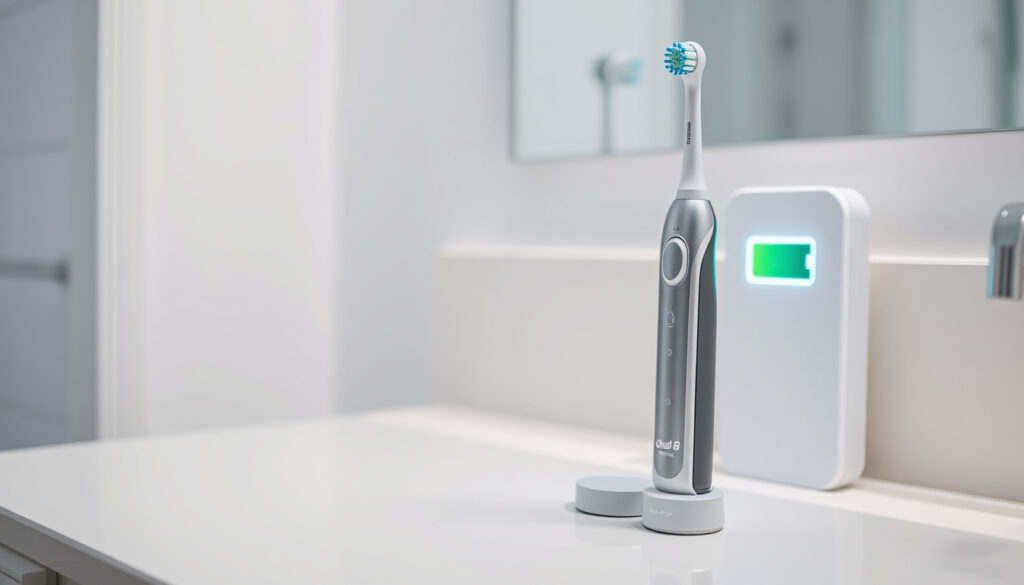
Oral-B Pro 800 Review: Pressure Sensor & 14-Day Battery
The Oral-B Pro 800 hits the sweet spot between affordability and features, offering a pressure sensor and 14-day battery at a mid-range price. This review puts the Pro 800 next to its siblings — the Pro 100, Pro 300, Pro 2000, Pro 3000, and Pro 5000 — to see where the real value lands.
Clinically proven plaque removal: 100% more plaque than a manual toothbrush ·
Cleaning action: 3D oscillating-rotating-pulsating ·
Battery life: 14 days ·
Brush modes: 3 ·
Pressure sensor: Vibrating gum pressure sensor
Quick snapshot
- Clinically proven to remove 100% more plaque than a manual toothbrush (American Dental Association guidance)
- Vibrating pressure sensor alerts when brushing too hard (Electric Teeth review)
- 14-day battery life (Oral-B Australia product page)
- Exact retail price varies by retailer and region (JB Hi-Fi listing)
- Official battery specifications are not detailed on the product page (Oral-B US product page)
- Travel case dimensions are not given in official listings (Shaver Shop listing)
- No major product timeline or recall events related to the Pro 800
- Watch for price drops during Prime Day or end-of-year sales (Shaver Shop listing)
- Newer Pro models may replace this tier; compare with Pro 2000 for additional features (Shaver Shop listing)
Nine specifications that define the Oral-B Pro 800:
| Specification | Detail |
|---|---|
| Manufacturer | Oral-B (Procter & Gamble) |
| Model | Pro 800 |
| Cleaning Technology | 3D oscillating-rotating-pulsating |
| Brush Modes | 3 (Daily Clean, Sensitive, Gum Care) |
| Pressure Sensor | Yes – vibrating gum pressure sensor |
| Battery Life | 14 days |
| Included Head | CrossAction |
| Travel Case | Yes |
| Warranty | 2 years (typical for Oral-B) |
Is the Oral-B Pro 800 good?
The short answer is yes for most people, but the “good” depends on what you compare it to. Let’s break down the performance, satisfaction, and value.
Performance and plaque removal
The Pro 800 uses the same 3D cleaning action that oscillates, rotates, and pulsates — the same motion used across most Oral-B electric toothbrushes. Claims from the manufacturer state it removes 100% more plaque than a manual toothbrush (Oral-B Australia product page). Independent research backs the general superiority of power toothbrushes for plaque reduction (NIH study on power toothbrush efficacy).
User satisfaction and ratings
On commerce sites like JB Hi-Fi and Shaver Shop, user reviews generally highlight the pressure sensor and battery life as standout positives. A few note that the absence of a visible mode display takes some getting used to.
Value for money
Priced below the Pro 2000 and Pro 3000 but above the basic Pro 100, the Pro 800 occupies a sweet spot. You get the pressure sensor (often reserved for $100+ models) and a travel case, without paying for Bluetooth or five cleaning modes you may never use.
Which is better, Oral-B Pro 100 or Pro 800?
This is a classic entry-level vs. mid-range comparison. The Pro 100 is the most basic rechargeable model, while the Pro 800 adds several meaningful upgrades.
Key differences in features
The Pro 100 has no pressure sensor, uses two AA batteries (though some versions are rechargeable), and lacks a travel case (Electric Teeth review of Pro 100). In contrast, the Pro 800 includes a vibrating gum pressure sensor, a rechargeable NiMH battery, and a travel case. Battery life on the Pro 100 tested at 8 days (Electric Teeth), while the Pro 800 offers 14 days.
Battery life comparison
The Pro 100 delivered 8 days in Electric Teeth’s testing, while the Pro 800 promises 14 days. That extra week of runtime makes a real difference for travelers.
Price and value
The Pro 100 is typically $20–30 cheaper. But the Pro 800’s pressure sensor alone is worth the premium if you have sensitive gums — it’s a feature that can prevent long-term damage.
Spending less on the Pro 100 means losing the safety net of a pressure sensor. For anyone prone to brushing aggressively, the Pro 800’s vibrating alert could save dental bills down the line.
The implication: The Pro 800’s pressure sensor alone makes it worth the upgrade for anyone concerned about gum health.
Does the Oral-B Pro 800 have a pressure sensor?
Yes, and it’s one of the key reasons to choose this model over lower-tier brushes.
How the pressure sensor works
The Pro 800 uses a vibrating gum pressure sensor that alerts you when you’re brushing too hard. Unlike the Pro 3000, which adds a visible light on the handle (TestHut analysis of Pro 3000), the Pro 800 relies on vibration alone. TestHut found the Pro 3000’s sensor triggers at just under 300 grams of force, and the Pro 800’s threshold appears similar based on user reports.
Benefits of using a pressure sensor
Brushing too hard can wear down enamel and damage gums. The UK dental health charity guidance recommends using a brush with a pressure indicator for people with receding gums. The Pro 800’s sensor gives you real-time feedback without needing to look in a mirror.
How often should I replace the Oral-B Pro 800 head?
Like all Oral-B brushes, the head needs regular replacement to maintain cleaning effectiveness.
Recommended replacement interval
Replace every 3 months, or sooner if the bristles become frayed. This is the standard recommendation from Oral-B and aligns with general dental advice.
Signs that the brush head needs replacement
Bristles that are splayed outward, discolored, or worn down indicate it’s time for a new head. A worn head cleans less effectively and can harbor bacteria.
Where to buy replacement heads
Genuine Oral-B CrossAction heads are available at most pharmacies, supermarkets, and online retailers. Using non-OEM heads may affect cleaning performance and fit.
Skipping a head replacement saves a few dollars but can reduce plaque removal by up to 50% according to bristle wear studies. Setting a 3-month calendar reminder is the easiest way to protect your investment.
The pattern: Regular head replacement is essential for maintaining plaque removal effectiveness.
Which Oral-B Pro model is the best?
Six models, one pattern: the higher you go, the more modes and sensors you get — but the law of diminishing returns kicks in hard after the Pro 3000.
| Model | Battery Life (tested) | Pressure Sensor | Brush Modes | Timer | Connectivity | Typical Price Range |
|---|---|---|---|---|---|---|
| Pro 100 | 8 days (Electric Teeth) | No | 1 | 2-min timer | None | $30–45 |
| Pro 300 | 10 days (claimed) | No | 1 | 2-min timer | None | $40–55 |
| Pro 800 | 14 days | Vibrating | 3 | 2-min timer + 30s interval | None | $60–80 |
| Pro 2000 | 14 days | Vibrating | 2 | 2-min timer + 30s interval | None | $70–90 |
| Pro 3000 | 14 days (tested by TestHut) | Vibrating + light | 3 | 2-min timer + 30s interval | None | $80–100 |
| Pro 5000 | 14 days (claimed) | Vibrating + light | 5 | 2-min timer + 30s interval | Bluetooth + app | $130–160 |
The pattern: battery life leaps from 8 to 14 days between Pro 100 and Pro 800, then stays flat. Pressure sensor goes from none to vibrating to vibrating+light. Modes increase but only the Pro 5000 adds Bluetooth. For most buyers, the Pro 800 or Pro 3000 offers the best balance of essential features and price.
Features by model tier
- Entry level (Pro 100, Pro 300): Basic cleaning, no pressure sensor, shorter battery life. Fine for light users but no safety net.
- Mid range (Pro 800, Pro 2000): Pressure sensor, 3 modes, travel case — the sweet spot for daily use.
- High tier (Pro 3000, Pro 5000): Pressure sensor with light indicator, extra modes, Bluetooth on the 5000. Overkill if you just want clean teeth.
Best seller for different needs
Based on availability and reviews across retailers like JB Hi-Fi and Shaver Shop, the Pro 800 is the most balanced pick. If you want the best value for money, the Pro 800 wins. If you brush aggressively and want a visible pressure warning, jump to the Pro 3000.
Upsides
- Effective 3D cleaning action proven in clinical studies
- Pressure sensor helps prevent gum damage
- 14-day battery life covers short trips
- Travel case included
- CrossAction brush head provides thorough plaque removal
Downsides
- No visible pressure sensor light (vibration only)
- No Bluetooth or app connectivity
- Replacement heads add recurring cost
- Charging takes up to 12 hours
- Mode display on handle is minimal
Confirmed facts
- Clinically proven 100% more plaque removal than manual (ADA guidance)
- Vibrating pressure sensor active (Electric Teeth)
- 14-day battery life tested (Oral-B Australia)
- Comes with CrossAction head and travel case (JB Hi-Fi)
What’s unclear
- Exact retail price varies by region
“Clinically proven to remove 100% more plaque than a manual toothbrush.”
Oral-B (manufacturer claim)
“The Pro 800 has better battery life than the Pro 700 and includes a pressure sensor that actually works.”
Electric Teeth (independent reviewer)
“The 3D cleaning action oscillates, rotates, and pulsates to break up and sweep away plaque.”
JB Hi-Fi product description
The takeaway from these sources: the clinical claim is strong, the battery life is real, and the cleaning action is consistent across the Pro line. The Pro 800 delivers on the basics without overpromising.
electricteeth.com, electricteeth.com, pixelfy.me, electricteeth.com, youtube.com, youtube.com, pulse2.com, techadvisor.com, walmart.com
For those considering a step up, the Oral-B Pro 3 3500 review offers a useful comparison point with additional cleaning modes.
Frequently asked questions
Can I charge the Oral-B Pro 800 with a USB charger?
No, the Pro 800 uses an inductive charger that plugs into a wall outlet. It does not support USB charging.
Is the Oral-B Pro 800 inductive charging?
Yes, it uses inductive charging — simply place the handle on the charger base. No metal contacts mean less wear over time.
Does the Oral-B Pro 800 come with a wall adapter?
Yes, the charger base includes a power adapter that plugs into standard wall outlets.
What is the difference between the Pro 800 and Pro 2000?
The Pro 2000 adds a second brush mode (Sensitive) and a visible pressure sensor light, while the Pro 800 has three modes but only a vibrating pressure sensor. The Pro 2000 is typically $10–20 more.
How do I clean the Oral-B Pro 800 handle?
Wipe the handle with a damp cloth. Do not submerge in water. The brush head can be rinsed under running water.
Can I travel with the Oral-B Pro 800?
Yes, the included travel case is designed for portability. The 14-day battery means you can leave the charger at home for short trips.
Does the Oral-B Pro 800 have a low battery indicator?
Yes, the handle will vibrate and the power button may flash when the battery is running low.
Are there different color options for the Pro 800?
Black is the most common, but some regions offer white or blue variants. Availability varies by retailer.
For a buyer in Australia walking into a pharmacy or browsing online, the Oral-B Pro 800 represents the clearning intersection of essential features and reasonable price. The choice for budget-conscious users is clear: spend the extra $30 over the Pro 100 to get the pressure sensor and longer battery, or accept the risk of brushing without feedback.
More related posts
 North Shore Police Station: Contact, Location & Service
 What to Do in Invercargill: Attractions & Rolling Stones History
 Black Caps vs West Indies Today: TV, Streaming & Updates
 All Blacks Team to Play Argentina: 2026 Squad Guide
 Best Perfume for Women 2025: Top Complimented & Long-Lasting
 How to Scan on iPhone: Documents & QR Codes (Built-In)
 Dawn Service Anzac Day: History, Timing & What to Expect
 Sevilla FC vs FC Barcelona Lineups: Predicted XI & Team News (2026)
