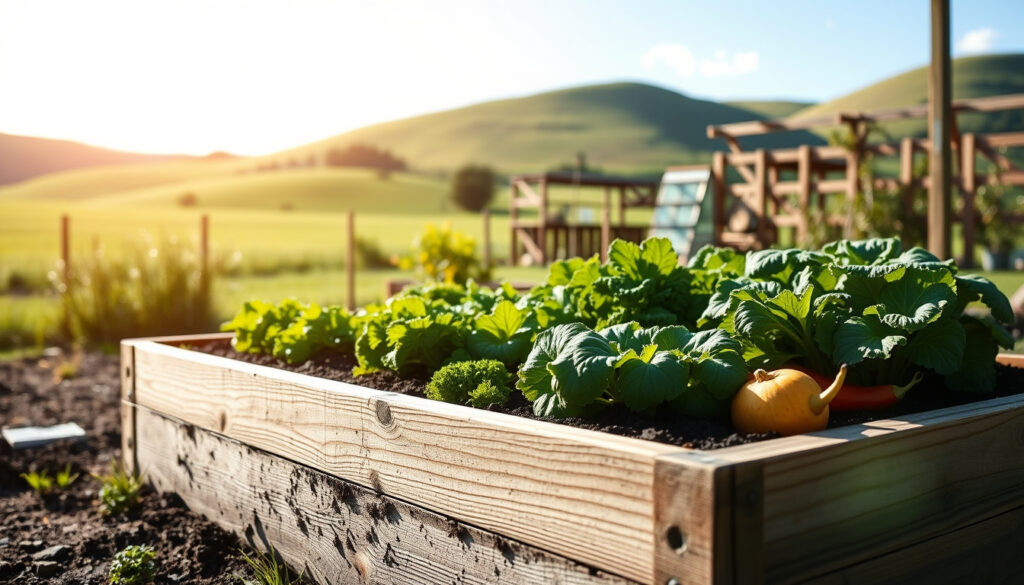
Raised Garden Beds NZ: Pros, Cons, Depth, and Where to Buy
Nothing beats the satisfaction of stepping into your garden to pick a ripe tomato. But if your soil is heavy clay or your back complains after ten minutes of weeding, a raised garden bed could change how you grow.
Raised bed height range: 30–60 cm typical in NZ ·
Common materials: Macrocarpa, treated pine, corrugated metal ·
NZ retail price range: NZD 50–600 ·
Popular NZ retailers: Bunnings, Mitre 10, Kmart, MacDirect ·
Warm-up advantage: Soil warms 2–4 weeks earlier than in-ground
Quick snapshot
- Warmer soil, earlier planting (First National (real estate & lifestyle guidance))
- Better drainage, less compact (Plankville (NZ gardening supply))
- Higher cost, more watering (First National) (First National (real estate & lifestyle guidance))
- Shallow: 20-30 cm for lettuce (Gardenary (raised-bed education))
- Medium: 30-45 cm for tomatoes (First National) (Gardenary (raised-bed education))
- Deep: 45-60 cm for root crops (First National) (Gardenary (raised-bed education))
- Weed barrier: cardboard or fabric (First National)
- Drainage layer: gravel or coarse sand (Plankville)
- Avoid: non-biodegradable materials (Plankville)
- Bunnings, Mitre 10, Kmart (Mitre 10 New Zealand (DIY retailer))
- Premium: MacDirect, Birdie’s (Plankville) (Mitre 10 New Zealand (DIY retailer))
- DIY options cost less (Plankville) (Mitre 10 New Zealand (DIY retailer))
Consider these key statistics when planning your raised bed.
| Fact | Value |
|---|---|
| Ideal raised bed height | 30–45 cm for most vegetables (First National) |
| Most popular material in NZ | Macrocarpa timber (Plankville) |
| Average price for 1.2m × 0.6m bed | NZD 80–200 (Plankville) |
| Soil warming benefit | Soil temperature increases 2–5°C compared to ground (First National) |
| Minimum depth for shallow-rooted crops | 20 cm (Gardenary) |
| Typical bed width for easy reach | 1.2 m (Plankville) |
What are the pros and cons of raised garden beds?
Three benefits, two trade-offs — here is how raised beds compare to growing straight in the ground.
| Factor | Raised bed | In-ground |
|---|---|---|
| Soil warmth | Warmer 2–5°C, earlier planting (First National) | Cooler, later start |
| Drainage & compaction | Excellent drainage, no foot traffic (Plankville) | Prone to compaction, may need amending |
| Watering frequency | Dries out faster (First National) | Retains moisture longer |
| Setup cost & effort | NZD 80–600 + labour (Plankville) | Minimal if existing soil is usable |
Upsides
- Soil warms earlier — extend the growing season by 2–4 weeks (First National)
- Improved drainage and less soil compaction (Plankville)
- Easier weeding and harvesting — less bending (Plankville)
Downsides
- Higher initial cost (materials and soil fill) (Plankville)
- Requires more frequent watering, especially in dry NZ summers (First National)
- Limited root space for deep-rooted crops unless bed is deep enough (First National)
The trade-off: extra warmth and drainage come at a price — both financial and in watering effort. For NZ gardeners who struggle with heavy clay or want a head start on spring, the balance still tips toward raised beds.
How deep should your raised garden bed be?
Getting depth wrong is the most common mistake. Here is what the experts say for different crops.
- 20 cm (8 in) minimum — suitable for lettuce, spinach, strawberries, and other shallow-rooted plants (Gardenary).
- 30–45 cm (12–18 in) ideal — works for tomatoes, peppers, beans, most common vegetables (First National).
- 60 cm (24 in) for deep-rooted crops — carrots, parsnips, potatoes need the extra depth (First National).
Gardenary notes that they see little reason to go over 2 feet unless mobility is a concern (Gardenary). For most NZ home gardeners, 30 cm is the sweet spot — deep enough for 90% of crops without wasting soil.
Double the minimum root depth rule: most plants need at least 30 cm, so aim for 45–60 cm to give roots room to spread. First National recommends a depth close to double the 30 cm minimum (First National).
The takeaway: Depth of 45 cm is ideal for most gardens — it accommodates root crops while keeping soil costs manageable.
What should I put at the bottom of a raised garden bed?
A good base prevents weeds and improves drainage. Here is what NZ sources recommend.
Weed barrier layer
- Landscape fabric — stops weeds while allowing water through (First National).
- Cardboard — biodegradable, cheap, smothers grass (First National).
- Bark mulch — also works as a weed suppressant (First National).
Drainage layer (if needed)
- Coarse gravel or sand at the very bottom if your site drains poorly (Plankville).
What to avoid
- Heavy clay — it compacts and blocks drainage (Plankville).
- Non-biodegradable materials like plastic liner (unless specifically designed for drainage) (Plankville).
The catch: skip the drainage layer if your bed sits on already well-draining soil — it can create a perched water table. A weed barrier is almost always worth it.
Which vegetables should not be grown in a raised bed?
Not everything thrives in a contained box. Avoid these space hogs and deep-rooters.
- Large sprawling plants — pumpkins, corn, and squash need more horizontal room than a standard raised bed provides. Plant them in the ground instead (First National).
- Deep-rooted perennials — asparagus and rhubarb require more than 60 cm of root depth. If you want them in a raised bed, build one that is at least 60 cm deep (First National).
- Fast-spreading herbs — mint and oregano can take over a small bed. Grow them in containers sunk into the soil (Plankville).
Better choices for raised beds: leafy greens, tomatoes, peppers, broccoli, carrots, beans, and berries — they reward the controlled environment.
Where to buy raised garden beds in NZ?
New Zealanders have three routes: buy a ready-made kit, source materials and DIY, or order a premium timber/metal bed online.
Best raised garden beds available in NZ
- Budget kits — Bunnings and Mitre 10 stock timber and metal beds from NZD 50 to 200. Mitre 10 New Zealand shows a practical example: a 1.8 m × 900 mm planter box (Mitre 10 New Zealand).
- Mid-range — Kmart offers simple metal raised beds around NZD 80–150.
- Premium — MacDirect and Birdie’s supply macrocarpa and Corten steel beds that last 10–15 years with proper treatment (Plankville).
How to build a DIY raised garden bed
- Use untreated macrocarpa or H4 treated pine — both are safe for food growing in NZ (Plankville).
- Plank dimensions: at least 200 mm × 50 mm for durability (Plankville).
- Secure corners with galvanised screws or brackets (Plankville).
- Start with a flat, level base — dig down about 50 mm where grass is present (Mitre 10 New Zealand).
- Fill with a mix of 50% topsoil, 30% compost, and 20% organic material (Plankville).
- Leave about 50 mm gap from the top to allow for mulch and watering (Mitre 10 New Zealand).
Cost of raised garden beds in NZ
- DIY build using macrocarpa or treated pine: approximately NZD 80–200 for a 1.2 m × 0.6 m bed (Plankville).
- Ready-made kit: NZD 50–150 from Bunnings/Mitre 10/Kmart.
- Premium metal or timber bed: NZD 200–600 from MacDirect or Birdie’s.
For a typical 1.2 m × 2.4 m bed, the cost gap between a basic kit (NZD 80) and a premium macrocarpa bed (NZD 400) is about NZD 320. Over 10 years, the premium bed lasts 5+ years longer, so the annual cost is actually lower — NZD 40/year vs NZD 16/year for a cheaper kit that might rot after 5 years.
The pattern: Premium beds cost more upfront but deliver better long-term value for serious gardeners.
Confirmed facts
- Raised beds reduce soil compaction (Plankville)
- Macrocarpa beds last 10–15 years in NZ (Plankville)
- Bottom weed barrier helps prevent weeds (First National)
- Most vegetables need at least 30 cm root depth (First National)
What’s unclear
- Exact optimal depth for specific NZ soil types — local clay or loam may shift the ideal by 5–10 cm
- Cost comparison over time vs in-ground after initial investment — depends on how you value labour and imported soil
- Impact of local microclimates on raised bed performance — not extensively studied in NZ context
“A raised bed site should start with a flat and level base.”
— Mitre 10 New Zealand (DIY retailer)
“Most plants need at least 30 cm of soil depth for happy roots.”
— First National (real estate & lifestyle guidance)
“Raised beds can dry out more quickly than traditional gardens.”
— First National
For New Zealand gardeners, the decision is clear: invest in a raised bed with the right depth (at least 30 cm, preferably 45 cm) and durable material (macrocarpa or H4 treated pine), or face the productivity limits of compact, cold soil. The payoff — earlier harvests, less weeding, and easier access — justifies the upfront cost for most home growers.
vegogarden.com, plankville.co.nz, junglestory.co.nz, eartheasy.com, facebook.com, snugnitureonline.com, facebook.com, reddit.com
For those considering similar setups, a guide to raised garden beds in Ireland offers useful comparisons on drainage and soil depth.
Frequently asked questions
How to prevent weeds in raised beds?
Install a weed barrier at the bottom (cardboard or landscape fabric) before adding soil. Mulch the top with bark or straw to suppress weed seeds blown in (First National).
Do raised beds need drainage holes?
If the bed sits on the ground, water can drain naturally through the open bottom. For beds with a solid base (e.g., on concrete), drill 1–2 cm holes every 30 cm. A gravel layer underneath helps (Plankville).
Can I use untreated timber in New Zealand?
Yes, untreated macrocarpa is a popular choice for food beds in NZ. It naturally resists rot and lasts 10–15 years. H4 treated pine is also safe once fully cured — ensure it is labelled safe for garden use (Plankville).
What soil mix is best for raised garden beds?
A common NZ recipe: 50% topsoil, 30% compost, and 20% organic material such as aged manure or leaf mould (Plankville). Adjust based on what grows — add sand for root crops, more compost for leafy greens.
How long do raised garden beds last?
Macrocarpa beds: 10–15 years with proper care. H4 treated pine: 8–12 years. Corrugated metal: 15–20 years if lined against rust. Plastic composite: 5–10 years depending on UV exposure (Plankville).
Should I line the sides of a raised bed?
Lining the sides is optional. It can help retain moisture and protect timber in dry climates, but may reduce airflow to roots. If you use untreated timber, skip the liner to let the wood breathe (Plankville).
What is the best base for a raised bed?
On grass, lay cardboard or landscape fabric directly on the turf, then build your bed on top. On concrete, add a drainage layer of gravel. On bare soil, just a weed barrier is sufficient — the soil underneath will help with drainage (First National).
Related reading
More related posts
 Taking Shape Tower Junction: Plus-Size Store & Brand Values
 Poison Tree Tattoo Meaning and Symbolism Explained
 What Does the Green Dot Mean on Snapchat? (Meaning & Duration)
 Cool Math Games Unblocked – Play Safely at School
 Free Cash on Registration Casino NZ Real Money 2026
 Oral-B Pro 800 Review: Pressure Sensor & 14-Day Battery
 Beers by Bacon Brothers Menu: Craft Beer & Bacon in Christchurch
 Rowan Atkinson Net Worth: Mr. Bean’s $150 Million Fortune
