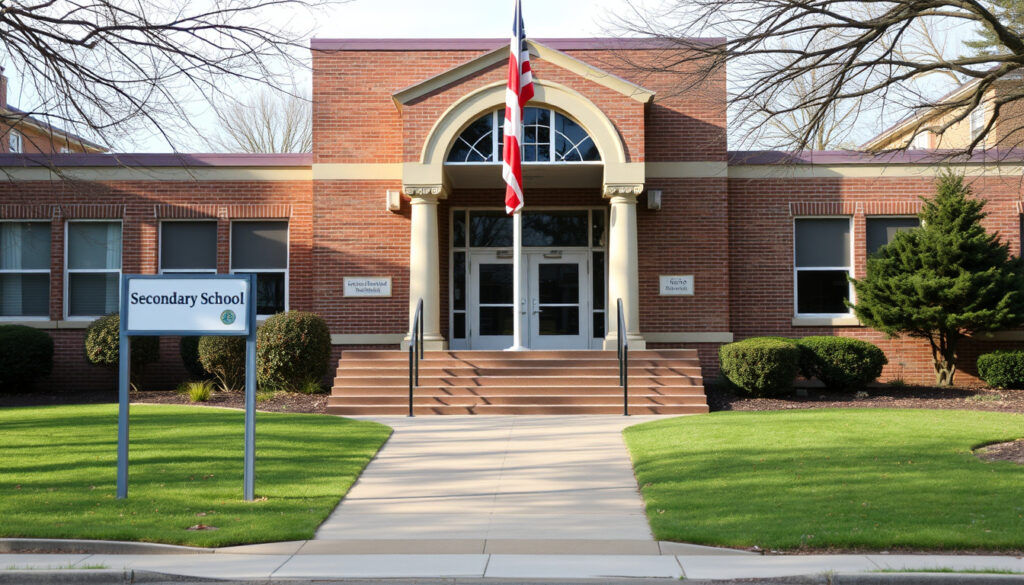
What Is Secondary School? Meaning, Examples, and Differences
Anyone who has tried to explain their school years to someone from another country already knows the confusion that one word can cause. “Secondary school” means something different in Ireland, the UK, and the US, and the differences go beyond simple name changes.
Typical age range: 11–18 years (varies by country) ·
Common names: High school, senior school, post-primary school ·
Compulsory education age: 5–16 in many countries ·
Ireland secondary school duration: 6 years (ages 12–18) ·
US secondary school span: Grades 9–12 (ages 14–18)
Quick snapshot
- Ages 12–18 (Schooldays.ie guide to Irish education)
- Junior Cycle (3 years) + Senior Cycle (3 years) (Guardianship Ireland advisory service)
- Also called post-primary school (same source)
- Ages 11–16 (or 18 with sixth form) (Wikipedia general reference)
- Includes comprehensive, grammar, academy schools (same source)
- GCSEs at age 16, A-Levels at 18 (same source)
- Ages 14–18 (grades 9–12) (Wikipedia general reference)
- Called high school (same source)
- Middle school (grades 6–8) is often separate (same source)
- Ages 12–18 (grades 8–12) (Wikipedia general reference)
- Provincial variations (same source)
- Often called high school or secondary school (same source)
Five key facts that frame the discussion, drawn from official and education advisory sources:
| Label | Value |
|---|---|
| Typical starting age | 11–12 years |
| Typical ending age | 16–18 years |
| Compulsory schooling ends | Age 16 in most OECD countries |
| Common alternative names | High school, post-primary, senior school |
| Primary to secondary transition | Usually after 6–7 years of primary education |
What is the meaning of secondary school?
Definition across education systems
Secondary school is the institution that provides secondary education after primary school, typically for students aged 11 to 18. According to Wikipedia general reference, secondary education is the stage following primary and preceding tertiary education. In many countries, it is split into lower secondary (ages 11–14) and upper secondary (ages 14–18).
The term “secondary school” is the standard label in Ireland, the UK, and many Commonwealth countries. In the United States, the equivalent institution is called high school, though “secondary school” is used as an umbrella term in policy documents.
Key characteristics of secondary education
- It is compulsory until a minimum age, often 16, as noted by Schooldays.ie guide to Irish education for Ireland.
- It bridges primary education with further study or work.
- It often includes a general curriculum in the early years and specialization later.
A parent moving from Ireland to the US won’t find a “secondary school” sign – they’ll need to look for “high school”. The core purpose is the same, but the packaging differs, and that matters for school registration and year placement.
What is an example of a secondary school?
Examples from different countries
Examples of secondary schools vary by country. In Ireland, the system includes voluntary secondary schools (often faith-based), community schools, comprehensive schools, and vocational schools, according to Guardianship Ireland advisory service. In the UK, the picture is equally diverse: comprehensive schools (non-selective), grammar schools (selective), and academies (state-funded but independent) are all common, as described by Wikipedia general reference.
In the US, examples include public high schools (district-based), private high schools, and magnet schools (with specialized curricula). The Canadian landscape includes publicly funded regional secondary schools, with some provinces also offering separate school systems.
Types of secondary schools in Ireland
- Voluntary secondary schools: mostly denominational, owned by religious bodies but state-funded.
- Vocational schools: run by Education and Training Boards, focused on practical skills.
- Community and comprehensive schools: combine academic and vocational streams.
The pattern: Irish parents choose among these types but all follow the national curriculum set by the Department of Education, as noted by Mackdonald Counselling Service guide to Irish schools.
The implication: the diversity of school types gives Irish families real choice, but it also adds complexity for newcomers who must navigate a system with no direct US parallel.
What is a secondary school in Ireland?
Structure of the Irish secondary education system
In Ireland, secondary school is formally called post-primary school. It is divided into two cycles: the Junior Cycle (three years: First, Second, and Third Year) and the Senior Cycle (three years: Fourth Year – often Transition Year –, Fifth Year, and Sixth Year), according to Guardianship Ireland advisory service. Transition Year is optional but widely taken; it is the first year of the Senior Cycle and usually chosen by students aged 15–16 (Mackdonald Counselling Service guide to Irish schools). The Senior Cycle culminates in the Leaving Certificate examination.
Age of entry and duration
Children in Ireland typically start secondary school at age 12 or 13, entering First Year. The system lasts six years, so most students graduate around age 18. Education is compulsory from age 6 to 16, or until the student has completed three years of post-primary education (Schooldays.ie guide to Irish education).
Though secondary school runs to age 18, compulsory attendance ends at age 16 or after three years of post-primary – meaning many students can legally leave before the Leaving Certificate. The gap between “school leaving age” and “completion age” is a policy tension in Ireland.
What is the difference between a secondary and a high school?
Terminology variations by country
The short answer: they are the same thing – just different names in different places. “Secondary school” is the term used in Ireland, the UK, and most of the English-speaking world outside North America. “High school” is the standard term in the United States and Canada, as noted by Wikipedia general reference.
Structural differences
The real differences lie in grade structure, not just naming. In the US, high school covers grades 9–12, typically ages 14–18. Middle school (grades 6–8) is separate. In Ireland, secondary school starts at age 12 and includes what the US would call middle school years. In the UK, secondary school begins at age 11 and often includes a sixth form for ages 16–18.
This matters for international transfers: an Irish student moving to the US after completing First Year (age 13) would likely enter 8th or 9th grade, depending on the district’s cutoff dates.
Three systems, one core task: educating adolescents. Here is how they compare:
| Feature | Ireland | UK (England) | US |
|---|---|---|---|
| Common name | Secondary school / Post-primary | Secondary school | High school |
| Starting age | 12–13 | 11 | 14 (grade 9) |
| Duration | 6 years (to 18) | 5–7 years (to 16 or 18) | 4 years (to 18) |
| Key examinations | Junior Cycle, Leaving Certificate | GCSEs (16), A-Levels (18) | No national exam; SAT/ACT for college |
| Compulsory to age | 16 | 16 (rising to 18) | 16–18 (varies by state) |
The implication: what “secondary school” looks like on the ground depends heavily on where you stand. The Irish system is the longest (6 years), the US system is the shortest (4 years), and the UK sits in between with optional sixth form. The trade-off: earlier specialization in the UK (GCSE choices) versus a broader Junior Cycle in Ireland.
Is a 12 year old in secondary school?
Typical age of entry by country
It depends on the country and the child’s birth date. In Ireland and the UK, a 12-year-old is almost certainly in secondary school. In Ireland, children start First Year at about age 12 (Guardianship Ireland advisory service). In the UK, Year 7 begins at age 11, so a 12-year-old is in Year 8 or 9.
Exceptions and variations
In the US, a 12-year-old is typically in 6th or 7th grade, which is often middle school, not high school. Some districts consider middle school part of secondary education, but the term “secondary school” in the US frequently refers to high school (grades 9–12). So while a 12-year-old is receiving secondary education, they are not yet in a “secondary school” as commonly understood by American parents.
Age cutoff dates – usually 1 September or 1 October – determine the exact starting year, adding a one-year variance within the same grade.
Clarity: what we know and what remains unclear
Confirmed facts
- In Ireland, secondary school starts at age 12–13 and lasts 6 years (Schooldays.ie guide to Irish education).
- In the US, high school covers grades 9–12 (Wikipedia general reference).
- The term “secondary school” is used globally to describe post-primary education (same source).
- Irish secondary school years: Junior Cycle (First, Second, Third) and Senior Cycle (Fourth/TY, Fifth, Sixth) (Guardianship Ireland advisory service).
What is unclear
- Exact age of entry can vary by a year depending on cutoff dates (e.g., a child born in August may start a year later than a child born in September).
- The boundary between lower secondary and upper secondary is not uniform across countries – some systems merge middle school with lower secondary, others keep them separate.
Quotes from official sources
“Post-primary education, also known as secondary education, is the stage of education that follows primary school. In Ireland, post-primary education is compulsory and is provided by voluntary secondary schools, vocational schools, community schools and comprehensive schools.”
“Secondary education typically takes place after six years of primary education and is followed by higher education, vocational education or employment. In most countries secondary education is compulsory, at least until the age of 16.”
Wikipedia general reference
Understanding secondary school: what it means for families
For a family moving to Ireland from the US, the key takeaway is that a 12-year-old will enter First Year immediately, not a middle school. For a US family returning home from Ireland, a 12-year-old who has completed First Year may need to repeat a year or skip ahead depending on the district’s policies. The choice of school type in Ireland – voluntary, vocational, or community – adds a layer of complexity that doesn’t exist in the public US system. For families navigating school transfers, the most reliable step is to contact the receiving school with the child’s birth date and last completed grade, because “secondary school” alone is not a precise enough description. The catch: even with perfect paperwork, a child’s placement may shift by a full grade based on local cutoff policies, making early outreach essential.
mackdonald.com, atlashighschools.com, greenhearttravel.org, cbpes.com
För en bredare internationell jämförelse kan du se denna globala ålders- och betygsöversikt som täcker fler länders system.
Frequently asked questions
What is post-secondary school?
Post-secondary school refers to any education after secondary school, including college, university, vocational training, and community college. It is not part of compulsory secondary education.
What does secondary school mean in the US?
In the US, “secondary school” is an official term that includes both middle school (grades 6–8) and high school (grades 9–12), though most Americans use “high school” for grades 9–12.
What is the difference between middle school and secondary school?
Middle school (grades 6–8) is a subset of secondary education in the US, while “secondary school” often refers to high school only. In Ireland and the UK, there is no separate middle school; secondary school includes all post-primary years.
How long is secondary school in most countries?
Typically 5–7 years, starting at age 11–13 and ending at 16–18. The most common duration is 6 years (e.g., Ireland, many Australian states).
Is secondary school mandatory?
In most countries, at least some years of secondary education are compulsory. In Ireland, education is compulsory from age 6 to 16, which covers primary and the first three years of post-primary.
What is the Junior Cycle in Irish secondary school?
The Junior Cycle is the first three years of secondary school in Ireland (First, Second, Third Year), culminating in the Junior Cycle Profile of Achievement. Subjects include English, Irish, mathematics, and a range of options.
What are the types of secondary schools in the UK?
The main types are comprehensive schools (non-selective), grammar schools (selective by exam), academies (state-funded with independence), and free schools (new schools set up by parents or groups). All follow the national curriculum but vary in governance.
More related posts
 Chelsea vs Arsenal Timeline: History & Key Results
 Dwayne The Rock Johnson – Biography, Net Worth, Family and Height
 Flights to Turkey from Auckland: Airlines, Costs & Tips (2025)
 Stuff Latest Breaking News: How to Find Verified NZ News
 Robert W. Kirk: Charlie Kirk Father Alive, Bio & Facts
 Westpac Bank Near Me: Branches, ATMs & Locator Guide
 Marise Martin Stole Fundraiser Money from Kids’ Rugby Team
 How to Brew Pour Over Coffee: Ratio, Steps & Mistakes
