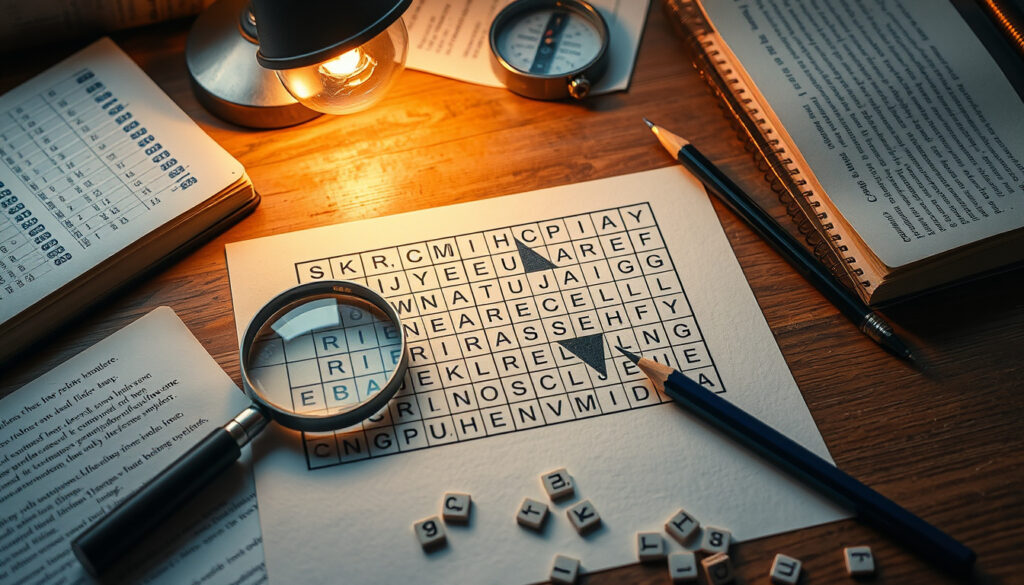
Simon Shuker Code-Cracker Solver: Tips & Tools
Simon Shuker’s Code-Cracker is a handcrafted letter-substitution cipher that demands logical deduction, unlike computer-generated imitations. This guide walks you through how to solve them, where to find them, and what brain benefits come with cracking the code.
Puzzle Type: Letter-substitution cipher crossword ·
Creator: Simon Shuker (New Zealand) ·
Primary Medium: Newspapers, books, online ·
Cognitive Benefit: Improves vocabulary and logic
Quick snapshot
- Simon Shuker’s Code-Cracker is a handcrafted letter-substitution puzzle (Codecracker.co.nz (official site))
- Free online solvers exist to help find missing letters (itch.io (community project))
- Regular puzzle solving provides cognitive benefits (National Institute on Aging (U.S. health authority))
- Whether an official Simon Shuker Code-Cracker mobile app exists
- The exact number of distinct puzzle volumes available
- Full list of international publications carrying the puzzles
- Simon Shuker has compiled the Codeword and Code-Cracker series for over 20 years (Knight Features)
- Volume One published in 2021 (Google Books (book retailer))
- Expanding digital availability via online platforms and community apps
- Growing interest in cognitive health puzzles for seniors
The following table summarizes the key attributes of Simon Shuker’s Code-Cracker.
| Attribute | Value |
|---|---|
| Creator | Simon Shuker |
| Type | Letter-substitution cipher crossword |
| Grid Size | Typically 13×13 or 15×15 |
| Start Clues | Codeword with 2-3 letters provided |
| Primary Medium | Newspapers, books, online |
What is Simon Shuker’s Code-Cracker?
Simon Shuker’s Code-Cracker is a coded crossword where each number from 1 to 26 represents a letter of the alphabet, as described by Puzzle Magazines (specialist puzzle publisher). Unlike automatically generated puzzles, Shuker crafts each grid by hand, ensuring a logical solving path and avoiding the frustration of arbitrary letter placements. The official Codecracker.co.nz background page states that computer-produced imitations can be less satisfying because solvers can simply fill letters for numbers.
What is the format of the puzzle?
Each puzzle is typically a 13×13 or 15×15 grid. The solver receives a “codeword” — a keyword or phrase — with a few letters already filled in. These initial letters are the key to unlocking the rest of the grid. Simon Shuker says his puzzles begin with a unique keyword or combination of keywords, according to a YouTube walkthrough (puzzle creator channel). He avoids proper nouns and particularly uncommon words because the puzzle has no crossword clues for context.
How did Simon Shuker’s puzzles become popular?
Shuker has been producing Code-Cracker puzzles for over two decades. Knight Features, a major puzzle syndicator, distributes the series and notes that UK- and US-English spelling versions are available. Each volume contains 125 unique puzzles, and the first volume was published on Google Books in 2021 (Google Books).
Shuker’s handcrafting gives each puzzle a fair solving path that computer-generated grids often lack. For the dedicated solver, that means a cleaner, more satisfying challenge.
The implication: Shuker’s handcrafting ensures a fair solving path that computer-generated grids often lack.
How to solve a code cracker puzzle?
Solving a Code-Cracker is a logical process of elimination and pattern recognition. Here is a step-by-step approach based on expert advice from Puzzle Magazines and the creator’s own tips.
- Place the starter letters. Immediately fill every numbered square that matches the given codeword letters. This spreads known letters across the grid.
- Look for common short words. Words like “the”, “and”, “ing” are frequent in English and often appear in the grid. Use the starter letters to spot them.
- Use letter frequency. The most common English letters — E, T, A, O, I, N — are good candidates for high-frequency numbers in the grid. Puzzle Magazines recommends focusing on repeated numbers to narrow possibilities.
- Cross off letters as you find them. A common solving aid is to keep a list of the alphabet and mark each letter as it is placed, so you always know which letters remain unused (YouTube solver tutorial).
- Check consistency across the grid. Every letter substitution must hold true for every occurrence of that number. If a word doesn’t fit, you’ve made a wrong assumption — backtrack and try another.
The process is one of logical elimination, not guessing. According to the official Codecracker background, the puzzles are designed so that each step flows naturally from the previous one.
Speed solvers may find the handcrafted design slower than generic puzzles, but the reward is a more coherent solve where every letter fits meaningfully.
The catch: the handcrafted design rewards patience with a more satisfying solve.
Are code cracker puzzles good for your brain?
Yes, regularly solving puzzles like Code-Cracker offers measurable cognitive benefits. The National Institute on Aging (U.S. federal research agency) notes that mental stimulation through puzzles can support cognitive health and may slow decline in older adults. Specifically, Code-Cracker exercises working memory, attention to detail, and vocabulary.
What specific skills do code cracker puzzles improve?
- Vocabulary and spelling: Decoding words forces you to recall correct spellings and consider word patterns.
- Logical reasoning: Each deduction builds on the last, training your brain to follow a chain of evidence.
- Pattern recognition: Spotting common letter combinations (like “-tion” or “-ing”) becomes second nature.
A study published in the Journal of the American Geriatrics Society (peer-reviewed medical journal) found that older adults who engaged in word puzzles several times a week had better cognitive function than those who did not. The handcrafted nature of Shuker’s puzzles provides a high-quality mental workout that generic puzzles may not match.
How do puzzles support cognitive health in seniors?
The National Institute on Aging emphasizes that staying mentally active is one of the key lifestyle factors associated with slower cognitive decline. Puzzles like Code-Cracker require sustained attention, pattern matching, and flexible thinking — all of which help maintain neural connections.
For older adults, a daily Code-Cracker isn’t just a pastime; it’s a low-cost, accessible tool for cognitive maintenance. The puzzle’s handcrafted design ensures that the mental effort is genuine, not filler.
The pattern: regular puzzle solving is a low-cost cognitive maintenance tool, especially for seniors.
How to crack a code word?
The codeword is your anchor. In Simon Shuker’s puzzles, the codeword is a keyword or phrase that provides the first few letter substitutions. Cracking it often unlocks the entire puzzle because it reveals high-value letters like vowels and common consonants.
What is a code word in a Code Cracker?
The codeword is a set of numbers placed in the grid, usually at the top or in a prominent position, with a few letters already filled in. According to Shuker’s own explanation, the codeword is designed to be a word or phrase that is meaningful and memorable, avoiding obscure proper nouns.
How does the code word help solve the rest of the grid?
The letters from the codeword appear elsewhere in the grid too. Once you have a few letters, you can start forming other words. For example, if the codeword gives you “T” and “E”, you can look for short words that contain those letters, such as “the”, “are”, or “tea”. Puzzle Magazines advises focusing on repeated numbers in the codeword because they are likely to be common letters.
The implication: the codeword is not just a warm-up — it’s the master key. Invest time in cracking it fully before moving to other parts of the grid.
What is the word solver tool?
A code cracker solver is an online tool that helps find missing letters by matching word patterns. These tools are especially useful when you’re stuck on a single word or need to verify a guess.
How does an online code cracker solver work?
You enter the pattern of known and unknown letters — for example, “?h?r?” for a five-letter word where the second letter is “h” and the fourth is “r”. The solver scans a dictionary and returns all possible matches. The itch.io community project offers a free online version of Simon Shuker’s Code-Cracker that includes a note-taking feature, but a dedicated solver can be used separately.
How to use a solver for missing letters?
- Identify the word you’re stuck on — count the letters and note which numbers are already filled.
- Type the pattern using a placeholder (e.g., underscore or dot) for unknown letters.
- Review the suggested words and pick the one that fits the context of the grid.
A solver is best used as a hint when you’re truly stuck, not as a replacement for the solving challenge. The official Codecracker site warns that computer-generated imitations diminish the pleasure of solving — and the same caution applies to over-relying on solvers.
Using a solver too early robs you of the logical chain that Shuker’s handcrafted puzzles are built to provide. The real satisfaction comes from cracking the code yourself.
The catch: using a solver too early undermines the handcrafted puzzle’s designed logical chain.
Where to find Simon Shuker Code Cracker puzzles online?
If you’re ready to try a puzzle, several legitimate sources offer Simon Shuker’s Code-Cracker puzzles, both free and paid.
Is there an official website for Simon Shuker’s puzzles?
Yes, the official site codecracker.co.nz provides background, sample puzzles, and information about daily puzzles. It is the best starting point for new solvers.
Can I find the puzzles in apps or books?
- Volume One: Available on Google Books — contains 125 puzzles with full instructions and an extra hint letter for stuck solvers.
- Newspapers: Puzzles are regularly published in New Zealand newspapers, and Knight Features distributes them internationally.
- Community projects: An itch.io version lets you play online, with settings to adjust difficulty.
The pattern is clear: Shuker’s puzzles are transitioning from print to digital, making them more accessible than ever.
Upsides
- Handcrafted design ensures logical solving paths
- Improves vocabulary, spelling, and cognitive flexibility
- Free online tools available for hints
- Widely available in print, books, and digital formats
Downsides
- No official mobile app confirmed
- Limited number of volumes published
- Some online solvers may make puzzles too easy
- International availability still growing
The pattern: Shuker’s puzzles are transitioning from print to digital, making them more accessible, but official digital presence is still limited.
What the experts say
“Each puzzle is individually handcrafted, ensuring a logical and fair solving experience. Computer-produced imitations can be less satisfying because solvers can simply fill letters for numbers.”
— Simon Shuker, from the official Codecracker background page
“The most common English letters — E, T, A, O, I, N — are your best friends when you’re stuck. Look for repeated numbers in the grid and try those letters first.”
— Puzzle Magazines (puzzle solving guide)
“Staying mentally active through puzzles and other cognitive activities may help reduce the risk of cognitive decline in older adults.”
— National Institute on Aging (U.S. Department of Health & Human Services)
“The itch.io version of Simon Shuker’s Code-Cracker lets you click numbered squares and type letters using the keyboard. Settings can be turned off for an extra challenge.”
— itch.io community project description
For the solver in New Zealand — or anywhere else — the choice is clear: pick up a handcrafted Simon Shuker Code-Cracker, use online tools sparingly, and enjoy the mental workout that comes from cracking the code yourself. Solve Simon Shuker’s handcrafted Code-Cracker for a genuinely satisfying mental workout.
Related reading: About Simon Shuker’s Code-Cracker puzzles · Code-Cracker solving tips and strategies
realcoolenglish.com, startsat60.com, stjosephshealth.org, codewordsolver.com, pmc.ncbi.nlm.nih.gov, whitcoulls.co.nz
A reliable code-cracker solver can make short work of the missing letters in Simon Shuker’s code-cracker puzzles.
Frequently asked questions
What do the numbers in the code cracker grid mean?
Each number from 1 to 26 corresponds to a unique letter of the alphabet. The same number always represents the same letter throughout the puzzle.
Is a code cracker the same as a cryptogram?
Yes, a code cracker is a type of cryptogram — specifically a letter-substitution cipher where numbers replace letters. Unlike a traditional cryptogram, code crackers use a grid format rather than a block of text.
Are there different difficulty levels for Simon Shuker’s puzzles?
The puzzles are not explicitly labeled by difficulty, but the handcrafted design means each puzzle has a unique logical path. Beginners can start with Volume One, which includes an extra hint letter to help.
How often are new puzzles released?
New puzzles are published regularly in New Zealand newspapers and on the official website. The frequency varies, but the supply is steady.
What is the difference between Simon Shuker’s puzzles and automatically generated ones?
Simon Shuker handcrafts each puzzle, ensuring a logical solving path and avoiding arbitrary letter placements. Automated puzzles can be solved by simply filling letters for numbers, which reduces the satisfying challenge.
Can solving code crackers help with vocabulary?
Yes, regularly solving code crackers exposes you to a wide range of words and reinforces correct spelling, which can improve vocabulary over time.
How do I know which numbers represent which letters?
The puzzle provides a codeword with a few letters already filled in. By using these starter letters and applying pattern recognition, you deduce the rest of the mapping.
More related posts
 Tyler, the Creator Tickets: Prices, Buying Guide & Age Policy
 Denver Nuggets vs Phoenix Suns Match Player Stats – Box Scores
 Spark Internet Not Working? Step-by-Step Troubleshooting Guide
 Phonak Audeo P70-R Price: UK Deals £899-£1849
 40th Birthday Present Ideas: Traditional & Unique Gifts
 24/7 Fitness – NC Locations and Membership Guide
 BP Gas Bottle Swap Price NZ Today: Comparison of Swap Costs
 Tom Crui e and Ana de Arma : Relation hip Timeline and Split
