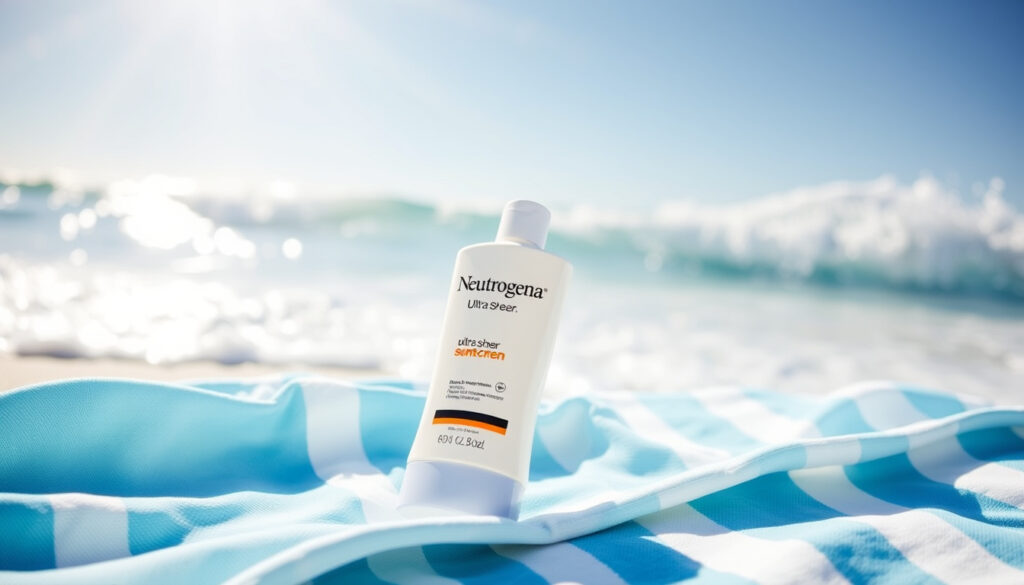
Neutrogena Ultra Sheer Sunscreen: Review, Safety & Use
Neutrogena’s Ultra Sheer line splits into two distinct camps—mineral variants that earn pregnancy-safe cred from dermatologists, and chemical formulations that experts recommend skipping for expectant mothers. This guide cuts through the marketing to give you the specs, the safety profile, and the real-world feel so you can decide which one actually belongs in your routine.
SPF Levels: Up to 70 · Water Resistance: 80 minutes · Key Technology: Helioplex UVA/UVB · Feel: Dry-touch, non-greasy · Recommendation: Dermatologist #1
Quick snapshot
- Helioplex delivers broad-spectrum UVA/UVB (Neutrogena)
- Dermatologist recommended brand #1 (Neutrogena)
- Water resistant for 80 minutes across variants (Neutrogena)
- Exact pregnancy safety status without full third-party ingredient verification
- User feedback on mineral variants during pregnancy specifically
- Long-term efficacy data for mineral actives during pregnancy
- Mineral Ultra Sheer SPF 30 is current formulation with Hawaii Act 104 compliance
- Healthline and MamaSkin lists updated to distinguish mineral vs chemical variants
- Brand continues to expand mineral sub-line for pregnancy-conscious consumers
- Growing regulatory momentum toward reef-safe formulations
The attribute comparison below summarizes the core specs across Ultra Sheer variants.
| Attribute | Value |
|---|---|
| Active Technology | Helioplex |
| SPF Range | 30-70 |
| Water Resistance | 80 minutes |
| Texture | Dry-touch, non-greasy |
| Variants | Lotion, Face, Mineral |
Is Neutrogena Ultra Sheer sunscreen good for skin?
The core appeal of the Ultra Sheer line is its Helioplex technology, which bundles avobenzone with stabilizers to deliver broadband UVA/UVB protection that doesn’t break down as quickly under sunlight. According to Neutrogena’s official product page, the mineral variants also lower skin cancer and aging risk through broad-spectrum coverage, and the dry-touch finish is designed to avoid the greasy residue that puts people off daily sunscreen.
Benefits for daily use
The non-comedogenic formulation means it won’t clog pores for most users, and the fast-absorbing texture makes reapplication less of a hassle. One verified user review on Neutrogena’s site describes the mineral SPF 30 as giving a “clean feeling” with “no shine,” which aligns with the brand’s positioning. For daily wear under makeup or alone, the face-specific Liquid SPF 70 variant is formulated to be lighter than the body versions.
The mineral sub-line additionally scores points for sensitive skin — both the Mineral Ultra Sheer SPF 30 and SheerZinc Face are marketed as ideal for reactive skin types, and SheerZinc Face adds colloidal oatmeal and vitamin E for soothing, per Healthline’s pregnancy sunscreen guide.
User experiences
Consumer reviews are mixed on the chemical Ultra Sheer variants. The same Neutrogena product page for SPF 55 includes a user comment noting the product “doesn’t look greasy or oily like a lot of the other face sunscreens I’ve tried,” though it still leaves a white cast that takes some blending. The Sheer Zinc line, by contrast, draws criticism for being “very thick, white, hard to apply” in a Kitchen Stewardship review, though it acknowledges Neutrogena’s attempt to deliver zinc-only protection.
The mineral Ultra Sheer SPF 30 earns the cleaner user reviews for face use, while the higher-SPF chemical variants trade some elegance for stronger UVA filters — but come with pregnancy trade-offs covered below.
Can I put Neutrogena Ultra Sheer sunscreen on my face?
Yes — but which specific variant matters enormously. Neutrogena makes distinct face-specific formulations alongside body sunscreens sold in the same Ultra Sheer family, and the ingredient split between them is not cosmetic, it’s safety-relevant.
Face-specific formulas
The Neutrogena Ultra Sheer Face Liquid SPF 70 is one of the face-specific options, and it’s worth noting that according to 15 Minute Beauty fanatics’ pregnancy skincare guide, this variant contains chemical sunscreens including salicylates — making it the one to skip if you’re pregnant. The Neutrogena Mineral Ultra Sheer Dry-Touch SPF 30, by contrast, uses only titanium dioxide and zinc oxide and is explicitly suitable for face and body, with a non-chalky finish that works under makeup.
SheerZinc Face Dry-Touch, listed as SPF 50, is another face-targeted option that Healthline’s expert-reviewed pregnancy sunscreen recommendations recommends as the best budget pregnancy-safe sunscreen pick. It contains approximately 20% zinc oxide, fragrance-free, and includes skin-soothing ingredients that address heightened smell sensitivity common during pregnancy.
Application tips
Neutrogena’s official directions, verified on the Mineral Ultra Sheer product page, call for applying liberally 15 minutes before sun exposure, then reapplying after 80 minutes of swimming or sweating and every two hours during prolonged sun exposure. For face use specifically, a pea-to-nickel-sized amount is generally sufficient — over-application wastes product without increasing protection linearly.
Neutrogena is most useful when you stick to the practical, pharmacy-basic lane rather than the correction or spray-SPF lane, according to MamaSkin’s pregnancy-safe skincare guidance.
The catch: face-specific branding masks chemical actives in some variants, so always verify the ingredient list before purchasing for pregnancy use.
Is Neutrogena Ultra Sheer sunscreen safe for pregnancy?
This is where Neutrogena’s portfolio genuinely splits into two different products. The mineral variants — Mineral Ultra Sheer SPF 30, SheerZinc Face, and the Sheer Zinc line — are consistently flagged as pregnancy-safe by Healthline, MamaSkin, and 15 Minute Beauty fanatics. The chemical Ultra Sheer variants — Dry-Touch SPF 55, SPF 70, sprays, Face Serum SPF 60, and Healthy Defense SPF 50 — are flagged to avoid, with specific ingredient concerns.
Ingredients review
The Neutrogena Ultra Sheer Dry-Touch SPF 55, verified by Neutrogena’s official product page, contains avobenzone at 3%, homosalate at 10%, octisalate at 5%, and octocrylene at 10%. 15 Minute Beauty fanatics identifies salicylates in this and similar chemical Ultra Sheer variants as the primary concern — these are hormonal disruptors that many pregnancy skincare guides flag. By contrast, the Neutrogena Mineral Ultra Sheer SPF 30 uses titanium dioxide at 6.6% and zinc oxide at 18.0% as actives — minerals that sit on the skin surface and aren’t absorbed systemically.
Healthline’s expert-reviewed guide explicitly recommends mineral sunscreens in pregnancy to avoid chemical absorption risks, noting that zinc oxide and titanium dioxide have decades of safety data.
Pregnancy guidelines
The practical guidance from MamaSkin’s pregnancy-safe brand analysis is direct: stick to Neutrogena’s mineral sunscreen sticks or the SheerZinc Face for pregnancy routines. The SheerZinc Face is additionally fragrance-free, which addresses the heightened smell sensitivity many pregnant people experience. 15 Minute Beauty fanatics maintains a running list of which Neutrogena products to avoid — the chemical Ultra Sheer variants occupy most of that list.
Is Neutrogena Ultra Sheer sunscreen mineral or chemical?
The Ultra Sheer line contains both. The original Dry-Touch SPF 55, SPF 70, and most spray and serum variants are chemical sunscreens using avobenzone, homosalate, octisalate, and octocrylene. The Mineral Ultra Sheer sub-line and the Sheer Zinc variants are mineral sunscreens using zinc oxide and/or titanium dioxide.
Standard vs mineral versions
The key distinction is active ingredient type. Chemical sunscreens absorb UV radiation and convert it to heat; mineral sunscreens scatter and reflect it. Neutrogena’s official Mineral Ultra Sheer SPF 30 page confirms 100% mineral actives and Hawaii Act 104 compliance — meaning oxybenzone-free, which matters for reef safety and aligns with the brand’s pregnancy-safe positioning.
The chemical Ultra Sheer Dry-Touch SPF 55 product page lists the same Helioplex technology but with chemical actives — the Helioplex label describes the stabilizer system that keeps avobenzone from breaking down, not the active type itself.
Key differences
In practice, the mineral versions have a slightly higher white cast risk — particularly the Sheer Zinc formulations, which use up to 21.6% zinc oxide in a Kitchen Stewardship review of mineral sunscreen options. The Mineral Ultra Sheer SPF 30 is formulated to be non-chalky per Neutrogena’s mineral product specifications, and user reviews confirm it applies cleaner on the face than the Sheer Zinc line. Chemical variants absorb invisibly but can cause sensitivity reactions in reactive skin types.
The “Ultra Sheer” name appears on both mineral and chemical products, which means you can’t rely on the branding alone. Always check the active ingredients — zinc oxide and titanium dioxide mean mineral; avobenzone, homosalate, or octocrylene mean chemical.
Do you put Neutrogena sunscreen on before or after moisturizer?
For chemical sunscreens like the standard Ultra Sheer Dry-Touch SPF 55 and SPF 70, sunscreen comes after moisturizer. For mineral sunscreens like the Mineral Ultra Sheer SPF 30 or SheerZinc Face, the order is more flexible — though applying mineral sunscreen as the final step is generally recommended to ensure direct skin contact for optimal UV reflection.
Correct application order
Neutrogena’s official application directions state to apply sunscreen liberally 15 minutes before sun exposure — this applies to both chemical and mineral variants. In a standard morning routine with moisturizer: cleanse → tone (optional) → moisturizer → wait 1-2 minutes → sunscreen → wait 2-3 minutes → makeup or SPF-only finish. This layering ensures the moisturizer doesn’t dilute the sunscreen film.
Step-by-step guide
The recommended sequence, per MamaSkin’s pregnancy-safe routine guidance for pregnancy-safe skincare:
- Cleanse face gently — don’t scrub, just prep the skin surface
- Apply moisturizer while skin is damp or just damp — this improves absorption
- Wait 1-2 minutes for moisturizer to settle — prevents pilling when you layer sunscreen
- Apply Neutrogena sunscreen (mineral variant for pregnancy) with upward strokes,pea-to-nickel amount for face
- Wait 2-3 minutes for the sunscreen to set before makeup or sun exposure
- Reapply every 2 hours during sun exposure, or after 80 minutes of swimming/sweating
For the chemical Ultra Sheer variants, the wait time before sun exposure is particularly important — chemical filters need skin contact time to form the protective matrix. Skipping this step means you’re underprotected even if you applied enough product.
The implication: mineral sunscreens offer more flexibility in layering, but chemical formulations demand strict adherence to the wait protocol for full protection.
The product comparison below clarifies which formulations align with pregnancy safety and daily use priorities.
| Variant | SPF | Active Type | Key Actives | Water Resistance | Pregnancy Safe? |
|---|---|---|---|---|---|
| Mineral Ultra Sheer SPF 30 | 30 | Mineral | Titanium Dioxide 6.6%, Zinc Oxide 18.0% | 80 min | Yes |
| Ultra Sheer Dry-Touch SPF 55 | 55 | Chemical | Avobenzone 3%, Homosalate 10%, Octisalate 5%, Octocrylene 10% | 80 min | Avoid |
| Ultra Sheer Face Liquid SPF 70 | 70 | Chemical | Chemical filters + salicylates | 80 min | Avoid |
| SheerZinc Face | 50 | Mineral | Zinc Oxide ~20% | Very water resistant | Yes |
| Sheer Zinc Mineral SPF 50 | 50 | Mineral | Zinc Oxide 21.6% | 80 min | Yes |
Upsides
- Mineral variants are pregnancy-safe and reef-compliant
- 80-minute water resistance across all variants
- Dermatologist-recommended brand with broad retail availability
- Non-comedogenic formulations suitable for acne-prone skin
- SheerZinc Face offers budget-friendly pregnancy-safe option
- Hawaii Act 104 compliance for mineral lines
Downsides
- Chemical Ultra Sheer variants contain pregnancy-avoid filters
- Sheer Zinc line has thick, white-cast application challenges
- Brand name shared across mineral and chemical products — easy to buy the wrong one
- Higher-SPF chemical variants offer no advantage for daily wear
- User reviews cite white cast on darker skin tones across mineral variants
- Phenoxyethanol preservative in Sheer Zinc line
How to Apply Neutrogena Ultra Sheer Sunscreen
Getting the protection you pay for means applying more than most people naturally reach for. The standard recommendation is a shot-glass-full for body application — approximately one fluid ounce — which most people underuse by roughly 50%.
- Measure: Use a full teaspoon for your face alone. For body, fill your palm to the first crease.
- Apply to bare skin: Sunscreen needs direct contact with skin to form the protective film. Apply before moisturizer for mineral sunscreens, after moisturizer for chemical sunscreens.
- Wait before sun exposure: Chemical sunscreens need 15 minutes to activate. Mineral sunscreens work immediately but the 15-minute window ensures the formula sets properly.
- Reapply on schedule: Every 2 hours during sun exposure. After 80 minutes of swimming or sweating. Don’t rely on morning application for an all-day beach day.
- Reapplication method: For mineral variants, you can layer the same product. For chemical variants, reapply with a fresh layer of sunscreen over any existing film.
Mineral sunscreens win on pregnancy and reef safety, but demand more effort to apply evenly — particularly the Sheer Zinc line. Users prioritizing a invisible finish should choose the Mineral Ultra Sheer SPF 30 over the thicker Sheer Zinc formulations.
The pattern: users who invest the extra effort in proper mineral sunscreen application get effective, pregnancy-safe protection without the chemical absorption concerns.
What’s confirmed and what’s not
The research points are clear on some fronts, less so on others — and the distinction matters when you’re making a purchase decision.
Confirmed
- Mineral Ultra Sheer SPF 30 uses Titanium Dioxide 6.6% and Zinc Oxide 18.0% as actives
- Chemical Ultra Sheer SPF 55 uses Avobenzone 3% and Homosalate 10% — avoid in pregnancy
- All reviewed Neutrogena sunscreens offer 80-minute water resistance
- SheerZinc Face is SPF 50 with ~20% zinc oxide
- Sheer Zinc Mineral uses Zinc Oxide 21.6%
- Mineral variants are 100% mineral actives and Hawaii Act 104 compliant
- Chemical Ultra Sheer variants contain salicylates flagged for pregnancy avoidance
What’s unclear
- Exact pregnancy safety without full third-party ingredient verification for all variants
- Quantitative user review data specific to face use during pregnancy
- Long-term safety studies for mineral actives in pregnancy (limited data exists)
- Whether recent reformulations have changed the chemical variant formulations
- International availability differences beyond the US market
The catch: while the mineral variants have decades of safety data, specific long-term pregnancy studies remain limited — which is typical for most topical skincare ingredients rather than a red flag specific to these products.
What experts and users say
“Neutrogena is most useful in pregnancy when you keep it in the practical, pharmacy-basic lane rather than the correction or spray-SPF lane.”
— MamaSkin (Skincare Expert, Pregnancy-Safe Skincare Guide)
“If you don’t mind the cast it’s honestly a pretty good sunscreen and doesn’t look greasy or oily like a lot of the other face sunscreens I’ve tried.”
— Consumer Review on Neutrogena Ultra Sheer SPF 55 product page
“This is pretty much a comedy show sunscreen from start to finish. Kudos to Neutrogena for trying to create a safe sunscreen using only zinc oxide.”
— Kitchen Stewardship Reviewer (Consumer Blogger, Sheer Zinc Line Review)
“It’s water resistant, very lightweight, and gives you a clean feeling once applied to your skin. It doesn’t make your skin or face shiny at all.”
— Consumer Review on Neutrogena Mineral Ultra Sheer SPF 30 product page
The pattern across sources is consistent: the mineral variants earn the positive reviews for feel, while the Sheer Zinc line’s high zinc oxide content creates application challenges that even Neutrogena’s brand defenders acknowledge with good humor. For pregnancy-safe daily use, the Mineral Ultra Sheer SPF 30 and SheerZinc Face land in the practical sweet spot — effective protection with a finish that won’t make you dread reapplying.
The chemical Ultra Sheer products are legitimate sunscreens with strong UV coverage — but the avobenzone and salicylate content puts them in a different category for pregnant users. Healthline’s expert-reviewed pregnancy guide and 15 Minute Beauty fanatics’ ongoing exclusion list both point clearly to the mineral sub-line as the pregnancy lane within Neutrogena’s portfolio.
For someone choosing between the two camps: pregnant people or those trying to conceive should stick to the Mineral Ultra Sheer SPF 30 or SheerZinc Face for reliable, reviewed protection. Everyone else using it for daily UV defense can choose any Ultra Sheer variant based on texture preference — but the mineral sub-line has enough user-validated elegance at SPF 30 that there’s little reason to reach for the higher-SPF chemical versions unless you have specific UVA-heavy exposure needs.
The bigger picture: the Ultra Sheer name covers a genuinely bifurcated product line, and that creates confusion that matters. Reading the active ingredients list before purchase is the single most important habit — not just for Neutrogena, but for any sunscreen in the pregnancy-conscious phase. The information is there; the research and expert sources above give you the framework to interpret it.
Buyers who check ingredient labels before purchase sidestep the entire safety confusion — the mineral vs chemical distinction becomes obvious once you know what to look for.
Related reading: Surf Forecast Waihi Beach · What Time is Sunset in LA
While Neutrogena Ultra Sheer provides effective dry-touch protection, dermatologist picks for face sunscreens help identify options suited to oily or sensitive skin.
Frequently asked questions
Which is the top 3 best sunscreen?
Best sunscreen depends on your priorities — for pregnancy-safe face use, SheerZinc Face SPF 50 and Mineral Ultra Sheer SPF 30 consistently appear in expert recommendations from Healthline, MamaSkin, and 15 Minute Beauty. For general daily use, the chemical Ultra Sheer SPF 55 ranks high for UVA protection and elegant feel, though expert consensus varies by skin type.
What is Neutrogena Ultra Sheer Sunscreen SPF 60?
SPF 60 variants in the Ultra Sheer line include the Ultra Sheer Water-Light Daily Face Sunscreen SPF 60 and the Ultra Sheer Face Liquid SPF 70. Both are chemical formulations — the face-specific variants use salicylates and are flagged to avoid during pregnancy by MamaSkin and 15 Minute Beauty.
Is there Neutrogena Ultra Sheer Sunscreen in Ireland?
Neutrogena products are sold in Ireland through pharmacies and retailers, though specific variant availability may vary by market. The brand maintains international distribution, but the mineral vs chemical formulation split applies globally — check active ingredients regardless of where you purchase.
How does Neutrogena Ultra Sheer compare to La Roche-Posay?
La Roche-Posay’s Anthelios line is a premium competitor with stronger UVA-PF ratings and more elegant textures in the chemical filter space. Neutrogena Ultra Sheer offers comparable broad-spectrum protection at a drugstore price point — but the mineral Neutrogena options have an edge in pregnancy-safe positioning compared to some La Roche-Posay chemical variants.
What about Neutrogena Sunscreen Spray?
Neutrogena’s Ultra Sheer spray variants are chemical formulations and fall into the pregnancy-avoid category per 15 Minute Beauty. Additionally, spray sunscreen delivery methods have efficacy concerns — it’s difficult to apply the recommended amount (one fluid ounce) with a spray, and inhalation risk exists with any aerosol sunscreen.
Which sunscreen to avoid while pregnant?
Avoid chemical Ultra Sheer variants — Dry-Touch SPF 55, SPF 70, sprays, Face Serum SPF 60, and Healthy Defense SPF 50 — due to avobenzone, homosalate, and salicylate content. Also avoid any Neutrogena product listing oxybenzone or retinyl palmitate as active or inactive ingredients during pregnancy.
Does Neutrogena Ultra Sheer have Vitamin C?
The core Ultra Sheer line is sunscreen-focused without added Vitamin C. SheerZinc Face includes colloidal oatmeal and vitamin E for soothing, which addresses skin sensitivity rather than providing antioxidant boost. If Vitamin C pairing is part of your routine, apply it in your morning serum step before sunscreen.
More related posts
 NZ Superannuation Rates 2024: Fortnightly Amounts
 500 AUD to NZD: Current Exchange Rates from Wise, XE & More
 Best Plant Protein Powder NZ: Top Brands Compared (2025)
 Reserve Bank OCR Announcement 2026: Dates, Predictions & Mortgage
 Pink Lady Rooftop Reviews – Christchurch Bar Ratings and Tips
 Chelsea vs Arsenal Timeline: History & Key Results
 Hamilton Beer and Wine: Reviews, Menu, Location Guide
 Nuze t Clean Lean Protein Review: I It Safe and Good for You?
