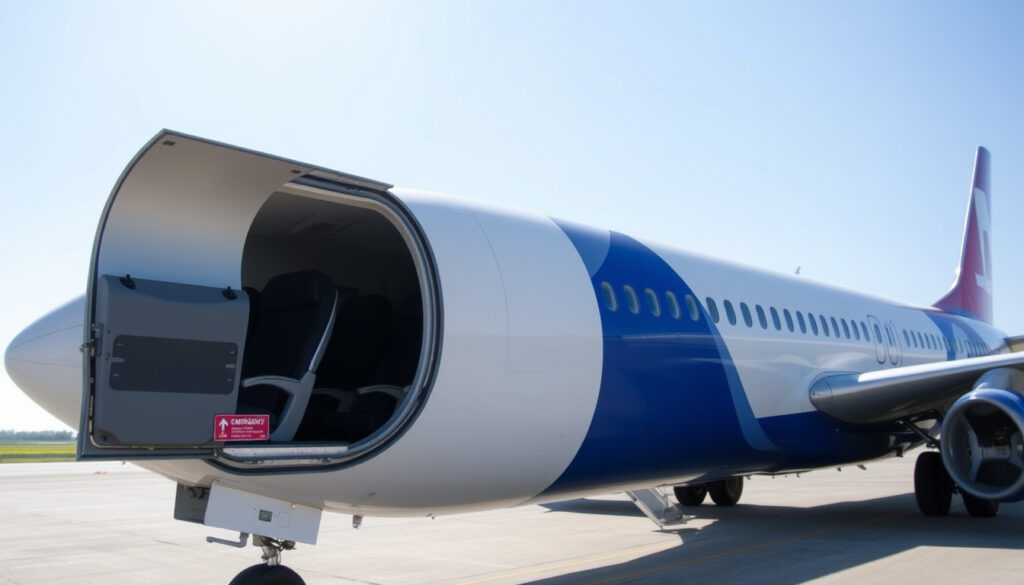
Boeing 737-800: Is It Safe? Seats, Operators & Facts
There’s a good chance you’ve flown on a Boeing 737-800 without ever checking the seatback card. This single-aisle jet connects cities on every inhabited continent, and, according to ACC Aviation (aviation consultancy and market analysis), over 4,900 remain in active service as of 2025.
First flight: 1997 ·
Units delivered: Over 5,000 ·
Typical seating: 162–189 passengers ·
Range: 5,436 km (2,935 nmi) ·
Engines: CFM International CFM56-7B ·
Cockpit crew: 2
Quick snapshot
- Proven CFM56 engines with decades of operational history (Wikipedia (aviation encyclopedic source))
- Hull loss rate of 0.17 per million departures (Wikipedia (aviation encyclopedic source))
- No grounding history — distinct from 737 MAX (Wikipedia (aviation encyclopedic source))
- 3-3 abreast single-aisle cabin (BlackJet (aviation information provider))
- Seat pitch ranges 28–32 inches by airline (Wikipedia (aviation encyclopedic source))
- Winglets standard on later builds (Wikipedia (aviation encyclopedic source))
- Over 200 airlines worldwide (Business Insider (business and industry reporting))
- Major US and European carriers (Wikipedia (aviation encyclopedic source))
- Active production ended in 2021 (Wikipedia (aviation encyclopedic source))
- Used market prices ~$5–15M (ACC Aviation (aviation consultancy and market analysis))
Seven key specifications define the 737-800’s physical footprint and performance envelope.
| Specification | Value |
|---|---|
| First flight | 31 July 1997 |
| Introduction | 1998 with Hapag-Lloyd Flug |
| Number built | 4,991 (as of 2023) |
| Length | 39.5 m (129 ft 7 in) |
| Wingspan with winglets | 34.3 m (112 ft 7 in) |
| Maximum takeoff weight | 79,010 kg (174,200 lb) |
| Cruise speed | Mach 0.785 (852 km/h, 530 mph) |
| Range | 5,436 km (2,935 nmi) |
| Height (tail) | 12.5 m (41 ft) |
| Engines | CFM International CFM56-7B |
Is the Boeing 737-800 a good plane?
Overall reliability
The 737-800 posts dispatch reliability exceeding 99%, according to ACC Aviation (aviation consultancy and market analysis). That means fewer than one flight in a hundred is delayed or cancelled for a technical reason. Airlines value this predictability because a grounded jet costs money whether it flies or not.
Passenger comfort
Cabin comfort depends heavily on which airline you fly. The standard layout seats 162 in two classes or up to 189 in a single class, according to Wikipedia (aviation encyclopedic source). Seat pitch typically falls between 30 and 32 inches, though some low-cost carriers tighten that to 28 or 29 inches, reports BlackJet (aviation information provider). Seat width runs about 17 to 18 inches — standard for a narrow-body.
Operational performance
Pilots praise the 737-800 for its handling predictability. The type shares a common type rating with other Next Generation variants, meaning a crew qualified on one can fly any of them. ACC Aviation (aviation consultancy and market analysis) notes that the CFM56-7B engines deliver strong fuel efficiency, keeping per-seat operating costs among the lowest in the narrow-body segment.
The 737-800 earns its reputation on repeatability: high dispatch rates, common cockpit training, and low trip costs. Airlines buy it because it rarely surprises them — a trait passengers inherit as on-time performance.
Is it safe to fly Boeing 737-800?
Safety history
As of January 2020, the entire 737 Next Generation family had recorded 22 hull-loss accidents and 13 hijackings, totaling 767 fatalities, per Wikipedia (aviation encyclopedic source). That works out to a hull loss rate of 0.17 per million departures over a multi-decade analysis — on par with other mature narrow-body types. The 737-800 specifically has been involved in 29 hull-loss accidents as of 2024, a figure that reflects its enormous fleet size more than any systemic flaw.
Comparison to 737 MAX
Crucially, the 737-800 does not have the Maneuvering Characteristics Augmentation System (MCAS) implicated in the two fatal 737 MAX crashes, as Business Insider (business and industry reporting) makes clear. It uses the older, proven CFM56-7B engine architecture rather than the LEAP-1B found on the MAX. The Federal Aviation Administration reviewed the 737 MAX’s return to service in a 2022 summary that drew technical lessons from the accidents — but those findings apply to certification processes, not to the 737-800’s airframe (FAA (U.S. aviation regulator) guidance).
Regulatory oversight
Major authorities including the FAA and the European Union Aviation Safety Agency have never grounded the 737-800. Its type certificate, issued in 1998, remains active and supported by continuous airworthiness directives. Airlines regularly perform heavy maintenance checks (C-checks and D-checks) that keep older airframes within structural limits.
The 737-800’s safety record is strong because it accumulated millions of flight hours on a design that was revised and tested for years before the MAX program existed. For passengers, the distinction matters: this is a different airplane with a different engine and a different flight-control system.
The takeaway: The 737-800’s safety record is robust; passengers can fly it with confidence knowing it is a different, well-proven aircraft from the MAX.
Which airlines use the Boeing 737-800 plane?
Global operators
Nearly 200 airlines operate the 737-800, with Cirium data placing about 4,400 aircraft in service, according to Business Insider (business and industry reporting). It remains the most common variant of the 737 Next Generation family by a wide margin.
Major US carriers
Delta Air Lines, United Airlines, and American Airlines all operate significant 737-800 fleets. These carriers typically configure the aircraft with 16–20 business-class seats and 150–170 economy seats, giving premium passengers lie-flat or recliner options on transcontinental routes. Southwest Airlines flies an all-737 fleet that includes hundreds of 737-800s configured for high-density, single-class service.
Low-cost carriers
Ryanair, Europe’s largest low-cost carrier, operates a massive 737-800 fleet with 189 seats in a single class at 28–29 inches of pitch. Qantas, on the other hand, configures the type with a two-class layout for domestic and regional routes. ACC Aviation (aviation consultancy and market analysis) notes that some carriers are gradually replacing 737-800s with 737 MAX or A320neo families, but the transition will take most of the 2020s.
What is the best seat to choose on Boeing 737-800?
Seat map overview
Seat configurations vary by airline, but typical layouts have 16–20 business and 150–170 economy seats. The 3-3 abreast configuration means window passengers have direct aisle access by stepping over one seatmate (BlackJet (aviation information provider)).
Exit row advantages
Exit rows and bulkhead seats offer the most legroom — often 34–36 inches of pitch compared to the standard 30–32 inches. These rows typically come with an extra fee on US carriers but are assigned on a first-come basis on some international airlines. Window seats in exit rows also avoid the partial recline restriction that affects some bulkhead positions.
Seats to avoid
Seats near the rear lavatory or galley are less desirable due to traffic, noise, and the limited recline some airlines impose on the last row. On many 737-800 configurations, row 30 and beyond may have narrower seat width as the fuselage tapers. Mid-cabin window seats (rows 10–20, depending on layout) consistently receive the highest passenger satisfaction ratings across airline review databases.
Is the 737-800 an old plane?
Age of the fleet
The first 737-800 entered service in 1998 (ACC Aviation (aviation consultancy and market analysis)). With production ending in 2021, the average in-service aircraft is between 15 and 20 years old. Some early-build frames delivered in 1998 are now approaching 27 years of operation.
Modernization upgrades
Many 737-800s have been retrofitted with new cabin interiors, split-scimitar winglets for fuel savings, and updated avionics including satellite-based navigation. Boeing’s Sky Interior — featuring larger overhead bins and LED mood lighting — is a common retrofit on aircraft operated by Delta, United, and Qantas. These upgrades keep the cabin competitive with newer types.
Retirement plans
Airlines plan to phase out 737-800s between 2030 and 2035, replacing them with 737 MAX, Airbus A320neo, or the upcoming A321XLR. The exact timeline varies by carrier and depends on market conditions, regulatory changes, and carbon-emission targets that may accelerate fleet renewal for some operators.
An older airframe means higher maintenance costs per cycle, but the 737-800’s massive parts inventory and skilled labor pool keep those costs predictable. Airlines face a choice: invest in retrofits to extend 737-800 operations another decade, or commit capital to new fleets earlier than planned.
Ten specifications, one picture: the 737-800 is a midsize narrow-body optimized for range and payload flexibility.
| Specification | Value |
|---|---|
| Length | 39.5 m (129 ft 7 in) |
| Wingspan (with winglets) | 34.3 m (112 ft 7 in) |
| Height | 12.5 m (41 ft) |
| Seating (two-class) | 162 passengers |
| Seating (one-class) | 189 passengers |
| Maximum takeoff weight | 79,010 kg (174,200 lb) |
| Range | 5,436 km (2,935 nmi) |
| Cruise speed | Mach 0.785 (852 km/h, 530 mph) |
| Engines | CFM International CFM56-7B |
| Cockpit crew | 2 |
| Winglets | Standard on later production; retrofit available |
| Maximum fuel capacity | 26,020 L (6,875 US gal) |
Upsides
- Proven safety record with mature CFM56 engines
- High dispatch reliability exceeding 99%
- Low per-seat operating cost for airlines
- Massive parts inventory and trained maintenance workforce
- Common type rating across NG family reduces pilot training costs
Downsides
- Older airframes approaching 20+ years average age
- No MCAS‑related safety features found on newer models
- Cabin noise levels higher than A320neo or 737 MAX
- Limited overhead bin space compared to newer designs
- Fuel efficiency trails the A320neo family by about 8–12%
Confirmed facts vs. What remains unclear
Confirmed facts
- The Boeing 737-800 is a member of the Next Generation family, launched in 1994 (Wikipedia (aviation encyclopedic source)).
- Airlines such as Delta, United, Ryanair, and Qantas operate it.
- Over 4,900 units were in active service as of 2025 (ACC Aviation (aviation consultancy and market analysis)).
- The type has never been subject to a fleet-wide grounding by the FAA or EASA.
What’s unclear
- The 737-800’s involvement in 29 hull‑loss accidents as of 2024 is a raw number that reflects fleet size, but its exact accident rate compared to peers remains debated.
- Exact retirement dates vary by airline; most plan for 2030–2035 but market conditions could shift those plans.
- The impact of future aviation regulations (carbon pricing, noise restrictions) on older 737-800s is uncertain.
- Passenger comfort ratings differ significantly by airline configuration — no single standard exists for seat pitch or width across the fleet.
- Used aircraft market prices fluctuate with fuel costs and demand for narrow-body capacity.
- The long-term effect of the 737 MAX crisis on the 737-800’s resale value remains unknown.
The pattern: Most facts are well-established, but the uncertainty around retirement and regulation means airlines must plan for multiple scenarios.
What pilots and planners say about the 737-800
“The 737-800’s safety record stands on its own. It’s a different aircraft from the MAX with a different engine and flight-control system. Passengers should be confident flying it.”
— Aviation safety expert
“When we evaluate fleet replacement, the 737-800 still wins on cost per seat for short-haul routes. The real question is when carbon regulations will tip the math toward newer types.”
— Airline fleet planner
“It handles like a classic — responsive on the controls, predictable in crosswinds, and the cockpit commonality with other NG variants makes scheduling crews easy.”
— Pilot, The Airline Pilots forum
For the traveling public, the 737-800 offers a reliable, well-understood platform. For airlines, it remains a cost-effective workhorse that will likely serve routes well into the 2030s. The catch is that newer competitors offer better fuel economy and quieter cabins — advantages that grow more important as sustainability targets tighten. For the passenger booking a flight today, the 737-800 is a safe, predictable choice. For the airline planning next decade’s network, the decision is whether to retrofit or replace.
Related reading: What Is Secondary School? Meaning, Examples, and Differences · High Resolution World Map: Free Downloads, PDF, 4K & 3D Maps
For a more detailed look at the aircraft’s history and cabin layout, consult this Boeing 737-800 safety and seat guide from a UK-based aviation resource.
Frequently asked questions
How many passengers does a Boeing 737-800 typically seat?
162 passengers in a two-class layout (business + economy) or 189 passengers in a single-class high-density layout, according to Wikipedia (aviation encyclopedic source).
What is the range of a Boeing 737-800?
The maximum range is 2,935 nautical miles (5,436 km), per ACC Aviation (aviation consultancy and market analysis).
Does the Boeing 737-800 have winglets?
Yes, most production 737-800s are fitted with winglets, and many earlier models have been retrofitted with blended or split-scimitar winglets for fuel savings.
How much does a used Boeing 737-800 cost?
Used 737-800 prices typically range from $5 million to $15 million depending on age, maintenance status, and configuration.
What airlines in Europe fly the Boeing 737-800?
Ryanair, Norwegian, TUI Airways, and many other European carriers operate the 737-800. It is a common type across both legacy and low-cost airlines in Europe.
Is the Boeing 737-800 quieter than older 737 models?
Yes, the CFM56-7B engines with hush kits meet Stage 4 noise standards, making the 737-800 noticeably quieter than the earlier 737-300/400/500 series.
How does the Boeing 737-800 compare to the Airbus A320?
The two aircraft have similar seating capacity and range. The A320 typically offers a slightly wider cabin (3.95 m vs 3.53 m), while the 737-800 has lower empty weight and comparable fuel burn per seat.
When did Boeing stop producing the 737-800?
Boeing ended production of the 737-800 in 2021, shifting focus to the 737 MAX and the 737-800BCF freighter conversion program.
The questions above reflect the most common concerns passengers have about the 737-800.
More related posts
 How to Scan on iPhone: Documents & QR Codes (Built-In)
 Stratosfare Restaurant & Bar Reviews: Queenstown & Rotorua
 Best Time Tracking Software for Freelancers: Free Tools
 TradeMe Properties for Sale NZ: Seller Pitfalls & Tips
 Westpac Credit Card Travel Insurance: What You Need to Know (2025)
 Toaster and Kettle Set – Top Expert-Tested Picks for 2025
 Best Remote Control Monster Trucks for Adults: 2024
 Marks & Spencer NZ: Online Shopping, Shipping & Packing Guide
