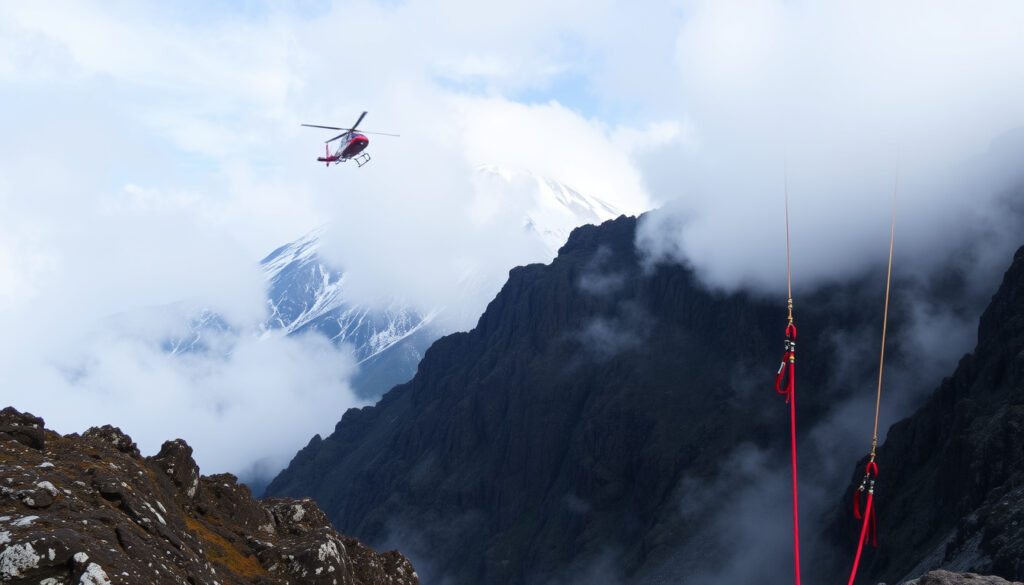
Mt Taranaki Fall Rescue: Key Incidents and Safety Insights
A hiker tumbled 600 meters down Mount Taranaki’s volcanic slopes in September 2023 and walked away with only minor injuries. That same precision was deployed in February 2026 when five climbers required emergency evacuation, with one critically injured and receiving CPR before airlift.
Rescues in 24 hours (Oct 2024): 5 · Longest survived fall: 600m · Feb 2026 incident climbers: 5 · Mt Taranaki elevation: 2,518m
Quick snapshot
- Specific trail or route where the Feb 2026 incident occurred
- Current recovery status of hospitalized climbers
- Total number of rescue personnel deployed
- Emergency call: 2:15 PM Sunday (Feb 22, 2026) (1News)
- First airlift: 6:20 PM — four-hour window of aerial denial due to weather (1News)
- Final extraction: 6:50 PM (1News)
- Police safety messages expected following rescue operation
- Ongoing scrutiny of climber preparation on Taranaki Maunga
- Seasonal patterns suggest continued rescue frequency
A summary table of the key organizations involved and incident outcomes follows.
| Label | Value |
|---|---|
| Peak rescue group | Taranaki Alpine Cliff Rescue |
| Gov source | police.govt.nz |
| News outlets | NZ Herald, BBC, Stuff, 1News |
| Coordinating authority | RCCNZ (Rescue Coordination Centre New Zealand) |
| Medical transport | Hato Hone St John |
| February 2026 casualties | 5 injured (3 serious, 2 moderate) |
| Hospital transports | 2 by helicopter, 1 by ambulance |
Is it safe to climb Mount Taranaki?
The question sounds simple. The answer is complicated. Mount Taranaki rises 2,518 meters above New Zealand’s North Island, its near-perfect volcanic cone drawing climbers who underestimate what the Department of Conservation calls “severe alpine conditions.” Five people were rescued within a single 24-hour period in October 2024 alone—including one hypothermia case and a 250-meter fall victim. A separate incident that same month saw one climber airlifted after a considerable distance fall, described in police statements as requiring immediate medical attention.
Acting Sergeant David Bentley of New Zealand Police said following the February 2026 incident that the group were “lucky to be alive,” according to 1News. The assessment underscores what rescue teams consistently report: Taranaki’s weather shifts without warning, its slopes hide loose rock and ice beneath what looks like a manageable path, and even experienced climbers can find themselves in situations that require helicopter evacuation.
Common risks like falls and hypothermia
- Falls from elevation result in the majority of rescue callouts—September 2023 saw a climber survive a 600-meter tumble with only minor injuries, an outcome rescue coordinators attributed to luck and the mountain’s forgiving volcanic substrate
- Hypothermia remains a year-round threat; October 2024’s batch of rescues included at least one hypothermia case despite relatively mild temperatures at lower elevations
- Weather windows that allow helicopter access can close within minutes, leaving injured climbers exposed for hours
Mt Taranaki is identified as one of New Zealand’s most dangerous hikes, yet its iconic profile makes it one of the most-climbed peaks. The mountain delivers exactly what visitors expect—until it doesn’t.
Department of Conservation guidelines
DOC recommends that climbers inform themselves of current conditions, carry emergency communication devices, and never assume a clear morning means a clear afternoon. The February 2026 incident occurred despite what may have appeared to be reasonable conditions at the outset—the kind of false confidence that sends people to hospital.
Mt Taranaki fall rescue update
The most recent major incident occurred on Sunday, February 22, 2026, when emergency services received reports of climbers in trouble at approximately 2:15 PM. 1News reported that one climber was already in critical condition and required CPR when rescue teams arrived on scene.
A significant search and rescue operation unfolded across multiple agencies, with RCCNZ coordinating Alpine Cliff Rescue, LandSAR, and Civil Defence alongside multiple helicopter companies. Rescue crews were focused on a rugged area near the summit of Mt Taranaki, according to Wilderness Magazine, which also reported that the Taranaki Rescue Helicopter Trust provided footage of the operation.
Helicopters were initially unable to reach the summit due to weather conditions—the same weather that had allowed the group to begin their ascent. The first critically injured climber was airlifted from the mountain at approximately 6:20 PM, four hours after the initial emergency call. Weather improvement proved critical to the successful rescue operation. The remainder of the climbing group was taken off the mountain by 6:50 PM.
Upon arrival at Taranaki Hospital, three climbers were in serious condition, two had moderate injuries, and two people were transported directly by helicopter while one was taken by ambulance. Hato Hone St John coordinated the medical transport aspect of the operation.
Ongoing helicopter callouts
The February incident follows a pattern of frequent rescue activity on Taranaki Maunga. In October 2024, five climbers required rescue within 24 hours—a statistic that places significant demand on volunteer rescue groups operating in one of the world’s most challenging alpine environments.
Each successful rescue requires coordination across multiple organizations, hundreds of volunteer hours, and significant taxpayer-funded emergency resources. The February 2026 operation mobilized search and rescue teams, Civil Defence, multiple helicopter operators, and hospital emergency departments.
Is Mount Taranaki the lonely mountain?
New Zealand’s iconic Lonely Mountain—the name that appears in J.R.R. Tolkien’s drafts for Middle-earth—refers to Mount Taranaki, which stands in near-complete isolation on the North Island’s western coast. Its geometric perfection made it a natural stand-in for Mount Fuji in The Last Samurai, and its prominence in Māori cosmology gives the mountain cultural significance that extends far beyond its 2,518-meter elevation.
The “lonely” descriptor fits in a literal sense: Taranaki sits alone, visually dominant across a landscape that offers few nearby peaks for comparison. It also fits in an experiential sense—climbers who attempt the summit often find themselves isolated on steep, loose terrain where help, if it comes, arrives by helicopter.
Iconic shape in media
The mountain’s near-perfect conical shape has made it a filming location for productions seeking dramatic volcanic backdrops. This same visual appeal draws climbers who may not fully appreciate the technical demands of the route or the speed at which conditions can deteriorate.
New Zealand’s Lonely Mountain nickname
The Tolkien connection is well-documented: scholars believe Tolkien drew inspiration from Mount Taranaki for his depiction of Erech and possibly Dale. Whether or not this is the definitive origin of the “Lonely Mountain” reference, the association has cemented Taranaki’s place in both New Zealand tourism marketing and global pop culture awareness.
The cultural weight extends beyond tourism—the mountain is a living ancestor in Māori cosmology, and this context increasingly informs how DOC approaches climber education about the maunga.
Why is Taranaki famous?
Taranaki’s fame rests on several pillars: agricultural productivity from the rich volcanic soil surrounding the mountain, the Taranaki Maunga Summit Climb as one of New Zealand’s most sought-after alpine experiences, and a volcanic profile that last erupted in the 19th century and remains dormant but not extinct.
The mountain sits within Taranaki Maunga, a dual land form that holds deep cultural meaning for Māori. Te Rē Māori terms reflect layers of meaning that non-Māori speakers may miss—Taranaki itself derives from historical associations with the region’s tribal history.
Cultural significance
For iwi (tribes) with traditional connections to the mountain, Taranaki is not merely a geographical feature but a living ancestor. Climbing the maunga carries cultural weight that visitors increasingly are encouraged to understand before attempting the summit.
Climbing and volcanic profile
Taranaki Maunga last erupted in 1854, and GNS Science monitoring indicates the volcano remains active. The odds of eruption are low in any given year, but the geological record shows a pattern of recurrence that makes long-term prediction impossible. What this means practically: the mountain is beautiful, culturally significant, and geologically alive—characteristics that don’t always translate into safe climbing conditions. For those interested in capturing the mountain’s dynamic nature, exploring MP4 to GIF converters can offer insights into creating animated visuals from video content.
The implication for climbers: the mountain’s dormant status does not reduce the immediate risks of alpine terrain, unexpected weather shifts, or the physical demands of the ascent.
What does Taranaki mean in Māori?
The name “Taranaki” carries layers of meaning rooted in the region’s tribal history. Linguists trace connections to words associated with settlement patterns and seasonal activities, though precise etymologies can vary depending on the tribal perspective consulted.
What matters for this article’s purposes is that the mountain’s name reflects a relationship between people and place that predates European settlement by centuries. Climb reports from DOC and rescue groups increasingly reference this context—not as cultural tourism box-checking, but because understanding the mountain’s significance appears to influence how some climbers prepare for and respect the terrain.
Māori language origins
Māori language conventions mean that references to the mountain often appear as “Taranaki Maunga” rather than “Mount Taranaki”—a grammatical distinction that places the mountain’s identity before any colonial naming convention. Visitors who engage with this linguistic framework reportedly approach the climb with different expectations than those who treat it purely as a physical challenge.
Confirmed
- Five climbers rescued in February 2026 incident
- One critical, CPR required, airlifted at 6:20 PM
- Three in serious condition upon hospital arrival
- Helicopters initially unable to reach summit due to weather
- Multiple agencies coordinated: RCCNZ, Alpine Cliff Rescue, LandSAR, Civil Defence
- 600-meter fall survival in September 2023
- Five rescues in October 2024 (24-hour period)
Unclear
- Specific route where February 2026 incident occurred
- Current medical status of hospitalized climbers
- Total rescue personnel deployed
- Whether eruption timeline models have updated since last published data
- Seasonal patterns in rescue frequency beyond documented incidents
Timeline of Recent Rescues
Three major incidents across less than two years illustrate the demands placed on Taranaki’s rescue infrastructure.
| Date | Incident | Key detail |
|---|---|---|
| 11 September 2023 | 600m fall survival | Climber tumbled entire vertical distance; minor injuries only |
| 14 October 2024 | Five rescues in 24 hours | Included hypothermia case and 250-meter fall |
| 22 February 2026 | Five climbers injured | One critical, CPR on mountain, four-hour delay to airlift |
What the timeline reveals: the mountain doesn’t respect seasonal patterns. September 2023, October 2024, and February 2026 span late summer through late winter, confirming DOC warnings that conditions can deteriorate regardless of time of year.
The group were lucky to be alive.
— Acting Sergeant David Bentley, New Zealand Police (1News)
This was a significant search and rescue operation involving multiple agencies working in difficult alpine conditions.
Related reading: Taranaki vs Hawkes Bay
Related coverage: Wellington Reviews October overview fördjupar bilden av Mt Taranaki Fall Rescue – What You Need to Know.
Frequently asked questions
What caused the Mt Taranaki accidents?
The documented incidents stem from falls (ranging from 250 meters to 600 meters), exposure-related hypothermia, and weather-induced delays that left injured climbers exposed for extended periods. Root causes vary by incident and remain under-reported in available sources.
How does Taranaki Rescue Helicopter operate?
The Taranaki Rescue Helicopter Trust provides dedicated helicopter coverage for medical evacuations and search operations across the region. The trust coordinates with RCCNZ, Alpine Cliff Rescue, LandSAR, and Civil Defence during major incidents.
What gear is needed for Mt Taranaki climbs?
DOC guidelines emphasize emergency communication devices (personal locator beacons or satellite messengers), weather-appropriate clothing for rapid temperature shifts, adequate food and water, first aid supplies including emergency blankets, and—crucially—experience reading alpine conditions.
Are there current Mt Taranaki news alerts?
Police and DOC websites maintain incident reporting. Taranaki Alpine Cliff Rescue posts updates on their Facebook page, though specific operational details during active incidents are typically released only after operations conclude.
How to follow Taranaki Daily News updates?
Taranaki Daily News provides regional coverage including rescue operations. For alpine-specific reporting, Wilderness Magazine and Stuff.co.nz maintain correspondent networks in the region.
What is Taranaki Alpine Cliff Rescue?
Taranaki Alpine Cliff Rescue is a volunteer organization specializing in technical rescue operations in steep and remote terrain. The group trains regularly on Mt Taranaki’s slopes and represents the primary ground-based rescue response during incidents on the mountain.
More related posts
 500 AUD to NZD: Current Exchange Rates from Wise, XE & More
 Cheap Easy Dinner Ideas NZ: Budget-Friendly Family Meals
 JBL Tour Pro 2 Review: Smart Case, Sound & Call Quality
 Balclutha Truck Sheep Roll: Latest Verified Updates
 10 Year Anniversary Gift – Tin, Aluminum and Diamond Ideas
 Houses for Sale in Blenheim – Latest Listings & Guide
 Herald Death Notices NZ: How to Search
 Surf Forecast Waihi Beach: Current Conditions & 10-Day Outlook
