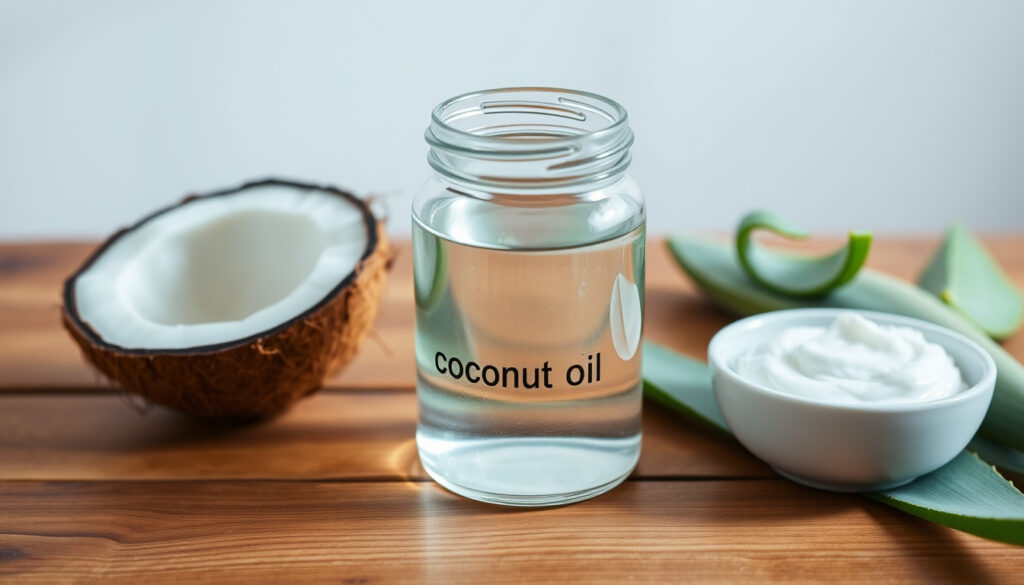
Is Coconut Oil Good for Your Skin? Benefits, Risks & Comparisons
Coconut oil locks in moisture effectively, but it also clogs pores with nearly unmatched efficiency. This article weighs the proven antimicrobial, moisture-locking benefits against the very real risk of breakouts, so you can decide where — and whether — coconut oil belongs in your routine.
Fatty acid content in coconut oil: 90% saturated, mainly lauric acid (Cleveland Clinic) ·
Comedogenic rating: 4 out of 5 (likely to clog pores) ·
Antimicrobial activity: Lauric acid disrupts bacterial membranes (Healthline) ·
Moisturizing efficacy vs mineral oil: Comparable in dry skin studies (Good Housekeeping)
Quick snapshot
- Deeply hydrates dry and cracked skin (Cleveland Clinic)
- Locks in moisture due to saturated fats (Cleveland Clinic)
- Lauric acid fights bacteria (Healthline)
- May help wounds and minor infections (Healthline)
- Antioxidants reduce inflammation
- Not proven to reduce wrinkles
Five key facts about coconut oil, one pattern: its strength as a moisturizer is directly tied to its greatest risk for facial breakouts.
Here is how the basic attributes stack up:
| Attribute | Detail |
|---|---|
| Comedogenic rating | 4/5 (highly comedogenic) |
| Key fatty acid | Lauric acid (50% of content) |
| Moisturizing effect | Increases skin barrier function (Healthline) |
| Best for | Dry body skin, mild wounds |
| Worst for | Acne-prone facial skin |
Is Coconut Oil Good for Your Skin?
Coconut oil works as both an emollient and an occlusive, meaning it softens skin and forms a barrier that locks in moisture. The Cleveland Clinic dermatology department of a leading academic medical center confirms its effectiveness for dry, cracked skin. The mechanism is straightforward: about 90% of its fatty acids are saturated, which gives it a thick consistency that clings to the skin surface.
Why coconut oil is moisturizing
- The high saturated fat content creates an occlusive seal that reduces transepidermal water loss (Cleveland Clinic).
- Virgin coconut oil has been used as a moisturizer for centuries in tropical regions (Curology, a dermatology telehealth service).
- A 2014 clinical study on pediatric atopic dermatitis patients showed improved transepidermal water loss and increased skin hydration after eight weeks of virgin coconut oil use (Good Housekeeping, reporting on peer-reviewed dermatology data).
The role of lauric acid in skin health
Lauric acid, which makes up roughly half of coconut oil’s fatty acid content, has antimicrobial properties. Research cited by Healthline, a medically-reviewed health information publisher indicates that lauric acid can disrupt the cell membranes of bacteria, including Staphylococcus aureus, a common skin pathogen. This is why some sources suggest coconut oil may help with minor wounds and infections. The catch: this same fatty acid profile contributes to the oil’s pore-clogging tendency.
The same lauric acid that makes coconut oil an effective antimicrobial moisturizer also makes it one of the most comedogenic cosmetic oils available. You cannot get the hydration benefit without accepting the clogging risk.
What Are the Disadvantages of Coconut Oil on Skin?
Coconut oil carries a comedogenic rating of 4 out of 5, which is the range dermatologists flag as high-risk for pore blockage. For comparison, many facial moisturizers are rated 0 or 1.
Comedogenic rating and acne risk
- Skincare guides consistently rate coconut oil at 4/5 for pore-clogging potential (Acne Safe, a dedicated skincare resource).
- Clogged pores can lead to blackheads, whiteheads, and inflammatory acne (Good Housekeeping).
- Some users develop milia — small, hard white or yellow bumps that form when keratin gets trapped under clogged pores (Cleveland Clinic).
- Blocked hair follicles can also cause folliculitis, an inflammation of hair follicles (Healthline).
Who should avoid coconut oil on face
Dermatologists recommend that people with oily or acne-prone skin avoid coconut oil on the face entirely (Good Housekeeping). Individuals with sensitive skin should also take caution, as coconut oil can trigger allergic contact dermatitis in some users (SELF, a wellness publication that consults board-certified dermatologists). The Cosmetic Ingredient Review has deemed coconut oil safe as a cosmetic ingredient broadly, but safety is not the same as suitability for every skin type (Good Housekeeping).
The pattern: coconut oil is a polarizing ingredient precisely because its lipid composition is exceptional at moisturizing and also exceptional at clogging. For people with oily skin, the moisturizing benefit is canceled out by the breakout cost.
Is It Okay to Apply Coconut Oil on Face Everyday?
For some skin types, daily facial use is a gamble. The Cleveland Clinic’s dermatology guidance advises against it for most faces, especially those with a history of acne or congestion.
Daily use on face vs body
- Body skin, particularly on the arms, legs, and torso, is thicker and less prone to clogged pores than facial skin.
- For very dry body areas — such as elbows, knees, and heels — daily coconut oil use can be effective without the same breakout risk.
- Coconut oil may help with eczema, dermatitis, and xerosis on the body (Healthline).
Signs of irritation to watch for
Even if your skin tolerates coconut oil initially, daily use can build up residue over time. Watch for small bumps (milia), whiteheads, or increased redness. Experts recommend patch testing before applying coconut oil to the face (SELF). Apply a small amount behind the ear or on the inner arm for 24–48 hours before committing to full-face use.
Daily facial use of coconut oil is a high-risk strategy for anyone with reactive or oily skin. Body use, especially on dry patches and rough areas, carries a much lower chance of negative effects.
Is Coconut Oil Better than Lotion?
The answer depends on where you are applying it and what your skin type is. Commercial lotions are water-based emulsions that typically include humectants, emollients, and occlusives in balanced formulas. Coconut oil is a pure occlusive.
Four key differences, one theme: lotion is engineered for facial tolerance, while coconut oil is optimized for maximum moisture retention on tougher skin.
Here is how they compare directly:
| Factor | Coconut Oil | Commercial Lotion |
|---|---|---|
| Primary mechanism | Occlusive (seals moisture in) | Humectant + occlusive (draws water in + seals) |
| Comedogenic rating | 4/5 | Typically 0–2 |
| Best use case | Very dry body skin, eczema | Facial hydration, daily maintenance |
| Absorption speed | Slow (greasy feel persists) | Fast (formulated to absorb) |
How coconut oil compares to commercial moisturizers
- For very dry skin on the body, coconut oil can be more effective than many lotions because it provides a thicker occlusive layer (Curology).
- For facial skin, lotion is typically safer because it is formulated to avoid pore blockages.
- Coconut oil may help reduce water loss, improve elasticity, and reduce itchiness in skin care use (Healthline).
When to use coconut oil vs lotion
Use coconut oil on elbows, knees, feet, and hands — areas with thick skin that can tolerate heavy occlusives. Use a non-comedogenic lotion on your face, neck, and chest, where pores are more easily blocked.
The implication: coconut oil and lotion are not interchangeable. They are tools for different jobs. Coconut oil wins on raw moisture-locking power; lotion wins on facial compatibility.
Where Not to Put Coconut Oil?
Certain areas of the body have thinner skin, higher sebum production, or more dense hair follicles — all factors that increase the risk of adverse reactions to coconut oil.
Areas prone to breakouts
- Face: especially the T-zone (forehead, nose, chin) where oil glands are most active (Cleveland Clinic).
- Chest and back: these areas are often acne-prone because of dense hair follicles that can become clogged.
- Shoulders: especially for people who exercise or sweat heavily in this area.
Risks for sensitive skin areas
Allergic contact dermatitis has been reported in some individuals after applying coconut oil (SELF). The eye area is particularly sensitive — any product that causes irritation around the eyes can lead to redness, swelling, or milia formation. Also, coconut oil is not recommended as a sunscreen because it provides only low SPF-like protection and does not protect effectively against sunburn (Curology).
The implication: applying coconut oil to the face, chest, or back without knowing your skin’s tolerance is the most common mistake people make with this ingredient.
Is Coconut Oil Good for Aging Skin?
Coconut oil’s antioxidant properties — largely from vitamin E and polyphenols — can reduce inflammation and oxidative stress on the skin. But that does not make it an anti-aging star.
Antioxidant effects for aging face
Coconut oil may support the skin barrier by locking in moisture, which can temporarily plump fine lines caused by dehydration (Healthline). For people with dry, mature skin, this short-term smoothing effect can make the face appear more hydrated and less lined.
Comparison with anti-aging products
- Coconut oil is not a replacement for vitamin C or retinoids in anti-aging routines (Healthline).
- Vitamin C serums stimulate collagen production; retinoids accelerate cell turnover. Coconut oil does neither.
- The antioxidant activity in coconut oil is far lower than what you get from dedicated antioxidant serums.
The catch: if your primary concern is aging, coconut oil is a supporting player at best. It can help with surface hydration, but it will not address collagen loss, hyperpigmentation, or fine lines at the structural level.
Is Vaseline or Coconut Oil Better for Your Face?
Both are occlusives, but they differ in one critical way: comedogenicity. Vaseline (petroleum jelly) is rated non-comedogenic. Coconut oil is rated highly comedogenic.
Comparing occlusive properties
- Vaseline is a pure hydrocarbon-based occlusive that forms a breathable barrier without penetrating pores.
- Coconut oil is a triglyceride-based occlusive that penetrates pores and can solidify inside them.
- Both reduce transepidermal water loss effectively.
Best use cases for each
The Cleveland Clinic’s dermatology team notes that Vaseline is safer for facial use because it does not clog pores. Coconut oil, by contrast, can be effective on very dry body areas but is risky on the face. For lip care, both work, though some people find coconut oil more cosmetically acceptable as a natural lip balm.
The trade-off: Vaseline gives you the same moisture-lock without the pore-clogging risk, making it the safer choice for face and sensitive areas. Coconut oil remains useful for body-only application where its heavier texture and potential for breakouts matter less.
How to Use Coconut Oil for Skin: A Step-by-Step Guide
- Patch test first. Apply a pea-size amount to the inside of your arm or behind your ear for 24–48 hours to check for allergic reaction or breakouts.
- Choose virgin, cold-pressed oil. Unrefined coconut oil retains more nutrients and has fewer processing additives.
- Apply to damp skin. Coconut oil locks in moisture, so it works best when skin is still slightly damp after a shower.
- Use on body, not face. Focus on elbows, knees, hands, and feet. Avoid the face, chest, and back unless you have confirmed your skin tolerates it.
- Use sparingly. A little goes a long way. Excess oil sits on top of the skin and can transfer to clothing or bedding.
- Do not use as sunscreen. Coconut oil provides negligible UV protection. Always pair with a broad-spectrum SPF 30+ sunscreen.
Confirmed Facts vs. What’s Unclear
Confirmed Facts
- Coconut oil is a potent moisturizer for dry body skin (Cleveland Clinic).
- It has antimicrobial properties due to lauric acid (Healthline).
- It can clog pores in some skin types, with a comedogenic rating of 4/5 (Acne Safe).
- A 2006 double-blind patch test found coconut oil was not an allergen in that context (Good Housekeeping).
What’s Unclear
- Whether coconut oil directly reduces wrinkles in aging skin — evidence is limited to anecdotal reports and small studies.
- If it is effective for skin whitening — there is no robust clinical evidence supporting this claim.
Quotes from Dermatology Experts
“Coconut oil is a comedogenic ingredient. It can clog pores and cause acne breakouts, especially in people who are prone to acne.”
— Dr. Marc Leavey, dermatologist at Cleveland Clinic
“Lauric acid — the main fatty acid in coconut oil — has been shown to disrupt bacterial cell membranes, which gives this oil some antimicrobial activity.”
— Healthline Medical Review Team (Healthline)
“For people with oily or acne-prone skin, coconut oil is best avoided entirely.”
— Good Housekeeping Beauty Lab, citing multiple board-certified dermatologists (Good Housekeeping)
“Coconut oil is not a sunscreen. It may provide SPF 2–4 protection at best, which is not enough to prevent sunburn or skin cancer.”
— Curology Dermatology Team (Curology)
Coconut oil is a legitimate moisturizer with proven antimicrobial activity, but its comedogenic nature makes it a poor choice for facial use, especially for anyone with oily or acne-prone skin. For body hydration — elbows, knees, feet, and areas of extreme dryness — it can be effective and affordable. For the face, especially daily use, non-comedogenic lotions or Vaseline are safer alternatives. For anyone in the United States with a history of facial breakouts, the choice is clear: keep coconut oil below the neck, or accept the risk of clogged pores and breakouts.
advanceddermatologypc.com, scienceinsights.org, dermapproved.com, scanskinai.com, blog.skinbuddy.me, ijdvl.com
For a deeper look at how coconut oil compares to other moisturizers, check out this detailed guide on coconut oil for skin.
Frequently asked questions
Can coconut oil lighten skin?
There is limited clinical evidence supporting skin-lightening effects from coconut oil. Some anecdotal reports suggest it may help with hyperpigmentation due to its vitamin E content, but no robust studies confirm this. For skin whitening, ingredients like vitamin C, niacinamide, and kojic acid have stronger evidence.
Does coconut oil expire for skin use?
Yes. Virgin coconut oil typically lasts 2–3 years unopened and 6–12 months after opening. Rancid coconut oil develops a sour smell and can cause skin irritation. Store it in a cool, dark place to extend its shelf life.
Can I use coconut oil as a lip balm?
Yes, many people use coconut oil as a natural lip balm. It is generally safe for lips, but some users may develop a tingling or allergic reaction. If you have sensitive lips, patch test first. For chapped lips, Vaseline may be more effective because it lasts longer without being absorbed.
Is refined or virgin coconut oil better for skin?
Virgin (unrefined) coconut oil is generally preferred for skin use because it retains more antioxidants and has a milder processing history. Refined coconut oil may have a longer shelf life and a more neutral scent, but it has fewer beneficial compounds. For topical use, virgin cold-pressed oil is the better choice.
How long does coconut oil take to absorb?
Coconut oil absorbs slowly — typically 30 minutes to several hours, depending on skin temperature and thickness. On warm skin it absorbs faster, but a greasy residue usually persists. If you need a quick-absorbing moisturizer, a lightweight non-comedogenic lotion is a better option.
Can coconut oil help eczema?
Some evidence suggests virgin coconut oil can improve skin hydration and reduce transepidermal water loss in atopic dermatitis patients, based on small clinical studies. It may help with mild eczema on the body, but it should not replace prescribed treatments. Consult a dermatologist before using coconut oil on active eczema patches.
Is coconut oil good for your hair?
Coconut oil is widely used as a hair treatment. It can penetrate the hair shaft better than many other oils due to its high lauric acid content. It is effective as a pre-wash treatment, deep conditioner, or scalp moisturizer. However, people with oily scalps or dandruff-prone skin should use it sparingly to avoid clogging hair follicles.
More related posts
 Waitara Childcare Closure: Verified Facts & Updates
 Jordan 4 Black Cat – 2025 Release Specs and Prices
 We Were Liars Book: Summary, Plot Twist, and Reading Order
 10 Year Anniversary Gift – Tin, Aluminum and Diamond Ideas
 All Blacks Team to Play Argentina: 2026 Squad Guide
 Ammu South Indian Restaurant Masterton Menu & Reviews
 Tyre Repair Near Me: Costs & When to Patch
 TradeMe Properties for Sale NZ: Seller Pitfalls & Tips
